
Kemetic Minds — Weather & Survival Report | June 17, 2026
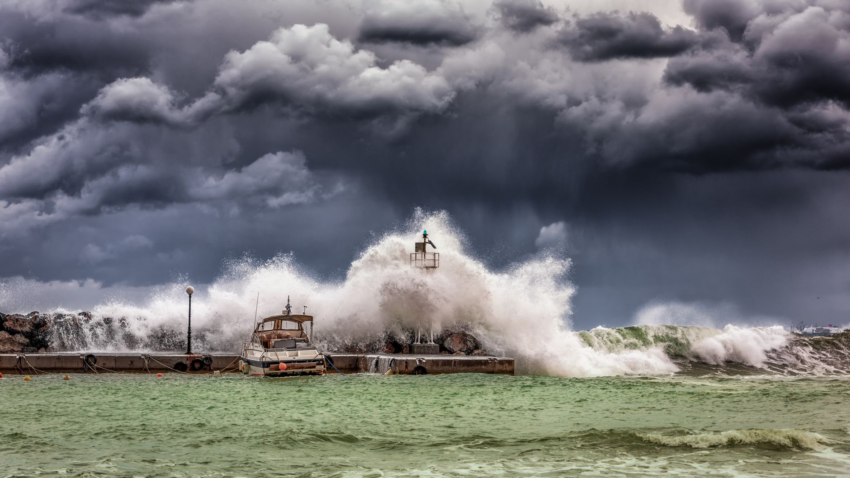
Tropical Storm Arthur, the first named storm of the 2026 Atlantic season, formed off the Texas coast on June 17 and triggered life-threatening flash flooding — a reminder that even a below-normal forecast season only needs one storm to devastate a community. Below is a step-by-step prep plan and complete grocery and supply shopping list to get your household ready now.
🌀 HAPPENING NOW
Tropical Storm Arthur Opens the 2026 Season With a Flooding Threat
Tropical Storm Arthur formed off the Gulf Coast of Texas on Wednesday, June 17, 2026, becoming the first named storm of the Atlantic hurricane season. Centered near Galveston with maximum sustained winds around 40 mph, Arthur was expected to weaken quickly—but its real danger is water, not wind. Forecasters warned of 5 to 10 inches of rain, with isolated totals near 20 inches, and life-threatening flash flooding along a large stretch of the northern Gulf Coast through Friday (CBS News, 2026; NPR, 2026; PBS NewsHour, 2026).
A Tropical Storm Warning stretched from High Island, Texas, to Morgan City, Louisiana, with flooding likely across Texas, Louisiana, Mississippi, Alabama, Georgia and the Florida Panhandle. If you are in that corridor, the time to act is today—not when the water reaches your door.
📊 The 2026 Outlook: “Below-Normal” Is Not “No Risk”
NOAA’s Climate Prediction Center forecasts a below-normal 2026 Atlantic hurricane season, with a 55% chance of below-normal activity. The outlook calls for 8 to 14 named storms, of which 3 to 6 could become hurricanes, including 1 to 3 major hurricanes (Category 3 or higher). An average season produces 14 named storms and 7 hurricanes (NOAA, 2026; CBS News, 2026).
Here is the trap in those numbers: a “quiet” season tells you nothing about your street. Hurricane Andrew struck during a below-average 1992 season and remains one of the costliest U.S. storms on record. The Atlantic season runs June 1 through November 30, and Arthur arriving in the very first weeks is a reminder that the forecast is a probability, not a promise. Treat every season like it has your name on it. (For the bigger climate picture, see our earlier report, Southern States Under Siege, and our Super El Niño Watch family preparedness plan.)
🛡️ Your Step-by-Step Plan to Prepare for the Next Storm
You do not need to panic-buy or build a bunker. You need a simple plan your whole household can run on short notice. Work these steps before a watch is ever issued.
Step 1 — Get Your Alerts Working Today
- Turn on Wireless Emergency Alerts on your phone and enable severe-weather push notifications for your county.
- Buy a battery- or hand-crank NOAA weather radio (about $30). It wakes you when a warning hits at 3 a.m.; a silenced phone will not.
- Know the difference: a Watch means conditions are possible; a Warning means take action now.
- Bookmark the National Hurricane Center for official track and intensity updates—not social-media rumors.
Step 2 — Know Your Zone and Your Exit
- Look up your evacuation zone through your state or county emergency-management website now, while you have time.
- Pick two routes out of your area in case one floods, and a destination (relative, friend, shelter) outside the danger zone.
- Keep your gas tank at least half full during the season; stations close and run dry once an evacuation order drops.
- Never drive through floodwater—just 12 inches can float a car, and 6 inches can knock you off your feet. Turn Around, Don’t Drown. (NWS, 2025)
Step 3 — Build Your Kit (Grocery List Below)
- Stock at least 3 days’ supplies (aim for 7) of water, food, and essentials per person.
- Fill the shopping list in the next section on your normal grocery run—spread over two trips it barely changes your budget.
- Refresh the kit at the start of every season and check expiration dates.
Step 4 — Protect People, Pets & Papers
- Make a communication plan with an out-of-state contact everyone can call; text first—texts get through when calls jam.
- Put copies of IDs, insurance policies, deeds, and a medication list in a waterproof bag, and photograph them to secure cloud storage.
- Plan for pets: carrier, leash, food, water, vaccination records. Many shelters require them.
- Account for medical needs: a 7–14 day medication supply, and a backup power plan for anyone on oxygen or refrigerated medicine.
Step 5 — During & After: Stay Alive in the Aftermath
- If told to evacuate, go early. If sheltering, move to an interior room on the lowest safe floor away from windows.
- Never run a generator, grill, or camp stove indoors or in a garage—carbon-monoxide poisoning kills more people after storms than the storms themselves (CDC, 2024).
- Assume every downed power line is live; stay at least 30 feet away and report it.
- When the power is out, keep the fridge and freezer closed. Throw out any perishable food held above 40°F for more than two hours—when in doubt, throw it out (FDA, 2024).
- Document damage with photos before cleanup for your insurance claim.
🛒 The Storm Grocery & Supply List
Print this or screenshot it. Quantities assume a household of four for seven days—scale up or down as needed. Prioritize foods that need no refrigeration, no cooking, and little or no water to prepare, in case both power and clean water go out (American Red Cross, 2025; Ready.gov, 2025).
| Category | What to Buy | Why / Notes |
|---|---|---|
| Water | 28+ gallons (1 gal/person/day × 7 days); plus extra for pets & hygiene | The single most important item. Fill clean jugs & the bathtub before landfall. |
| Canned protein | Tuna, chicken, salmon, sardines, canned beans, chili, Vienna sausages | Ready to eat cold; long shelf life. Get pop-top cans. |
| Shelf-stable staples | Peanut butter, crackers, granola/protein bars, trail mix, dry cereal, instant oatmeal | High-calorie, no-cook energy. Kid-friendly. |
| Canned fruit & veg | Fruit cups, canned vegetables, applesauce, canned tomatoes | Vitamins + the liquid counts toward hydration. |
| Pantry & comfort | Bread/tortillas, rice & dried beans (if you can boil), powdered/shelf milk, coffee/tea, hard candy, cooking oil, salt | Morale matters during long outages. |
| Baby & pet | Formula, baby food, diapers, wipes; pet food & extra water | Don’t forget the smallest household members. |
| Light & power | Flashlights, lantern, lots of batteries, power banks, NOAA weather radio, car charger | Skip candles—fire risk. Charge everything before the storm. |
| Health & first aid | First-aid kit, 7–14 day prescription supply, pain reliever, hand sanitizer, masks, thermometer | Refill prescriptions early in the season. |
| Tools & sanitation | Manual can opener, multi-tool, duct tape, trash bags, bleach, toilet paper, baby wipes, coolers + ice | A manual can opener is the most-forgotten essential. |
| Cash & documents | Small bills, waterproof document pouch, paper map | ATMs and card readers fail when the grid goes down. |
List adapted from American Red Cross and FEMA Ready.gov hurricane and emergency-kit guidance (American Red Cross, 2025; Ready.gov, 2025).
📌 Bottom Line
Tropical Storm Arthur is a warning shot, not the main event. A below-normal forecast is good news—but the storm that floods your home counts the same whether it was number 3 or number 13. Get your alerts on, know your zone, and knock out the grocery list this week. The household that already walked the plan is the one that comes through the season whole. Do it now—not when the cone points at you.
References
American Red Cross. (2025). Survival kit supplies / How to prepare for a hurricane. Retrieved June 17, 2026, from redcross.org
CBS News. (2026, June 17). Tropical Storm Arthur, the first Atlantic tropical cyclone of the year, forms off Texas’ Gulf Coast. cbsnews.com
Centers for Disease Control and Prevention. (2024). Carbon monoxide poisoning after a disaster. cdc.gov
National Hurricane Center. (2026). Active tropical cyclones and forecasts. National Oceanic and Atmospheric Administration. nhc.noaa.gov
National Oceanic and Atmospheric Administration. (2026). NOAA predicts a below-normal 2026 Atlantic hurricane season. noaa.gov
National Weather Service. (2025). Turn Around, Don’t Drown. weather.gov
NPR. (2026, June 17). Tropical Storm Arthur is the first named storm of the Atlantic hurricane season. npr.org
PBS NewsHour. (2026, June 17). Dangerous flooding from Tropical Storm Arthur, first of the Atlantic season, threatens Gulf Coast. pbs.org
Ready.gov / Federal Emergency Management Agency. (2025). Hurricanes & Build a Kit. ready.gov/hurricanes · ready.gov/kit
U.S. Food and Drug Administration. (2024). Food and water safety during power outages and floods. fda.gov
Methodology: Current-storm facts sourced from NPR, PBS NewsHour and CBS News reporting on Tropical Storm Arthur (June 17, 2026). Seasonal outlook from NOAA’s Climate Prediction Center. Preparedness and grocery guidance follows FEMA/Ready.gov, American Red Cross, CDC and FDA standards. This guide is general information, not a substitute for official orders from your local emergency-management authorities—always follow their evacuation and shelter instructions.
📱 Stay Connected

Kemetic Minds Editorial Desk
Verified NewsroomPrimary-sourced investigative intelligence on civil rights, voting rights, federal policy, and consumer protection. Sourced from primary legal filings, government statistics, and direct field reporting.