

Kemetic Minds — Financial Justice Series | June 25, 2026
🚨 Key Findings
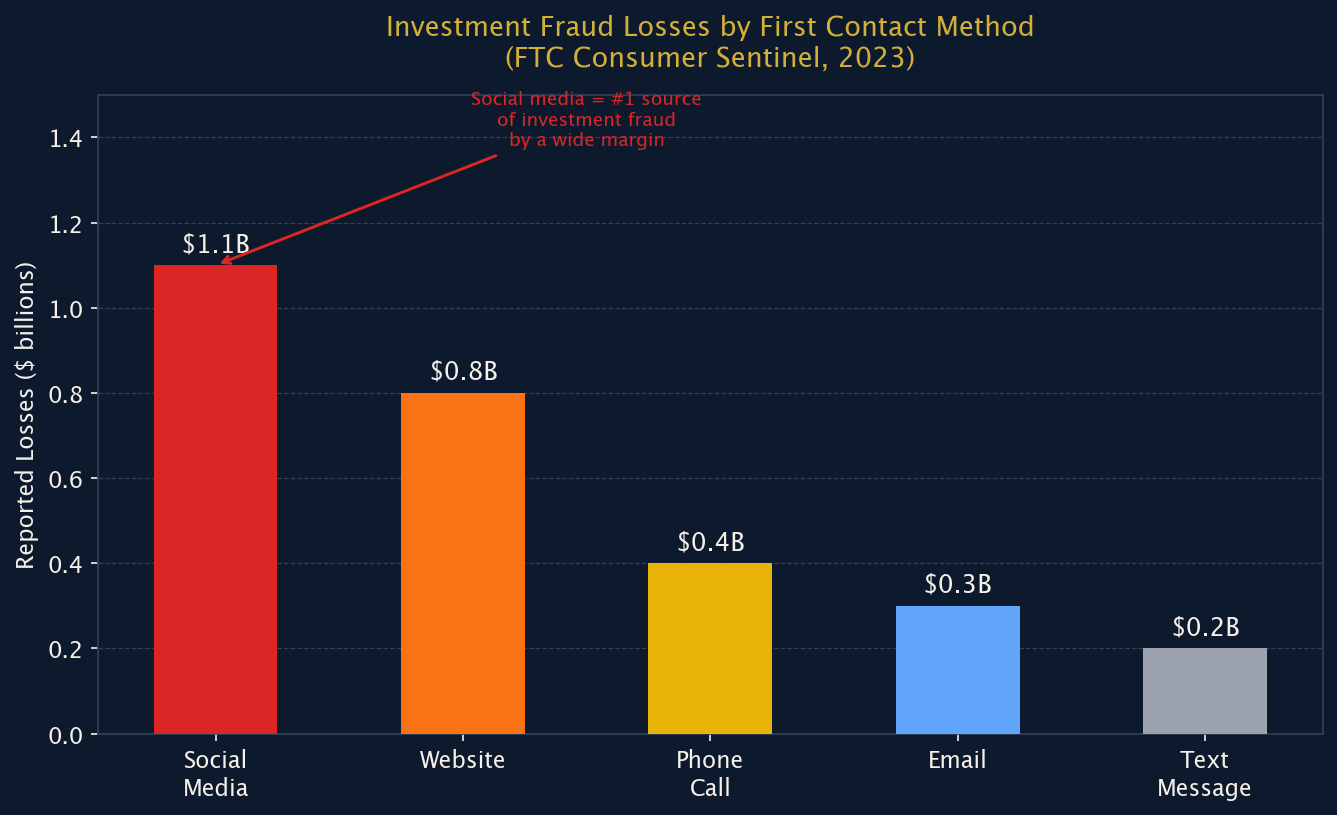
- $1.1 billion in investment fraud in 2023 was first initiated through social media — the #1 contact method by a wide margin (FTC, 2024).
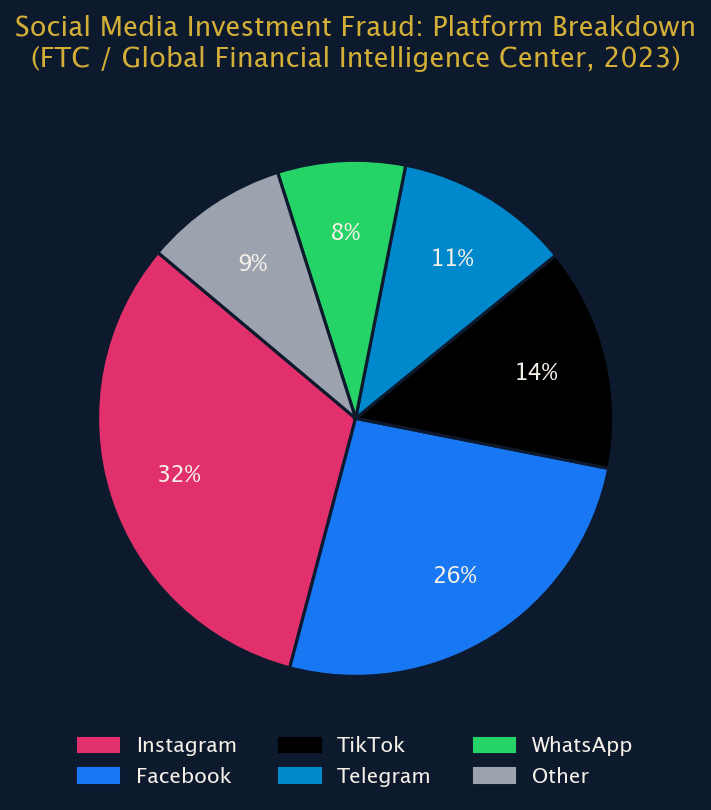
- Instagram (32%) and Facebook (26%) account for more than half of all social-media investment fraud reports (FTC / GFIC, 2023).
- Self-styled trading “gurus” selling courses and “signals” operate in a largely unregulated gray area — without the licensing required of real financial advisors.
- The SEC has taken action against dozens of social-media trading influencers for “pump and dump” and undisclosed paid promotion schemes.
The Playbook: Rented Lamborghinis and Fake Brokerage Statements
The social-media trading guru is one of the most reliably profitable scams of the digital era. The formula is consistent: an aspirational persona — usually a young man of color in a luxury car or a rented mansion — posts screenshots of trading gains, promotes a “course” or “VIP group,” and markets the idea that his lifestyle is accessible to anyone who follows his signals.
The Federal Trade Commission documented that in 2023 alone, $4.6 billion in total investment fraud losses were reported by consumers — the highest ever recorded. Social media was the top first-contact method, responsible for $1.1 billion of those losses, with investment fraud on social media growing faster than any other contact method (FTC, 2024).
Figure 1
Investment Fraud Losses by First Contact Method (FTC, 2023)
How the Scams Actually Work
📈 Pump and Dump
The guru quietly buys a cheap, thinly-traded penny stock or obscure cryptocurrency. They then promote it aggressively to their followers as a “hot pick.” The surge of buying from followers drives the price up. The guru sells into the spike, crashes the price, and the followers are left holding a worthless asset. The SEC charged over 50 individuals with social-media pump-and-dump schemes between 2021 and 2024 (SEC, 2024).
💰 Course and Signals Scams
The guru sells a $500–$3,000 “masterclass” or access to a “VIP signals group” where they share trade calls. The signals are random or cherry-picked from hindsight. The course content is generic material available for free. The guru’s income comes from course sales, not trading — and the brokerage screenshots showing profits are frequently doctored. Real brokerages do not generate those kinds of clean graphical summaries without specific formatting tools.
📱 Undisclosed Paid Promotions
Section 17(b) of the Securities Act requires anyone who is paid to promote a security to disclose it prominently. The SEC has charged dozens of influencers for hyping stocks without disclosing that they were paid for the promotion. In one 2023 action, eight social-media influencers were charged with securities fraud for coordinating pump-and-dump schemes via a private Discord server, generating $114 million in illegal profits (SEC, 2023).
Figure 2
Social Media Investment Fraud: Platform Breakdown (2023)
Why Black Communities Are Targeted
Research from FINRA and the Consumer Federation of America finds that investment fraud disproportionately targets communities that have been underserved by mainstream financial services — a category that includes a large segment of Black Americans. The reasoning is straightforward from a predator’s perspective: people who feel excluded from traditional investment channels are more likely to respond to appeals framed around community empowerment, economic independence, and distrust of “the system.”
Many trading gurus explicitly market to Black audiences using language of financial liberation, building a community-coded trust that legitimate firms have not earned. The FTC’s 2023 Consumer Sentinel Network data show that Black adults aged 18–44 are among the most targeted groups for investment fraud by contact method and reported loss size.
How to Tell a Fraud from a Real Advisor
✅ The Verification Checklist
- Check FINRA BrokerCheck. Every licensed broker and investment advisor in the U.S. is registered. Search the person’s name at BrokerCheck.finra.org — free and takes 60 seconds. If they are not registered, they cannot legally give personalized investment advice.
- Check the SEC’s Investment Adviser Public Disclosure. Registered investment advisors must file with the SEC or their state. Search at adviserinfo.sec.gov.
- Ask for their Form ADV. Every registered investment adviser must file a Form ADV disclosing their fees, conflicts of interest, and disciplinary history. A real advisor will hand it to you without hesitation.
- If they show brokerage screenshots, ask for a live login. Fraudsters can generate fake P&L images in minutes. A real trader will show you a live brokerage dashboard without hesitation.
- Anyone promising “guaranteed returns” is lying. No SEC-registered investment professional can legally guarantee a return. If you hear it, walk away.
- Search their name + “fraud,” “SEC,” or “complaint.” Real court and SEC enforcement records are public. A 30-second search can reveal a history of fraud.
Where to Report
- SEC: sec.gov/tcr — report securities fraud, including pump and dump and undisclosed promotions.
- FTC: ReportFraud.ftc.gov — report all investment and wire fraud.
- FINRA: finra.org — report broker misconduct.
- FBI IC3: IC3.gov — internet-enabled financial crime.
References
Federal Trade Commission. (2024). Consumer Sentinel Network data book 2023. ftc.gov
Federal Trade Commission. (2024, February). Reports of investment fraud hit record high in 2023. Consumer Advice. consumer.ftc.gov
Securities and Exchange Commission. (2023, December). SEC charges eight social media influencers in $100 million stock manipulation scheme. Press release. sec.gov
Securities and Exchange Commission. (2024). Investment adviser public disclosure. adviserinfo.sec.gov
Financial Industry Regulatory Authority. (2024). BrokerCheck. brokercheck.finra.org
FINRA Investor Education Foundation. (2023). Non-traditional investments and underserved investors: Understanding the fraud landscape. finrafoundation.org
Methodology: Investment fraud figures from FTC Consumer Sentinel Network 2023 annual data. Platform breakdown approximated from FTC and Global Financial Intelligence Center 2023 reported fraud data. SEC enforcement actions from public SEC press releases and litigation releases. This article is for educational purposes only.
📱 Stay Connected

Kemetic Minds Editorial Desk
Verified NewsroomPrimary-sourced investigative intelligence on civil rights, voting rights, federal policy, and consumer protection. Sourced from primary legal filings, government statistics, and direct field reporting.