
Kemetic Minds — Financial Justice Series | June 23, 2026
₿ Key Findings
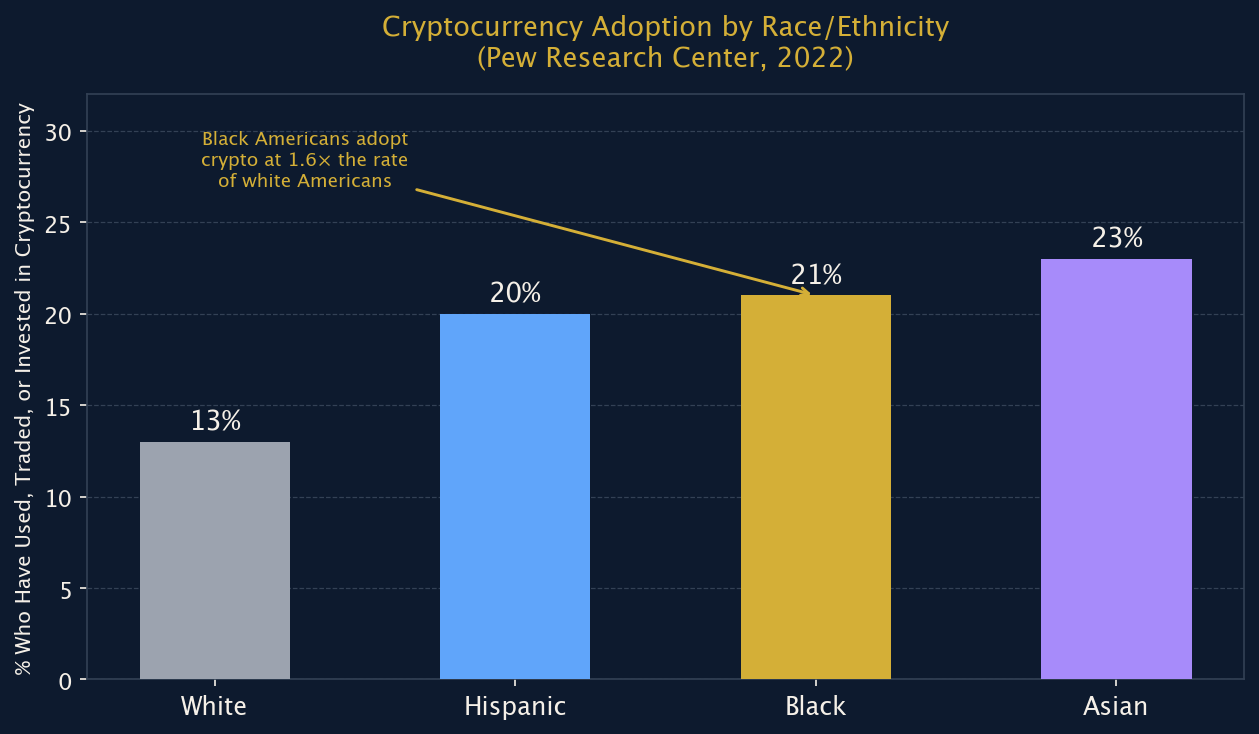
- 21% of Black Americans have used, traded, or invested in cryptocurrency — the highest rate of any major racial group except Asian Americans (Pew Research, 2022).
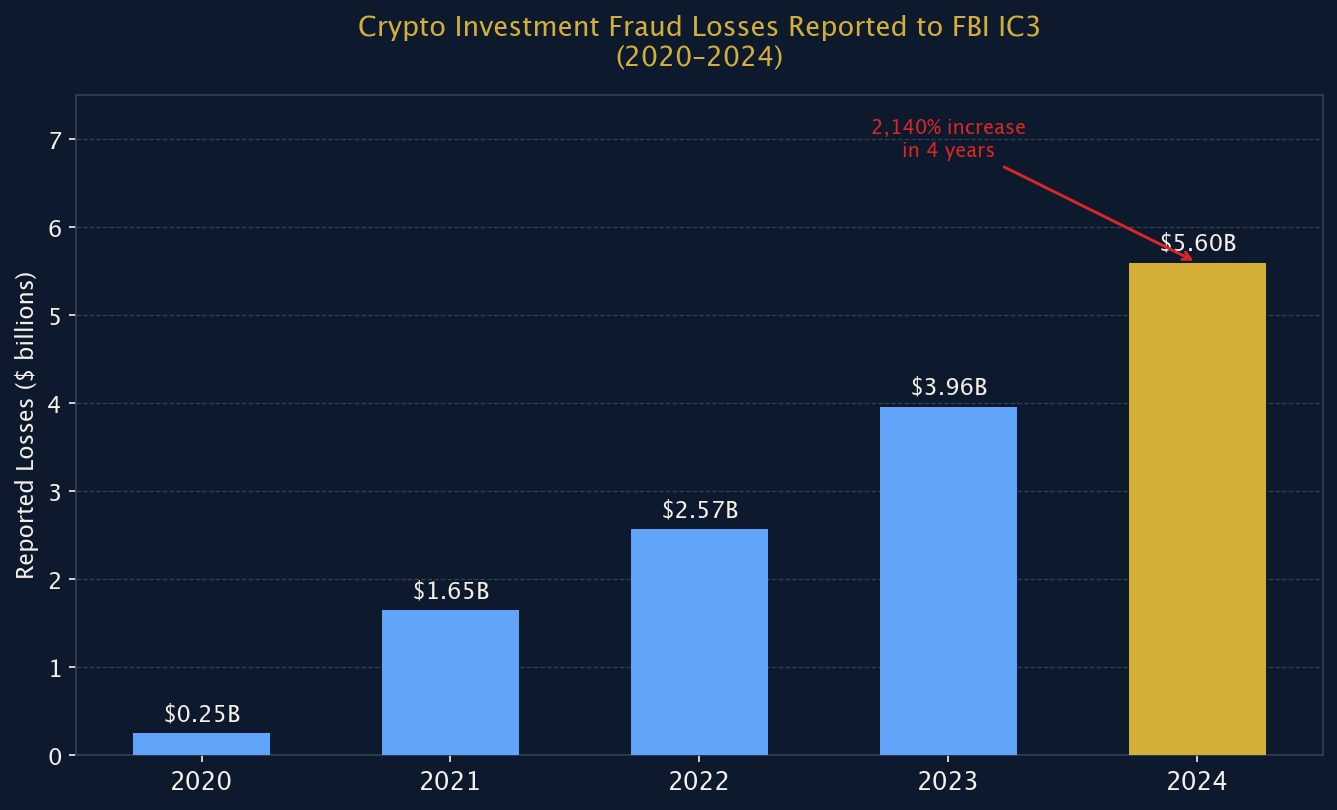
- Crypto investment fraud losses reported to the FBI grew 2,140% between 2020 and 2024, reaching $5.6 billion (FBI IC3, 2025).
- Black Americans are disproportionately targeted by “pig-butchering” investment scams on Instagram, TikTok, and WhatsApp.
- Bitcoin’s long-term risk-adjusted returns are lower than a simple S&P 500 index fund when volatility is accounted for.
The Highest Adoption, the Highest Exposure
A 2022 Pew Research Center survey found that 21% of Black Americans have personally used, traded, or invested in cryptocurrency — compared to just 13% of white Americans. Among all major demographic groups surveyed, Black and Asian Americans were the most likely to have engaged with crypto (Pew Research Center, 2022).
This adoption surge is driven by a genuine and understandable logic: traditional banking and investing have historically excluded Black communities through redlining, discriminatory lending, and lack of access to employer retirement plans. Cryptocurrency, with its low minimums, 24/7 access, and marketing as a “democratizing” technology, appeals to communities that have been locked out of conventional wealth-building.
But high adoption without high awareness creates a dangerous combination. Fraud targeting crypto investors has exploded — and the communities most enthusiastic about crypto are often the least protected by financial advisors, regulators, or legal safeguards when things go wrong.
Figure 1
Cryptocurrency Adoption by Race/Ethnicity (Pew, 2022)
The Fraud Explosion: $5.6 Billion Lost in 2024
The FBI’s Internet Crime Complaint Center (IC3) reported that investment fraud involving cryptocurrency reached $5.6 billion in reported losses in 2024 — making it by far the largest single category of internet-enabled crime by dollar value. That is a 2,140% increase from 2020, when crypto fraud losses were $250 million (FBI, 2025).
These figures represent only reported losses. Experts estimate the actual toll is two to three times higher, because many victims — especially those targeted in romance-linked investment scams — are too embarrassed or confused to report.
Figure 2
Crypto Investment Fraud Losses Reported to FBI IC3 (2020–2024)

How the Scams Work: “Pig Butchering” and the Long Con
The dominant crypto fraud model targeting Black investors is called “pig butchering” (sà zhú pán in Mandarin, from which it originated). The mechanics:
Step 1: Build Trust Over Weeks
A stranger contacts you on Instagram, a dating app, Facebook, or via a wrong-number text. They are charming, attractive in their photos, and seem successful. They ask about your life, share theirs. They never ask for money. This phase can last weeks or months.
Step 2: Introduce the “Opportunity”
Casually, they mention a crypto investment that has made them wealthy. They show screenshots of returns. They help you sign up on what appears to be a real trading platform — with a professional-looking website, live charts, and customer service. You invest a small amount. The platform shows instant gains.
Step 3: The Slaughter
Encouraged by “gains,” you invest more — sometimes tens of thousands of dollars. When you try to withdraw, you’re told there are “taxes” or “fees” due first. The platform vanishes, the contact disappears, and your money is gone. The entire platform was fake. FBI cases show average losses of $200,000–$500,000 per victim (FBI, 2025).
The Real Investment Case for Crypto — Stripped of Hype
This is not an argument that cryptocurrency has no legitimate role in a portfolio. It is an argument for clear eyes. Here is what the data actually show:
- Bitcoin has generated extraordinary returns over its full history — but with extreme volatility. It dropped 77% from its 2021 peak, 83% from its 2018 peak, and 92% from its 2013 peak. Most retail investors do not hold through those drawdowns (Chainalysis, 2022).
- The S&P 500 has beaten Bitcoin on a risk-adjusted (Sharpe ratio) basis in every 3-year window since 2018, according to CFA Institute analysis.
- If you allocate crypto, it should be no more than 5–10% of your portfolio — money you can afford to lose entirely — after maxing out tax-advantaged retirement accounts first.
- Only use regulated, major U.S. exchanges: Coinbase, Kraken, or Gemini. Never send crypto to platforms you discovered through social media or a romantic contact.
🛡️ Red Flags: How to Know a Crypto “Opportunity” Is a Scam
- You were contacted out of the blue — wrong number, DM, or dating app.
- The platform is not listed on CoinMarketCap or any regulated exchange comparison.
- You are shown guaranteed returns or told losses are “impossible.”
- You cannot withdraw without paying a “tax” or “fee” first — this is always a scam.
- The person who introduced you disappears when you ask for help withdrawing.
- The platform’s website was registered within the last year (check Whois.domaintools.com).
Report crypto fraud to the FBI at IC3.gov and the FTC at ReportFraud.ftc.gov.
References
Federal Bureau of Investigation. (2025). Internet Crime Report 2024. Internet Crime Complaint Center. ic3.gov
Pew Research Center. (2022, November). Majority of Americans aren’t confident in the safety and reliability of cryptocurrency. pewresearch.org
Chainalysis. (2022). The Chainalysis 2022 crypto crime report. chainalysis.com
Federal Trade Commission. (2024). Protecting consumers in the digital age: Investment scams and social media. ftc.gov
S&P Dow Jones Indices. (2024). SPIVA U.S. scorecard. spglobal.com
Methodology: Adoption data from Pew Research Center’s 2022 nationally representative survey. Fraud loss data from FBI IC3 Annual Reports 2020–2024. This article is for educational purposes and does not constitute investment advice.
📱 Stay Connected

Kemetic Minds Editorial Desk
Verified NewsroomPrimary-sourced investigative intelligence on civil rights, voting rights, federal policy, and consumer protection. Sourced from primary legal filings, government statistics, and direct field reporting.