
Kemetic Minds — Civil Rights & Community Series | August 20, 2026
⚠️ Key Findings
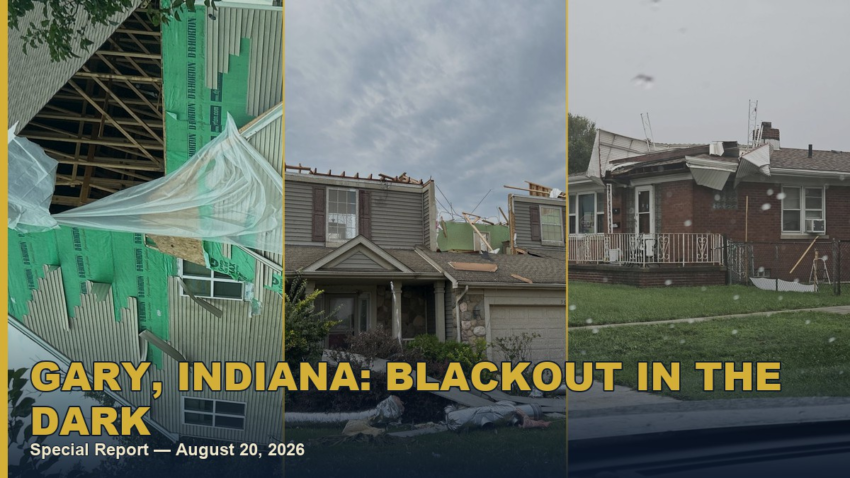
- A derecho with a 99 mph peak wind gust at Gary/Chicago International Airport tore through Lake County, Indiana on August 11, 2026, part of a wider outbreak that produced eight confirmed tornadoes across the Chicago region[1].
- More than 300,000 NIPSCO customers statewide lost power. Nine days later, Gary still had more customers in the dark than any other Indiana city — roughly 26,600 as of August 20, with full restoration not targeted until August 25[2][3].
- Gary is roughly 76% Black, with a median household income under $39,000 and a poverty rate above 33% — among the highest of any Indiana city[4].
- One person died in the derecho: an unhoused woman struck by wind-driven roofing debris in nearby Lake Station[1].
- NiSource’s utility president says the slower restoration reflects storm-damage severity, not a “socioeconomic divide”[2]; residents and Governor Braun both called the pace unacceptable[5][6].
What Actually Hit Gary
Just after sunrise on Tuesday, August 11, 2026, a line of severe thunderstorms crossing from Iowa into northern Illinois organized into a derecho — a fast-moving band of widespread, long-lived, damaging straight-line winds. By late morning it had swept into northwest Indiana. The National Weather Service’s Chicago office recorded a peak wind gust of 99 mph at Gary/Chicago International Airport, with numerous other readings of 70–90 mph across Lake County [1].
The same system produced eight confirmed tornadoes across the NWS Chicago area of responsibility. Two crossed the state line into Lake County, Indiana, affecting St. John and Munster, while Crown Point took direct EF-2 tornado damage, with numerous trees and power lines down across town[1]. One person was killed: an unhoused woman in Lake Station, struck by roofing debris torn loose by the wind[1].
Figure 1
The August 11 Derecho Over Lake County, Indiana
Note. Interactive map; hover any marker for details. Zoomed to the Chicago–Northwest Indiana corridor[1].
A City Already Running on Empty
More than 300,000 NIPSCO customers — over 60% of the utility’s Indiana customer base — lost power in what the utility’s parent company, NiSource, called one of the most severe storm events in its recent history. NiSource president Melody Birmingham compared the winds directly to a hurricane: “Those winds were as strong as a Category 2 hurricane”[2].
Gary bore the brunt of it. The city needed repair or replacement of roughly 335 damaged utility poles and 27 substations — the most extensive and complex damage anywhere in NIPSCO’s service territory[3][2]. Nine days after the storm, an estimated 26,600 Gary customers were still without power, close to 40% of everyone still in the dark statewide, and NIPSCO did not target full restoration for the city until August 25 — two full weeks after the derecho hit[3]. Gary Mayor Eddie Melton put it plainly: “Progress is being made, power is actively being turned on. But many residents are still suffering without power.”[2]
Gary, Indiana: A City Built by Steel, and by Struggle
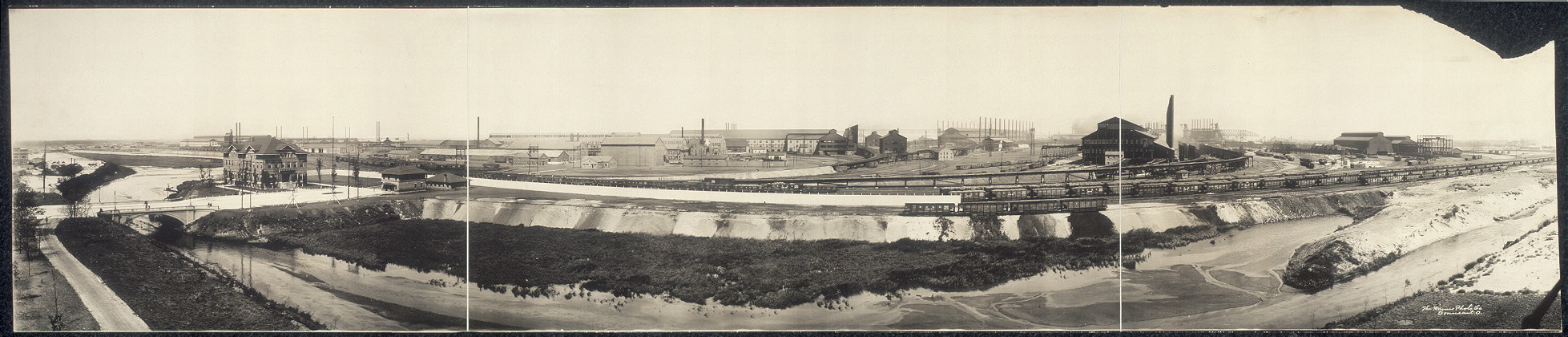
Gary was founded by U.S. Steel in 1906 and named for one of its board chairmen; for decades the mills were the city’s entire economic engine, employing more than 30,000 workers at their post-war peak. As global competition and automation hit the American steel industry starting in the early 1970s, Gary Works’ workforce collapsed to roughly 7,000 by the mid-2000s. Historians point to more than falling steel demand, too: discriminatory lending and housing practices blocked many of Gary’s Black residents from following departing white residents and capital out of the city, hollowing out its tax base even faster [7].
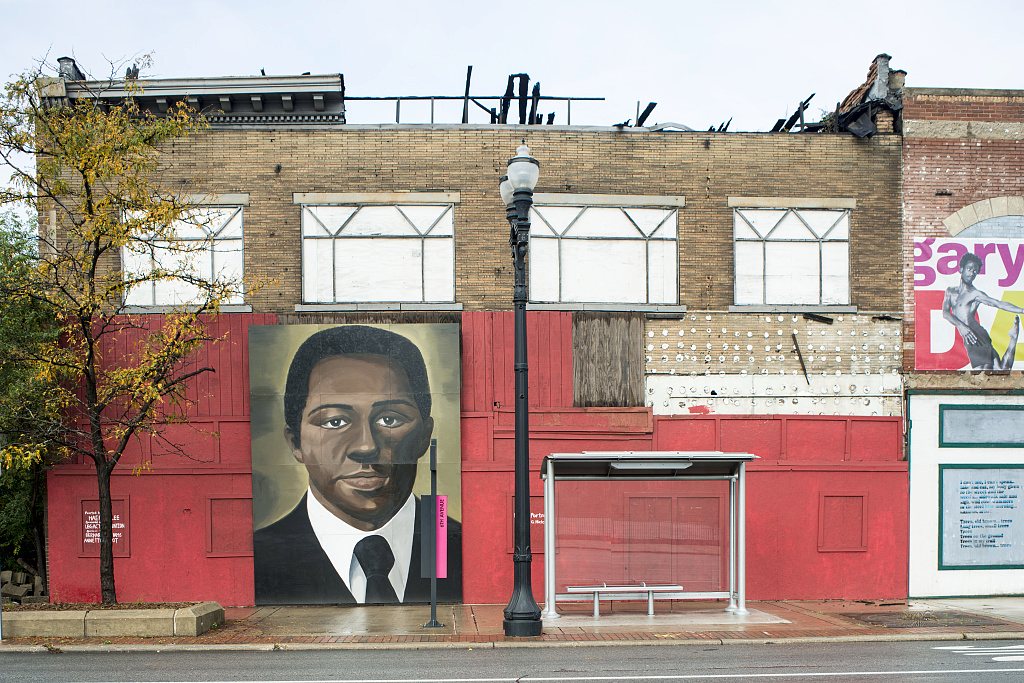
Against that backdrop, Gary made national history. On November 7, 1967, voters elected Richard G. Hatcher mayor, making him — alongside Cleveland’s Carl Stokes, elected the same day — one of the first Black mayors of a major U.S. city. Hatcher, who overcame a childhood speech impediment and blindness in one eye, went on to serve 20 years in office, from 1967 to 1987 [8].
Today, Gary’s population sits under 68,000 — a fraction of its mid-century peak — and is roughly 76% Black. Median household income is under $39,000, and about a third of residents live below the poverty line[4]. That combination of an aging, storm-battered grid and a population with fewer financial cushions to fall back on is the backdrop against which this outage dragged on as long as it did.
“We Have Felt Invisible”
For residents, the storm’s aftermath was less about statistics than about heat, spoiled food, and days that blurred together without electricity. Cynthia Bailey described sweltering in her own home: “I’m in a hot house. And I am in here, burning up, sweating from head to toe… I can’t take it! It is just not right.”[9] Kenneth Lewis put the frustration more bluntly: “They aren’t pausing when they take our money. We’re the first to get cut off when anything happens, NIPSCO.”[9]
A 27-year-old Gary resident named Ajahalla described watching neighboring towns get their lights back while Gary waited: “It’s extremely dangerous. I can’t even explain how dark it is at night… It got to a point where we have literally been competing for hotel rooms.” Raven Summers, without power for six days, connected it to a pattern of repeated disasters the city has weathered largely on its own: “This is Gary, Indiana — the hometown of Michael Jackson — but many of us have felt invisible… I survived an EF-1 tornado in June. Two months later, my family endured another devastating storm and nearly a week without electricity. We are still here.”[5]
The Response
NiSource has pushed back on the suggestion that Gary was deprioritized because of who lives there. Birmingham said directly: “This is not about a socioeconomic divide, this is truly because of the area the storm hit.” Company officials point to the sheer scale of pole and substation damage concentrated in the city as the reason recovery took longer than in less-damaged suburbs[2].
Governor Mike Braun, meanwhile, called the pace of restoration “unacceptable” over a week into the outage: “There’s no excuse. We are providing protection and we are clearing the path… It’s on NIPSCO management to step up, take this seriously and restore power now.” The state activated the Indiana National Guard, Indiana State Police, the Department of Transportation, the Department of Correction, and the Department of Natural Resources to assist NIPSCO crews and secure affected neighborhoods [6]. Indiana also opened $5,000 emergency grants for storm victims to cover essentials like food, clothing, and uninsured medical devices, accessible by calling 211[6], and President Trump approved federal emergency assistance through FEMA for the affected counties[6].
The Bottom Line
The facts here are not in serious dispute: a derecho with hurricane-force gusts caused the most severe, concentrated grid damage anywhere in NIPSCO’s territory in Gary, and the city waited longer than any other in Indiana to get power back. What’s contested is what that pattern means — a straightforward function of where the worst damage happened, as the utility maintains, or the latest example of a majority-Black, lower-income city landing at the back of the recovery line, as many residents believe. Both readings can be true for different reasons at once: the physical damage was real and concentrated, and Gary’s decades of disinvestment left it with less capacity to absorb a two-week blackout than a wealthier suburb would have had.
If you live in an area prone to severe storms, the practical takeaway doesn’t depend on resolving that argument: know your utility’s outage-reporting number, keep a battery- or solar-powered charging bank and a few days of non-perishable food and water on hand, and check on elderly or medically vulnerable neighbors directly rather than assuming help is already on the way.
References
- National Weather Service Chicago. (2026, August 11). August 11, 2026: Powerful morning derecho produces widespread wind damage and tornadoes across northern Illinois and northwest Indiana. weather.gov/lot ↩a ↩b ↩c ↩d ↩e ↩f
- Chicago Sun-Times. (2026, August 19). Gary residents still in the dark as power outage could drag for 2 weeks after last week’s deadly storms. chicago.suntimes.com ↩a ↩b ↩c ↩d ↩e ↩f
- Chicago Crusader. (2026, August 20). 9 PM update: NIPSCO says Gary’s power will be fully restored by August 25. chicagocrusader.com ↩a ↩b ↩c
- Data USA. (2026). Gary, IN. U.S. Census Bureau American Community Survey (via Data USA). datausa.io ↩a ↩b
- Atlanta Black Star. (2026, August 19). ‘We have felt invisible’: Black Gary residents trapped in ‘extremely dangerous’ conditions as blackout drags into second week. atlantablackstar.com ↩a ↩b
- Chicago Crusader. (2026, August 20). Indiana Governor Braun calls prolonged power outages “unacceptable.” chicagocrusader.com ↩a ↩b ↩c ↩d
- Bogdanovic, N. (2023, May 17). Gary, Indiana went from boomtown to bust in just half a century. The Vintage News. thevintagenews.com ↩
- Indiana University. (2026). Foundational politician: Richard G. Hatcher. My IU News & Stories. myiu.org ↩
- TheGrio. (2026, August 19). ‘I can’t take it’: Thousands of Gary residents go over a week without power after deadly storms. thegrio.com ↩a ↩b

Kemetic Minds Editorial Desk
Verified NewsroomPrimary-sourced investigative intelligence on civil rights, voting rights, federal policy, and consumer protection. Sourced from primary legal filings, government statistics, and direct field reporting.
1 thought on “Breaking News · Aug 21, 2026Nine Days in the Dark: Inside Gary, Indiana’s Slow-Motion Blackout After the August Derecho”