
KEMETIC MINDS
Climate & Extreme Weather Report — July 9, 2026
Key Takeaways
- A historic heat dome put over 185 million Americans under heat alerts from June 30 through the July 4th weekend, 2026.
- At least 148 daily high-temperature records were broken; Atlantic City, NJ hit 106°F on July 4.
- At least 25 suspected heat deaths were reported in New Jersey alone, with the national toll estimated between 25 and 40.
- Majority-Black and low-income neighborhoods have roughly a third less tree canopy and can run up to 13°F hotter than areas two miles away, per urban-heat-island research.
- A second heat dome began forming over the western and central U.S. on July 6, extending the event.
1. 148 Records in a Week
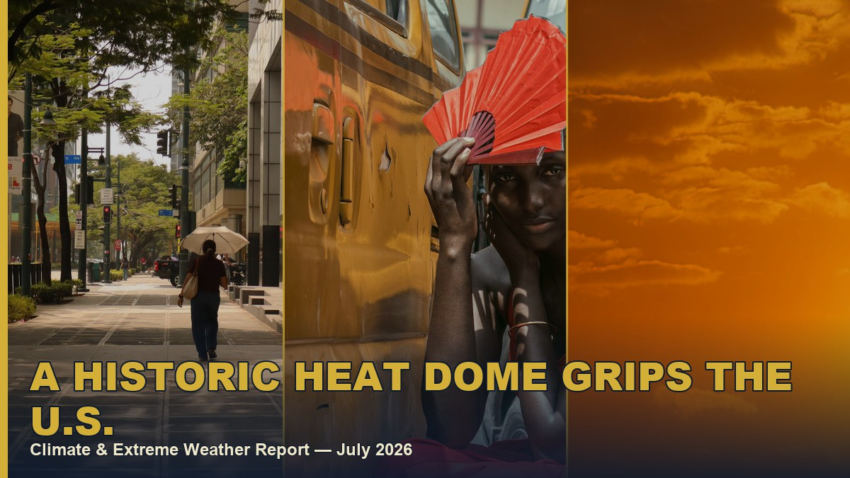
A slow-moving heat dome settled over the eastern and central United States from late June through the Fourth of July weekend, putting more than 185 million people under heat alerts and breaking at least 148 daily high-temperature records between June 30 and July 5. Atlantic City, New Jersey reached 106°F on July 4 — an all-time or near-record high — while Washington, D.C. and Raleigh, North Carolina both hit 103°F. (Fox Weather; NBC News)
At least 25 suspected heat deaths were reported in New Jersey alone, with the national toll estimated at 25 to 40 as of July 6. Many victims were found indoors without working air conditioning, or outside on streets and in parked cars. Delaware’s state government issued an extreme heat warning advisory citing the National Weather Service, and NOAA’s HEAT.gov portal tracked the event as it expanded. (ABC News; State of Delaware)
Video: Core of life-threatening July 4 heat dome shifts over East Coast, bringing extreme temperatures. Source: YouTube.
2. Why Black Neighborhoods Run Hotter
Heat is America’s deadliest weather hazard — deadlier than tornadoes or floods — and it does not fall evenly. The Congressional Black Caucus Foundation has documented how decades of redlining left majority-Black neighborhoods with roughly a third less tree canopy and far more heat-absorbing pavement than white neighborhoods in the same cities, a gap that can mean a 13°F temperature difference between two neighborhoods just two miles apart. Residents in those neighborhoods are also less likely to have reliable access to air conditioning, which tracks directly with where this week’s indoor heat deaths were concentrated. (Congressional Black Caucus Foundation; The Weather Channel)
A second heat dome began forming over the western and central U.S. on July 6, meaning this is very likely not the last extreme heat event of the summer. If you’re in an older, tree-sparse neighborhood without reliable AC, treat check-ins on elderly neighbors and relatives as seriously as you would a storm warning.
3. What You Can Do Right Now
Check on elderly relatives, neighbors, and anyone without reliable air conditioning at least once a day during an active heat alert — most heat deaths happen indoors, quietly, not outdoors dramatically. Know your city’s designated cooling centers before you need one; most municipal websites list them by ZIP code once a heat advisory is issued.
Sign up directly for National Weather Service heat alerts for your county through NOAA’s Weather-Ready Nation alert system, rather than relying on push notifications from an app that may lag official warnings. If you live in a historically redlined neighborhood with sparse tree canopy, that’s a concrete, fundable city-council agenda item — the Congressional Black Caucus Foundation’s Center for Policy Analysis and Research publishes tree-canopy and heat-island equity data by neighborhood that residents can cite directly when pushing for investment.
Longer term, support local ordinances requiring landlords to provide working air conditioning as a habitability standard, not an amenity — several cities have passed exactly this kind of law in response to heat deaths in rental housing.
Kemetic Minds Analysis
The pattern here isn’t subtle: the same redlining maps drawn nearly a century ago still predict, almost block by block, where people die of heat today. A heat dome is a weather event, but who survives it is a policy outcome — tree canopy, AC access, and housing quality are all things city governments choose to fund or not fund. As these events get more frequent, the neighborhoods already carrying the heat-island burden will keep absorbing a disproportionate share of the deaths unless that infrastructure gap actually gets closed.
See also our Super El Niño Watch special report and practical preparedness guide for more on this summer’s extreme weather pattern.
References
- ABC News. (2026, July). 25 suspected heat deaths in New Jersey from record-breaking July 4 weekend temperatures. abcnews.go.com
- Congressional Black Caucus Foundation. (n.d.). Burning disparities: The impact of heat islands on Black communities. cbcfinc.org
- Fox Weather. (2026, July). Heat-related deaths mount after historic Fourth of July heat wave broiled eastern US. foxweather.com
- NBC News. (2026, July). Unpacking the U.S. heat wave ahead of July Fourth 2026, in 7 graphs and charts. nbcnews.com
- State of Delaware. (2026, July 1). The NWS issues extreme heat warning advisory for all of Delaware. news.delaware.gov
- The Weather Channel. (2026, June 30). America’s deadliest weather is heat, not tornadoes or floods. weather.com
Investigative Methodology: Sourced from Fox Weather, NBC News, ABC News, the State of Delaware’s official release citing the National Weather Service, The Weather Channel, and the Congressional Black Caucus Foundation. No Wikipedia sources and no tweets or social-media posts were used as sourcing. Citations follow APA 7th edition format.
Stay Connected

Kemetic Minds Editorial Desk
Verified NewsroomPrimary-sourced investigative intelligence on civil rights, voting rights, federal policy, and consumer protection. Sourced from primary legal filings, government statistics, and direct field reporting.