Key Takeaways
- On August 7, 2026, the Knight First Amendment Institute at Columbia University published an analysis framing Washington’s rapid-fire higher-education edicts—funding freezes, Title VI complaints, accreditation pressure—as a federal “whac-a-mole” campaign.
- The Institute argues the torrent of agency demands is a designed challenge that exhausts campuses, but also a rare opening for coordinated First Amendment and academic-freedom litigation.
- The analysis arrives as the Heritage Foundation’s Project 2025 blueprint—which calls for eliminating the Education Department and dismantling DEI programs—is being executed across multiple agencies at once.
- For Black students and faculty, the pattern carries specific stakes: DEI dismantling, repurposed Title VI complaints, and chronic under-resourcing leave HBCUs and access programs first in the crosshairs.
There is a rhythm to the federal assault on higher education now: a Dear Colleague letter, a funding freeze, a civil-rights complaint, a subpoena—and then another before the last one has landed. The Knight First Amendment Institute calls it whac-a-mole, and in an analysis published August 7, 2026, the Columbia University watchdog makes an argument campus leaders have been too exhausted to make themselves: the chaos is the point, but so is the opening it creates.
What the Moment Is
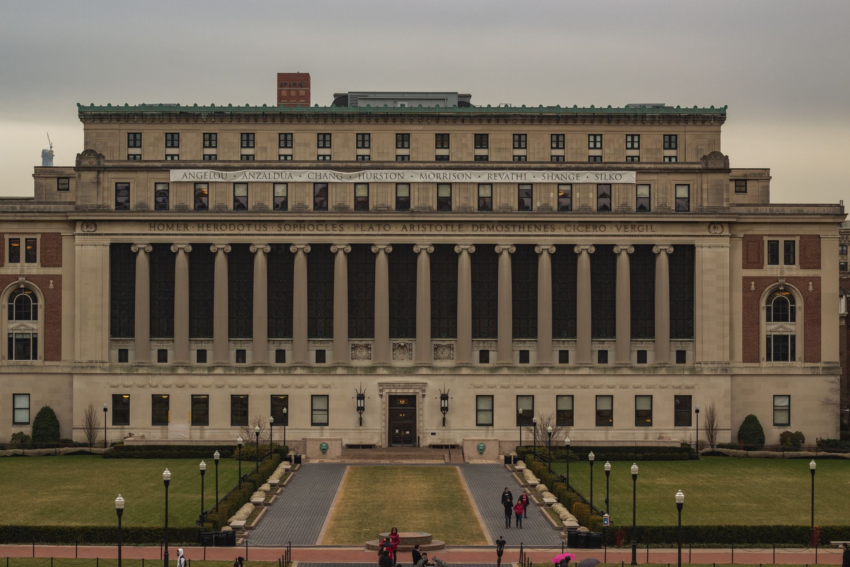
The Institute’s new analysis describes universities scrambling to answer a stream of federal directives that arrive faster than institutions can parse them. Each one carries existential stakes—accreditation status, federal financial aid, research grants, immigration enforcement. The cumulative effect is institutional exhaustion, and exhaustion is itself a negotiating posture. The Institute reads both sides of the coin: a genuine set of challenges, from exploding legal costs to chilled speech on campus, and a strategic opportunity to consolidate litigation, build a common record, and reclaim ground under the First Amendment before courts that have long protected academic freedom as a special constitutional interest.
The Cost of the Mallet for Black America
For Black students and faculty, this game has specific and outsized consequences. The targets are not random: DEI offices, Black studies programs, minority-serving institution funding streams, and the expressive rights of students of color are disproportionately in the crosshairs. Meanwhile, Title VI complaints at the Department of Justice have been repurposed to police the speech of pro-Palestinian activists—with Black students frequently at the center of those coalitions—and investigative reporting has documented how many of those complaints originate from a small network of conservative litigation shops. When every crisis response consumes leadership, Black student success initiatives become deferred line items. The whac-a-mole does not merely distract; it reorders priorities, and the priorities that fall are the ones built for access and equity. HBCUs, the least endowed and most mission-driven institutions in the country, feel it first and recover last.
The Opening Inside the Chaos
The Knight Institute’s intervention is valuable precisely because it names the countermove. Every federal overreach is a case. The government cannot condition billions of dollars in student aid on ideological conformity, and courts have repeatedly guarded academic freedom from exactly this kind of coercion. If universities coordinate on strategy—filing amicus briefs, sharing discovery, refusing to settle quietly—they can turn whac-a-mole into a deliberate test of the agenda’s legality. The NAACP Legal Defense Fund has long argued that education equity and coordinated legal resistance are inseparable, and its docket shows the playbook works. The question is whether university presidents will act like defendants or recognize that they, and the students they serve, are the targets.
Project 2025 Is the Source Code
None of this is improvisation. The Heritage Foundation’s 920-page Project 2025 blueprint calls explicitly for eliminating the Department of Education, dismantling DEI requirements, and reworking accreditation to purge “activist” institutions. What campus leaders once dismissed as a fringe wish list is now the operational memo for a set of agencies firing at the same target on a rotating schedule. The disjointed whac-a-mole of executive orders and enforcement letters is the blueprint executed by other means—and the Federal Register is the paper trail for each swing of the mallet. Recognizing the source code changes the response: this is not a run of unfortunate policy priorities; it is a coordinated project with a documented plan.
What You Can Do
The response must match the coordination. Courts matter, but so does the ballot box: the November 2026 midterms will decide which members of Congress hold the purse strings and which state attorneys general have the standing to sue. Call your representatives and tell them who pays for this whac-a-mole. Follow the full timeline on the Kemetic Minds Project 2025 tracker, and support litigation from the Knight Institute and the Legal Defense Fund. The federal mallet is fast—but the democratic lever is faster, and it still swings.
References
- Heritage Foundation. (2025). .
- Knight First Amendment Institute. (2026, August 7). Responding to federal whac-a-mole: Challenges—and opportunities—for higher education.
- NAACP Legal Defense and Educational Fund. (n.d.). Our work: Education .
- U.S. Department of Justice, Civil Rights Division. (2026). Civil rights division: Education cases.
- U.S. Government Publishing Office. (2026). .
- U.S. Congress. (2026). .
Photo: Leandro Paes Leme via Pexels

Kemetic Minds Editorial Desk
Verified NewsroomPrimary-sourced investigative intelligence on civil rights, voting rights, federal policy, and consumer protection. Sourced from primary legal filings, government statistics, and direct field reporting.