
KEMETIC MINDS
Community Safety — Traveling and Moving About Safely Right Now — July 15, 2026
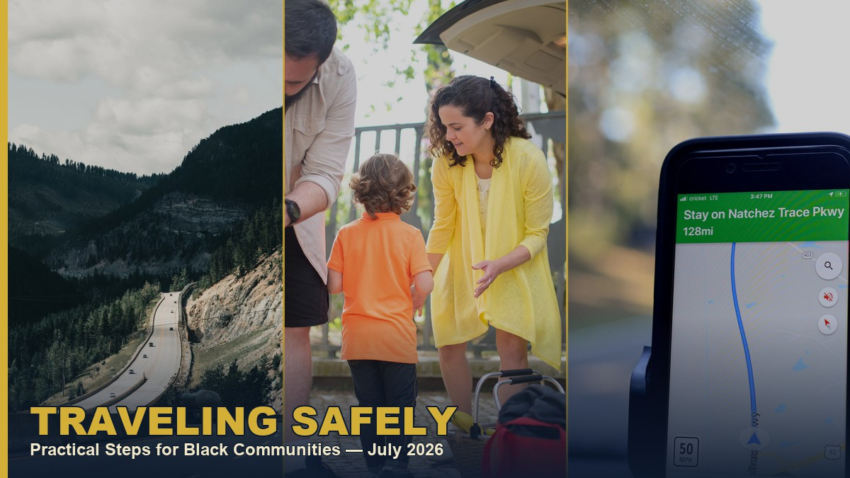
ICE checkpoint-style stops have spread well beyond the traditional border zone in 2026, and a class-action lawsuit alleges some stops are based on language or appearance rather than any lawful basis. This guide covers what your rights actually are during a stop, plus community-built tools that route road trips around historically unwelcoming areas.
1. What’s Actually Changed on the Road in 2026
This isn’t a story about a single incident — it’s a pattern showing up across multiple cities at once. Reporting compiled through 2026 documents ICE checkpoint-style operations that have moved well beyond the traditional 100-mile border zone, with agents setting up at highway off-ramps, interstate rest stops, Greyhound and bus terminals, and near immigration court buildings in interior cities such as Denver, Atlanta, Nashville, and Minneapolis (Kocher, 2026). Some of these are traditional roadblock-style stops where every vehicle is checked; others are more targeted operations at specific chokepoints.
The legal backdrop matters here too. A 6-3 Supreme Court decision in Noem v. Vasquez-Perdomo allowed immigration agents to continue using factors like apparent ethnicity, language, and location as part of the basis for a stop, and civil rights attorneys say that ruling has been followed by an increase in stops that sweep up US citizens and lawful residents who simply “look like” someone agents are looking for (NYCLU, 2026). None of this requires you to be undocumented, or even an immigrant, to be affected — it requires only being in the wrong place, in the wrong vehicle, at the wrong time.
2. The Documented Pattern of Racial Profiling
On April 8, 2026, the New York Civil Liberties Union, the Legal Aid Society, Make the Road New York, and the law firm Covington & Burling filed a class-action lawsuit against the Department of Homeland Security on behalf of eight New Yorkers, alleging ICE agents are “illegally stopping and arresting people based on the language they speak and the color of their skin” to meet enforcement quotas (NYCLU, 2026). The complaint documents a driver stopped while taking his daughter to school and a man arrested while pumping gas — ordinary movement, not any documented criminal activity, was what drew attention.
The scale is not small. Between January 20, 2025 and March 10, 2026, immigration officials made roughly 9,346 arrests in the greater New York City area alone, more than triple the rate of the prior administration’s final six months, and of roughly 800 “collateral” arrests (people picked up who weren’t the original target) between August 2025 and March 2026, about 85% had no criminal history at all (NYCLU, 2026). “Having brown skin or speaking Spanish do not constitute probable cause,” the NYCLU argues in its filing — and civil rights groups note the same logic of appearance-based suspicion extends to Black drivers and pedestrians in mixed-status and majority-Black neighborhoods, even when immigration status was never in question (NYCLU, 2026).
This sits on top of a much longer-running pattern that predates the current enforcement surge. A 2022 analysis of nearly 17,000 calls to the National Immigration Detention Hotline, conducted by the Black Alliance for Just Immigration and Freedom for Immigrants, found that Black immigrants make up only about 6% of the ICE detention population but accounted for 28% of all abuse-related hotline calls, and more than half of the calls categorized as high-intensity or life-threatening (Freedom for Immigrants, 2022). The point isn’t that this is new — it’s that a documented, pre-existing disparity is now operating inside a much larger enforcement dragnet.
3. The Traffic Stop Data Behind “Driving While Black”
Separate from immigration enforcement, ordinary traffic policing continues to show measurable racial disparities. Bureau of Justice Statistics survey data found that 9% of Black drivers who were stopped faced a subsequent search or arrest — more than double the rate for white drivers (3%) — and white drivers were substantially more likely to receive only a warning (47%) compared to Black drivers (34%) (GovFacts, 2026, citing BJS data). The Stanford Open Policing Project’s analysis of more than 200 million stop records found the racial disparity in who gets stopped shrinks significantly after dark, when officers can no longer see a driver’s race before deciding to pull them over — a strong signal that visible race, not driving behavior, is doing real work in the decision to stop someone in daylight (GovFacts, 2026).
None of this means every stop is discriminatory, and it doesn’t mean avoiding driving. It means the odds of a routine stop escalating are not evenly distributed, and it’s reasonable to prepare for that reality the same way you’d prepare for any other statistically elevated risk — with calm, specific steps rather than either denial or panic.
4. The Bigger Picture: Hate Crime Trends
Traffic stops and checkpoints are one axis of risk; bias-motivated violence is another, and the most recent federal data shows it moving in a clear direction. FBI Uniform Crime Reporting data released in August 2025 for calendar year 2024 recorded 11,679 hate crime incidents nationwide — the second-highest total since the FBI began tracking this data in 1991 — and anti-Black bias remained the single largest driver of hate crime in the country, with 3,004 anti-Black incidents accounting for more than half of all race-motivated hate crimes that year (USAFacts, 2025). Over the decade from 2015 to 2024, anti-Black hate crimes rose 81%, the largest percentage increase of any racial or ethnic category tracked (USAFacts, 2025).
That trend is the backdrop, not a prediction of what will happen on any specific trip. But it’s the reason “know your rights” guidance and route-planning tools aren’t overreactions — they’re a response to a documented, measurable pattern that’s been getting worse, not better, for a decade.
5. What You Can Do Right Now
Before you leave: Save an immigration and/or criminal defense attorney’s phone number in your phone under a name you’ll remember under stress, and share your route and expected arrival time with someone who isn’t traveling with you. The ACLU’s know-your-rights guides, available by state, cover both police and ICE encounters and can be downloaded as PDFs for offline reference when you may not have signal (ACLU, 2026).
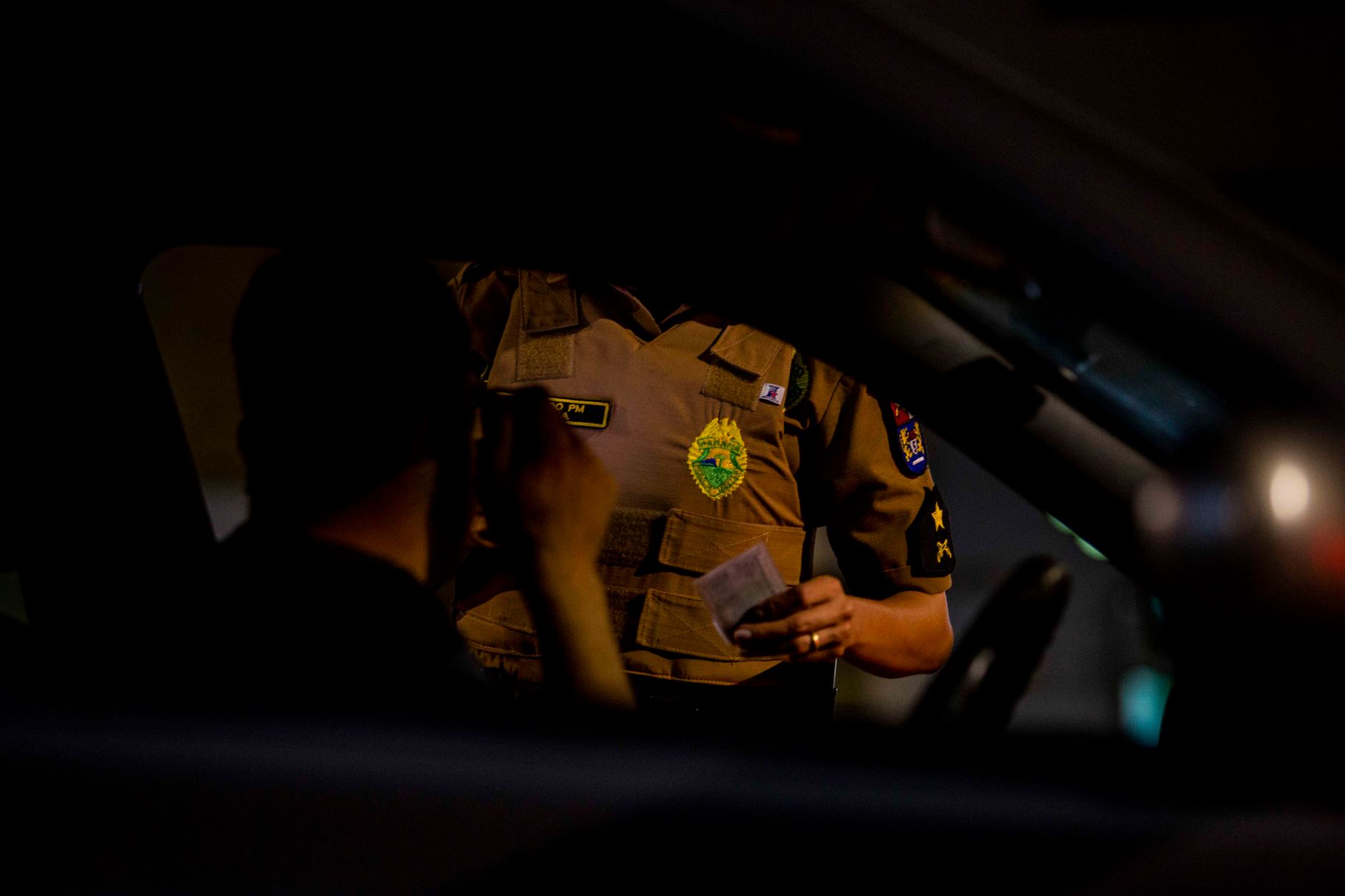
In the vehicle: Keep your license, registration, and proof of insurance somewhere easy to reach without digging — most states require you to produce these during a traffic stop, but you are not required to carry or produce immigration documents (Kocher, 2026). A dashcam, or simply your phone propped and recording, documents the stop from your perspective; apps like Legal Equalizer are built specifically to start recording and silently alert your emergency contacts with your GPS location at the tap of a button (Hypepotamus, 2018).
During a stop, from ACLU guidance: You have the right to remain silent — say so out loud rather than staying quiet without saying it. You do not have to consent to a search of your vehicle; you can say clearly, “I do not consent to a search.” If federal agents (not local police) approach you, you can ask “Am I free to leave?” and if they say yes, you may calmly walk or drive away (ACLU, 2026). None of these responses require hostility — calm and clear is more protective than either silence-without-context or confrontation.
Route planning: The Green Book Global app crowdsources a “Traveling While Black” safety score for cities across the US, color-coded green/yellow/red, and can automatically reroute a road trip around historically unwelcoming areas — it is a modern, community-sourced version of the original Negro Motorist Green Book (Black Enterprise, 2024). Pair it with the broader household and travel preparedness steps in our survival skills guide.
If you witness someone else’s stop: You have a legal right to film police and ICE activity in public from a safe distance, as long as you don’t physically interfere. Staying nearby, visibly filming, and narrating what you see (time, location, badge or vehicle numbers) is one of the most concretely useful things a bystander can do.
Kemetic Minds Analysis
None of what’s documented above is unique to 2026, and none of it means every trip ends badly — the overwhelming majority of traffic stops and travel do not escalate. What’s changed is the density of enforcement activity along ordinary travel routes and the scale of a legal environment that, after Noem v. Vasquez-Perdomo, gives agents more room to treat appearance as grounds for a stop. That’s not a reason to stop moving through the world; it’s a reason to travel the way frequent flyers travel through airport security — documents ready, questions anticipated, a plan for delay already made before it’s needed. The tools covered here (know-your-rights PDFs, route-planning apps, a saved attorney’s number, a second person who knows your route) cost nothing and take an evening to set up once. The data says that evening is worth spending.
References
- ACLU. (2026, June 8). Know your rights: Stopped by police. aclu.org
- ACLU. (2026, June 8). Know your rights: Immigrants’ rights. aclu.org
- Axios. (2025, August 5). FBI reports hate crimes hit 2nd largest record in 2024. axios.com
- Black Enterprise. (2024, November 14). Green Book Global launches road trip travel planner tool. blackenterprise.com
- Freedom for Immigrants. (2022, October 26). Uncovering the truth: New report confirms disproportionate abuse and violence against Black migrants in immigration detention. freedomforimmigrants.org
- GovFacts. (2026). “Driving while Black”: How racial bias shapes traffic stops in America. govfacts.org
- Hypepotamus. (2018, April 10). This app makes sure you know your rights and alerts emergency contacts when you get pulled over. hypepotamus.com
- Kocher, A. (2026). Know your rights resources for ICE and Border Patrol encounters (2026 update). austinkocher.substack.com
- NAACP. (2026, April 23). NAACP joins growing coalition of over 120 organizations to issue travel advisory for 2026 FIFA World Cup. naacp.org
- NYCLU. (2026, April). ICE’s racial profiling is illegal: The NYCLU is suing to stop it. nyclu.org
- USAFacts. (2025, September 5). Are hate crimes on the rise? usafacts.org
Investigative Methodology: Every claim in this report is sourced to a named outlet or organization with a direct link, and every quote or statistic was checked against the original published source before inclusion. No Wikipedia sources and no unverified social-media claims were used. Citations follow APA 7th edition format. This piece is protective guidance, not legal advice — consult a licensed attorney for your specific situation.
Stay Connected

Kemetic Minds Editorial Desk
Verified NewsroomPrimary-sourced investigative intelligence on civil rights, voting rights, federal policy, and consumer protection. Sourced from primary legal filings, government statistics, and direct field reporting.
3 thoughts on “Racial Justice · Jul 15, 2026Traveling and Moving About Safely Right Now: Practical Steps for Black Communities Amid ICE Checkpoints and Rising Hate Crime”