KEMETIC MINDS
Special Report — The Klan and the Badge — August 18, 2026
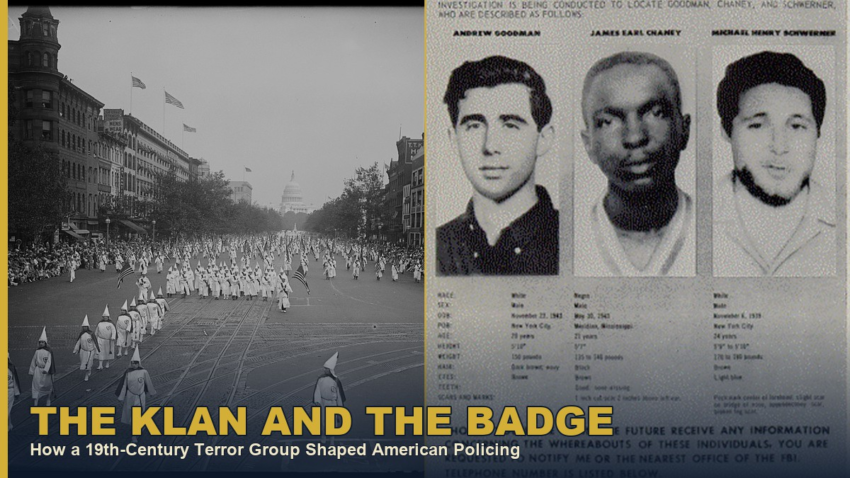
For a century after Reconstruction, membership in the Ku Klux Klan and a badge were not opposites — in thousands of documented cases across the South and Midwest, they were the same job. This report traces that relationship from Klan-elected sheriffs in the 1860s and 1870s, through the Second Klan’s takeover of entire state governments in the 1920s, to a Neshoba County, Mississippi deputy sheriff who helped murder three civil rights workers in 1964. Then it asks the harder question: what has actually changed, and what does the FBI’s own internal reporting say is still unresolved today?
1. Reconstruction: When the Sheriff Was the Klan
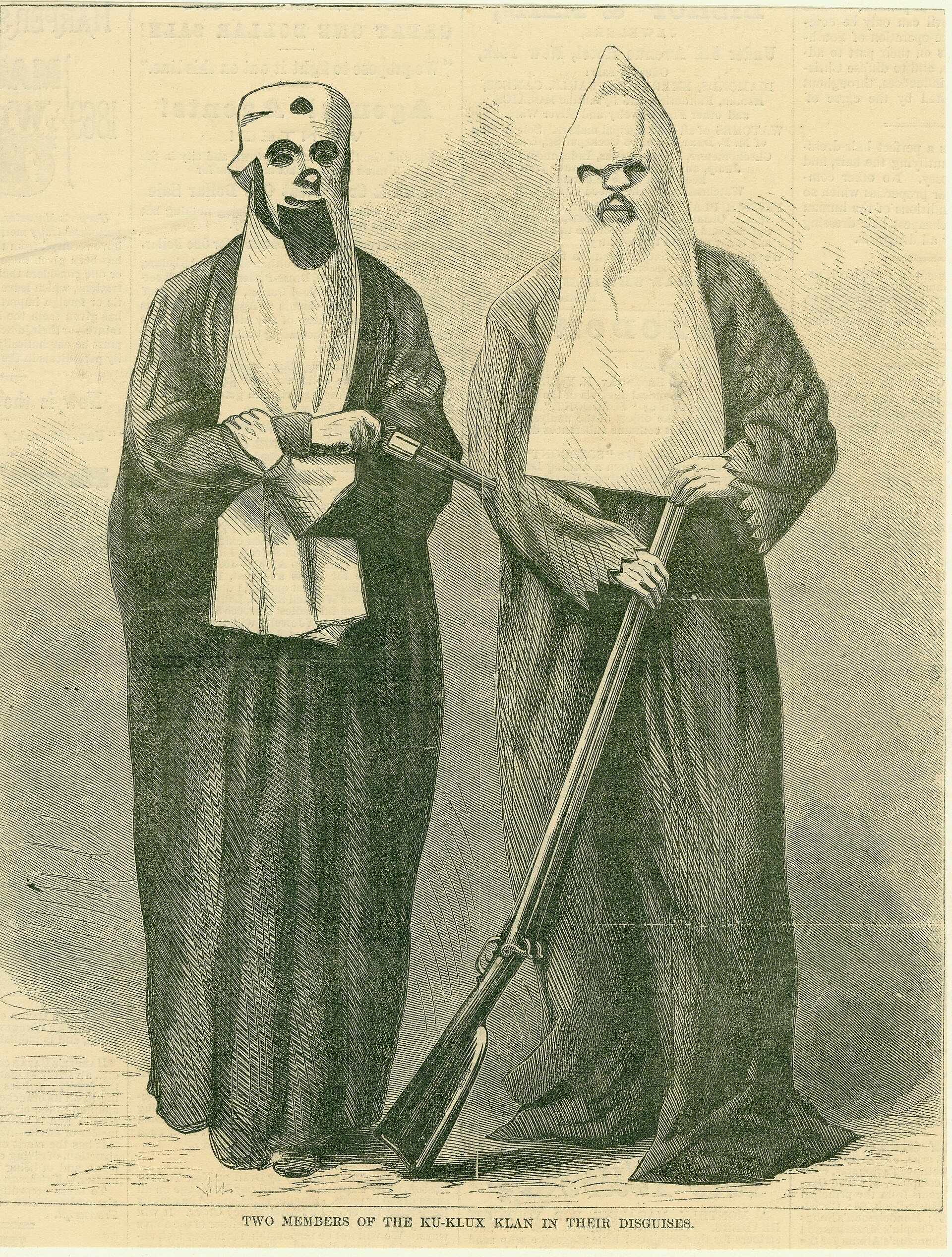
The Ku Klux Klan was founded in Pulaski, Tennessee in 1866, and by 1867 it had reorganized into a paramilitary network aimed squarely at reversing Reconstruction[1]. Its targets were specific: the roughly 700 Black men who had won elected office across the South between 1865 and 1877, the freedmen registering to vote for the first time, and any local law enforcement official — Black or white — who tried to protect them[2].
A surviving 1868 letter held by the Gilder Lehrman Institute shows exactly how directly the Klan’s terror campaign intersected with law enforcement itself: it is a written threat against Davie Jeems, a Black man who had just been elected sheriff of Lincoln County, Georgia — addressed to him by name, warning him against taking the office[3]. In Texas alone, the Klan’s Reconstruction-era membership has been estimated as high as 100,000, and the organization used its bloc voting power to help elect sheriffs, judges, and state legislators sympathetic to its aims — meaning in many counties, the people legally empowered to investigate Klan violence were the same people committing it, or owed their office to the people who did[1].
2. The 1920s “Second Klan”: Governors, Legislatures, and Police Departments
The Klan that emerged after 1915 was not a fringe rural remnant — it was, for a few years, closer to a mainstream political machine. National membership estimates for the mid-1920s Klan range from 2.5 to 4 million people, and by 1924 the organization’s perceived political power was such that neither major national political party would formally denounce it[2].
Indiana is the starkest documented case. Klan membership there peaked at roughly 250,000 — close to a third of the state’s native-born white male population — and Klan-backed candidates did not just win isolated seats. They captured a Marion County congressional seat in 1924, then the Indianapolis mayor’s office, city council, and school board in 1925, and ultimately the governor’s office and majority control of both chambers of the Indiana General Assembly[4]. Governments in Alabama, Colorado, Georgia, Louisiana, Oklahoma, Oregon, and Texas were, to varying degrees, staffed and influenced by Klan members during the same period, and in Colorado, Klan financial and organizational backing directly propelled Benjamin Morley to the governorship in 1924[2]. Local police chiefs, patrolmen, and sheriffs were part of that same wave of Klan-endorsed hiring and election across the affected states — not because every officer joined out of personal conviction, but because Klan endorsement functioned as a job qualification in the jurisdictions it controlled.
3. Mississippi Burning: A Deputy Sheriff’s Role in the 1964 Murders
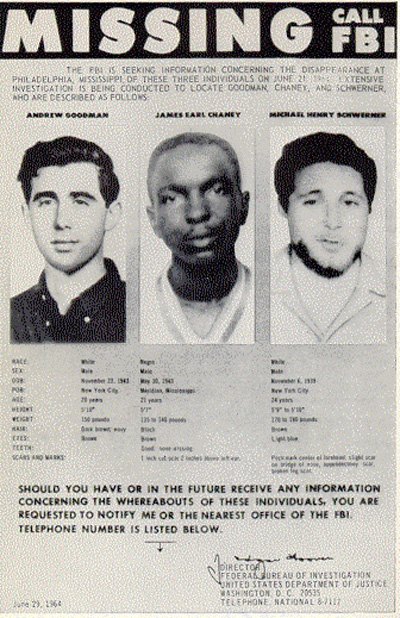
On June 21, 1964, Neshoba County, Mississippi Deputy Sheriff Cecil Price — also a member of the White Knights of the Ku Klux Klan — arrested civil rights workers James Chaney, Andrew Goodman, and Michael Schwerner on a pretextual speeding charge[5]. After holding them for hours, Price released them, then tipped off fellow Klansmen to their route and helped intercept their car. All three men were murdered that night; their bodies were found buried in an earthen dam 44 days later[6].
The Justice Department charged 21 men with conspiring to violate the victims’ civil rights. In October 1967, an all-white federal jury convicted seven of the defendants — including Deputy Sheriff Price — though none was convicted of murder itself, only conspiracy[5]. It took until 2005 for a state murder conviction in the case at all, against Klan organizer Edgar Ray Killen, and the Justice Department did not formally close its file on the killings until 2016 — 52 years after the murders[7]. This was not a rogue officer acting alone against his department’s wishes; it was a sworn deputy using the authority of his badge — the traffic stop, the jail cell, the release timed to a Klan ambush — as the actual mechanism of the killing.
4. The FBI’s Own Warning: 2006, Buried Until 2020
What makes the Klan-and-badge relationship different from a closed historical chapter is that the FBI itself has continued documenting versions of it into the 21st century — and largely kept that documentation from the public. On October 17, 2006, the FBI’s Counterterrorism Division circulated an internal intelligence assessment titled White Supremacist Infiltration of Law Enforcement, warning that white supremacists were deliberately seeking jobs in policing to gain “access to restricted areas vulnerable to sabotage” and to tip off extremist groups when they came under investigation[8].
A heavily redacted version leaked to The Intercept in 2017; the full, unredacted document was not made public until September 2020, when Rep. Jamie Raskin, then chair of the House Oversight Subcommittee on Civil Rights and Civil Liberties, formally released it[9]. The FBI’s own “key judgment” in the memo states plainly that “white supremacist infiltration of law enforcement can result in other abuses of authority and passive tolerance of racism within communities served,” and that most documented cases were not outside infiltration at all — they were self-radicalization by people already wearing a badge[9].
5. 2019: The Plain View Project Finds Thousands of Posts, Not Isolated Cases
In 2019, the Plain View Project — founded by Philadelphia attorney Emily Baker-White and reported jointly by Injustice Watch and BuzzFeed News — catalogued roughly 5,000 racist, violent, or otherwise bigoted social media posts and comments made by more than 3,500 current and former officers across eight U.S. police departments[10]. In Philadelphia alone, the project identified about 3,100 offensive posts from 328 active-duty officers — and separately found that 139 of those 328 officers already had one or more federal civil rights lawsuits filed against them, suggesting the online rhetoric tracked with on-the-job conduct rather than existing apart from it[11].
The Philadelphia Police Department fired 13 officers over the findings and suspended four more; some of those firings were later overturned in arbitration[11]. Individual cases surfaced the same pattern nationwide across the following years: a Muskegon, Michigan officer fired in 2019 after a framed KKK membership application was found displayed in his home during a house tour[12]; a North Carolina officer fired after photos placed him at a Klan rally[13]; and, in Fruitland Park, Florida, a police chief and his deputy chief both fired in 2014 for active Klan membership uncovered during an unrelated FBI investigation[14].
6. What Has Actually Changed — and What the FBI Says Hasn’t
Kemetic Minds Analysis
The most obvious change is structural: what was once open, electorally rewarded Klan membership among sheriffs and governors is now, everywhere, a firing offense the moment it surfaces. No police department in America today would defend an officer found to be a card-carrying Klansman the way Neshoba County effectively did in 1964. That is real progress, and it happened because journalists, civil rights lawyers, and eventually federal prosecutors made it costly to look the other way.
But the throughline across all six eras above is not formal Klan membership — it is what the Brennan Center for Justice’s 2021 investigation Hidden in Plain Sight found still missing: despite the FBI’s own 2006 warning, “the Justice Department has no national strategy designed to identify white supremacist police officers or to protect the safety and civil rights of the communities they patrol,” and few departments have written policies specifically barring affiliation with white supremacist groups[15]. The infiltration the FBI warned about in 2006 is still, per the Brennan Center’s 2021 findings, largely unscreened for at the hiring stage.
What has flipped is the anonymity advantage. The 1920s Klan drew power from open, celebrated public membership — robes worn in daylight marches. The modern version studied by the Plain View Project instead relies on the assumption that a private Facebook post stays private. Technology built the Klan’s public spectacle in the 1920s, and, a century later, technology is what unravels its quiet successor: searchable social media archives, the National Decertification Index tracking officers fired for misconduct across state lines, and public-records requests are doing the identification work that used to fall to overwhelmed, sometimes complicit, local oversight[16]. The tools have modernized. According to the FBI’s most recent public assessment, whether departments are required to use them before handing someone a badge has not been addressed.
This report sits alongside our ongoing coverage of underreported hate crimes against Black America, the pressure campaign against civil rights enforcement institutions, and voting rights under renewed legal threat — three fronts where the same century-old pattern of formal power being used informally against Black Americans keeps resurfacing in new form.
📣 From the Kemetic Minds Newsroom:
A deputy sheriff’s badge was the weapon in Neshoba County in 1964. A framed application on a living room wall ended a career in 2019. The uniform changed less than the consequences did. Know your history. Know your rights. Stay informed.
References
- Texas State Historical Association. (n.d.). Ku Klux Klan. Handbook of Texas. tshaonline.org ↩a ↩b
- Bill of Rights Institute. (n.d.). The Ku Klux Klan in the 1920s. billofrightsinstitute.org ↩a ↩b ↩c
- Gilder Lehrman Institute of American History. (n.d.). A Ku Klux Klan threat, 1868 [Primary source: letter to Sheriff-elect Davie Jeems, Lincoln County, Georgia]. gilderlehrman.org ↩
- WRTV Indianapolis. (n.d.). The history of hate in Indiana: How the Ku Klux Klan ran the state — could it happen again? wrtv.com ↩
- Federal Bureau of Investigation. (n.d.). Mississippi Burning. FBI History — Famous Cases & Criminals. fbi.gov ↩a ↩b
- PBS American Experience. (n.d.). Murder in Mississippi. pbs.org ↩
- Blakemore, E. (2016). After 52 years, the “Mississippi Burning” case closes. Smithsonian Magazine. smithsonianmag.com ↩
- Federal Bureau of Investigation, Counterterrorism Division. (2006, October 17). White Supremacist Infiltration of Law Enforcement [Intelligence Assessment]. National Security Archive. nsarchive.gwu.edu ↩
- Winston, A., & Speri, A. (2020, September 29). Unredacted FBI document sheds new light on white supremacist infiltration of law enforcement. The Intercept. theintercept.com ↩a ↩b
- Injustice Watch. (2019). In Plain View: Cops’ troubling Facebook posts revealed. interactives.injusticewatch.org ↩
- Nashrulla, T. (2019, June). 13 Philadelphia police officers will be fired for racist and violent Facebook posts. BuzzFeed News. buzzfeednews.com ↩a ↩b
- CNN. (2019, September 13). A police officer was fired after KKK memorabilia was found in his Michigan home. cnn.com ↩
- FOX8 WGHP. (n.d.). Police officer fired after photo of him at KKK rally in North Carolina surfaces. myfox8.com ↩
- ABC News. (2014). Florida cop fired for KKK ties was undercover, ex-wife claims [Fruitland Park police chief and deputy chief case]. abcnews.go.com ↩
- Brennan Center for Justice. (2021). Hidden in plain sight: Racism, white supremacy, and far-right militancy in law enforcement. brennancenter.org ↩
- Police Chief Magazine. (n.d.). NDI: Tracking interstate movement of decertified police officers. International Association of Directors of Law Enforcement Standards and Training. policechiefmagazine.org ↩
Investigative Methodology: Every claim in this report is sourced to a named federal record (FBI, National Security Archive, congressional oversight release), established historical archive (Gilder Lehrman Institute, Texas State Historical Association), or investigative journalism outlet (The Intercept, PBS American Experience, Smithsonian Magazine, BuzzFeed News, Injustice Watch, Brennan Center for Justice) with a direct link. No Wikipedia sources were used.
📱 Stay Connected

Kemetic Minds Editorial Desk
Verified NewsroomPrimary-sourced investigative intelligence on civil rights, voting rights, federal policy, and consumer protection. Sourced from primary legal filings, government statistics, and direct field reporting.