KEMETIC MINDS
Investigative Intelligence Report — May 20, 2026
This briefing covers a new $1.7 billion Justice Department fund for Jan. 6 defendants that civil rights leaders call an insult to reparations advocates, a House hearing targeting the Southern Poverty Law Center, a lawsuit against a Black-physician directory, an NAACP rally over the Callais redistricting ruling, and a courthouse shoot-out tied to online extremism. Here’s what happened in each.
Trump’s $1.7B Jan. 6 Fund Blasted as Insult to Black Americans and Reparations
The Justice Department has established a roughly $1.7 billion “anti-weaponization” fund expected to compensate pro-Trump protesters charged in connection with the Jan. 6, 2021 attack on the U.S. Capitol — a move critics say effectively rewards individuals, including self-described white supremacists, who tried to overturn a democratic election. Civil rights leaders argue that creating such a fund during an affordability crisis, while refusing to advance federal reparations legislation, sends an unmistakable message about whose suffering the federal government chooses to acknowledge (TheGrio, 2026).
Dr. Bernice King, CEO of the King Center and daughter of Dr. Martin Luther King Jr., called the fund proof that America has the capacity to repair harm but “has yet to choose justice” when it comes to descendants of enslaved people. Reparations scholar Dr. Marcus Anthony Hunter told TheGrio that Black Americans have spent generations documenting state-backed harms while being told to “wait, prove, study, and justify” their pain, yet Jan. 6 allies saw nearly $1.8 billion appear almost instantly (TheGrio, 2026).
Rep. Ayanna Pressley (D-Mass.), lead sponsor of H.R. 40 to create a federal reparations commission, called the fund “a slap in the face to Black people who’ve been fighting for reparations after centuries of enslavement [and] segregation.” Rep. Summer Lee (D-Pa.) described it as a government that “doesn’t value Black life the way it values white rage,” noting that Congress has still not passed even a study bill on reparations while rapidly mobilizing money for Jan. 6 defendants (TheGrio, 2026).
Dreisen Heath, a reparations policy expert, noted the fund leverages an uncapped Treasury judgment fund that previously paid Black and Native farmers who had proven racial discrimination — only after long delays. She argues that using this mechanism for Trump allies, on the basis of a politically appointed commission with opaque eligibility criteria, “weaponizes” the concept of reparations and reveals how quickly money could flow if a future administration chose to fund real repair for Black communities (TheGrio, 2026).
House Hearing Targets SPLC as Civil Rights Groups Warn of Weaponized Prosecutions
On May 20, Maya Wiley, president and CEO of The Leadership Conference on Civil and Human Rights, testified before the House Judiciary Committee at a hearing focused on the Southern Poverty Law Center (SPLC), framing it as part of a coordinated attack on civil rights nonprofits. Wiley told lawmakers that the Trump administration has “wiped out much of our federal government’s civil rights enforcement offices and staff” and is now criminally targeting SPLC because it effectively challenges efforts to roll back civil rights, voting rights, and protections for marginalized communities, including Black Americans (The Leadership Conference, 2026).
Wiley recounted SPLC’s history of bankrupting violent white supremacist organizations such as the United Klans of America, litigating voting-rights cases that increased fair representation for Black voters in Alabama, and tracking extremist groups whose ideologies fueled mass atrocities from Charlottesville to the Emanuel AME Church massacre. She emphasized that SPLC’s confidential informant program has provided intelligence that helped stop planned attacks, including a foiled synagogue bombing in Las Vegas, directly contradicting claims that SPLC “manufactures hate” (The Leadership Conference, 2026).
Wiley’s statement also connected the hearing to a broader pattern of repression: she cited the administration’s moves to brand advocates as “domestic terrorists,” cut billions in grants to nonprofits that track hate and bias, and allow extrajudicial killings by federal agents to go unpunished — policies that disproportionately endanger Black communities. Wiley highlighted that SPLC recently sued on behalf of residents of Eatonville, Florida, after the county tried to quietly sell off land central to that historic Black community, and has litigated against groups like the Goyim Defense League for targeting both Jewish and Black residents in Nashville, including four Black children (The Leadership Conference, 2026).
This attack on the SPLC is part of the same coordinated dismantling of civil rights infrastructure we documented in our earlier report on the multi-front assaults on Black voting and safety. As federal enforcement retreats, the organizations that have historically filled that gap are being targeted directly.
Lawsuit Challenges “Find A Black Doctor” Directory as Alleged Racial Discrimination
On May 19, the group Do No Harm filed a federal lawsuit in the Southern District of New York targeting “Find A Black Doctor,” an online directory listing only Black physicians and dentists in active clinical practice. The suit alleges the directory violates the Civil Rights Act of 1866 by discriminating against non-Black physicians in contracting and by barring them from valuable advertising access and potential new patients solely because of race (Do No Harm, 2026).
Do No Harm’s chief medical officer, Dr. Kurt Miceli, argued that restricting listings to Black doctors promotes “racial segregation” and rests on what he calls the “pernicious and debunked myth” of racial concordance — the idea that patients have better outcomes with same-race providers. The complaint names dermatologist Dina D. Strachan as the directory’s founder and ongoing operator, asserting that, because the directory sells listings, it constitutes a contract subject to federal anti-discrimination law (Do No Harm, 2026).
The suit highlights Travis Morrell, a white Do No Harm member and double board-certified dermatologist who applied to be listed but was rejected because he is not Black. For Black communities, the case strikes directly at an infrastructure many patients use to find Black clinicians amid pervasive racial bias in health care. It illustrates a growing legal backlash that frames Black-centered spaces as discriminatory — even when those spaces arise in direct response to unequal care and generations of medical mistrust (Do No Harm, 2026).
Black Voting Power Under Siege and Mobilization in the South
Civil-rights advocates continue to respond to the Supreme Court’s decision in Louisiana v. Callais, which sharply weakened Section 2 of the Voting Rights Act by making it far harder to challenge maps that dilute Black voting strength. Analyses from Racism.org and the Los Angeles Times describe the ruling as effectively allowing states to draw districts without considering racial demographics, opening the door to maps that reduce Black political representation across the South (Racism.org, 2026; Los Angeles Times, 2026).
The downstream effects of Callais — including the dismantling of majority-Black congressional districts in Tennessee and Alabama — were covered in detail in our Supreme Court voting rights analysis and our report on gerrymandering and policy rollbacks reshaping Black America. What is new this week is the organized fightback on the ground.
In response, the NAACP has centered its 2026 work around “Defending Black Voter Power,” warning that redistricting is being weaponized to “silence our vote and reverse decades of hard-won progress” and calling the current crisis a failure of the justice system. The organization is urging Black communities to commit to vote and treating electoral participation as both a defensive and offensive strategy amid an eroded system of checks and balances (NAACP, 2026).
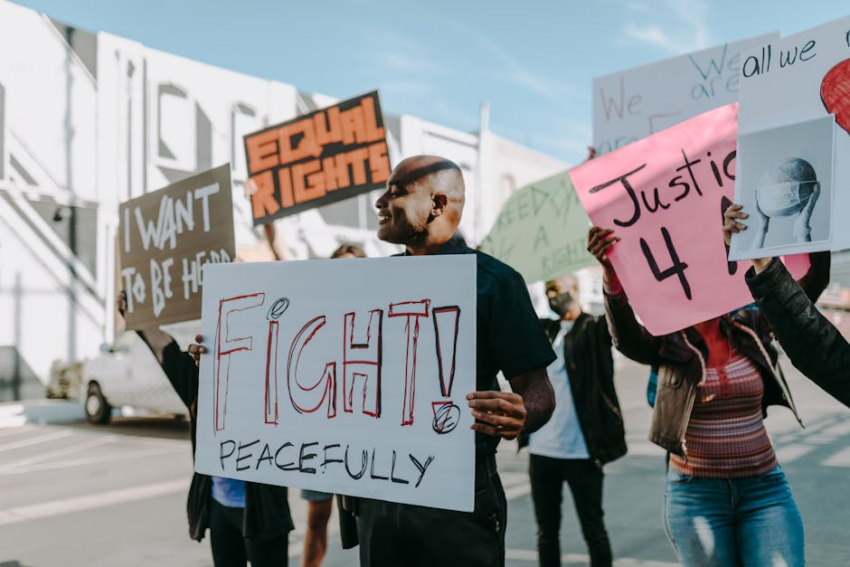
On May 20, the NAACP promoted a “Mississippi Fights Back” rally at the Jackson Convention Center under the banner “Defending Black Voter Power,” signaling a localized pushback in a state with one of the longest histories of Black disenfranchisement in the nation. Alongside groups like Black Voters Matter, NAACP president Derrick Johnson framed current attacks on Black political influence — including court decisions and Project 2025-aligned policies — as “blatant, racist, anti-Black” assaults on multiracial democracy rather than isolated legal disputes (NAACP, 2026). The Montgomery march earlier this spring showed this same energy is building across the South.
Racist Livestreamer Charged After Courthouse Shooting in Tennessee
CNN reports that Dalton Eatherly, a livestreamer known online as “Chud the Builder” for content featuring racial slurs against Black people and other minorities, now faces attempted murder and multiple other charges after a shoot-out outside the Montgomery County Courthouse in Clarksville, Tennessee. According to the Montgomery County District Attorney General’s Office, Eatherly confronted an unidentified man on the courthouse steps; both were shot and transported to local hospitals, where they were listed in stable condition (CNN, 2026).
In addition to attempted murder, Eatherly has been charged with using a firearm during a felony, assault, and reckless endangerment with a deadly weapon. The sheriff’s office reports that he is being held without bond pending an arraignment and bond hearing. While the victim’s race has not been publicly identified, the case highlights the blurred line between racist online extremism and real-world violence that disproportionately targets Black communities — a pattern our racial justice and voting rights analysis has documented repeatedly this year (CNN, 2026).
Project 2025: Ongoing Threat Landscape for Black Communities
Although there were no major new formal Project 2025 policy rollouts in the past 48 hours, Black civil-rights organizations continued to spotlight the plan as the ideological backbone for several of these developments — including attacks on the SPLC and voting-rights enforcement. The NAACP warns that Project 2025’s regressive agenda, now being partially implemented by the Trump administration, would dismantle diversity, equity, and inclusion programs, roll back protections in education and housing, and deepen racial inequities in policing and incarceration (NAACP, 2026).
The Legal Defense Fund’s Thurgood Marshall Institute details how Project 2025 would weaken anti-discrimination laws and worker protections, dismantle the Department of Education, and undermine the Census and election systems in ways that would undercount Black communities and suppress Black political power. The report also highlights threats to reproductive justice, environmental justice, and affordable housing that would hit Black families hardest — from shutting down the Office of Environmental Justice to shifting key housing programs to states with histories of racial discrimination (NAACP LDF Thurgood Marshall Institute, 2026).
The ACLU and other national groups describe Project 2025 as a blueprint for using the federal government to openly discriminate against marginalized communities and to concentrate power in the presidency, enabling an administration to unravel decades of civil-rights gains. Trump has already implemented a significant share of Project 2025’s domestic agenda, including ending federal DEI programs, expanding aggressive immigration enforcement, and moving to dismantle the Department of Education — demonstrating that the plan is not hypothetical but already reshaping institutions central to Black advancement (ACLU, 2026; VPM/NPR, 2026; White House, 2025).
🧠 Kemetic Minds Analysis
The events of May 19–20, 2026 reveal a consistent pattern: every institution Black Americans built — or that was built to serve them — is now a target. The SPLC, which spent decades bankrupting Klan organizations, is under federal scrutiny. “Find A Black Doctor,” a patient-driven directory born of medical racism, is being sued as a civil rights violation. The reparations movement, which documents generations of state-sanctioned harm, watches as $1.7 billion flows instantly to Jan. 6 defendants.
This is not coincidence. It is a strategic inversion: the language of civil rights — anti-discrimination, equal access, colorblindness — is being weaponized to dismantle the very structures that protected Black communities from discrimination. When Do No Harm sues a Black doctor directory, it uses the Civil Rights Act. When the DOJ funds Jan. 6 defendants, it uses the same Treasury mechanism that once (slowly) paid Black farmers who proved racial discrimination. The tools of redress are being turned into instruments of reversal.
The Mississippi Fights Back rally represents a necessary pivot: when courts and federal agencies cannot be trusted, the organizing moves to the streets, the precincts, and the school boards. The “Chud the Builder” arrest is a reminder that this fight is not abstract — online extremism has a direct line to physical violence, and the communities most targeted are the least protected by an increasingly hostile federal enforcement apparatus.
What this moment demands is clarity about what is actually happening. These are not isolated policy disagreements or legal technicalities. They are the coordinated execution of a long-planned effort to reverse Black political, economic, and institutional power. Register to vote. Attend local meetings. Support Black-owned health care, media, and mutual aid. The ground-level infrastructure is where this fight will be decided.
📣 From the Kemetic Minds Newsroom:
A $1.7 billion fund for Jan. 6 defendants. A hearing designed to silence the SPLC. A lawsuit against a Black doctor directory. A voting-rights rally in Jackson. An extremist livestreamer charged with attempted murder. These stories belong together — they are five faces of the same assault. Stay informed. Stay organized. Support independent Black media.
References
- TheGrio (2026). Trump’s $1.7B fund an insult to Black people and reparations fight? thegrio.com.
- The Leadership Conference on Civil and Human Rights (2026). Statement of Maya Wiley, President and CEO, at the House Judiciary Committee SPLC Hearing. civilrights.org.
- Racism.org (2026). Racial Justice Update — May 11–17, 2026. racism.org.
- Do No Harm (2026). Do No Harm Sues Racially Discriminatory Doctors’ Directory. donoharmmedicine.org.
- NAACP (2026). Addressing the Disastrous Impacts of Project 2025 on the Black Community. naacp.org.
- Los Angeles Times (2026). After Voting Rights Act setback, Black Americans brace for new fight. latimes.com.
- NAACP (2026). NAACP: Leading the Fight to End Racial Inequality. naacp.org.
- CNN (2026). Livestreamer known for posting racist content faces attempted murder charges after courthouse shooting. cnn.com.
- VPM / NPR (2026). Trump has rolled out many of the Project 2025 policies he once claimed ignorance about. vpm.org.
- NAACP LDF Thurgood Marshall Institute (2026). What Project 2025 Means for Black Communities. naacpldf.org.
- The Leadership Conference on Civil and Human Rights (2026). Project 2025: What’s At Stake for Civil Rights. civilrights.org.
- ACLU (2026). Project 2025 Offers Dystopian View of America. aclu.org.
- White House (2025). Ending Radical and Wasteful Government DEI Programs and Preferencing. whitehouse.gov.
Investigative Methodology: This intelligence report is compiled using real-time search technology and multi-source verification. Our AI analysts synthesize data from national news, local reports, and primary legal documents to provide systemic context for the Black community.
📱 Stay Connected
Related Interactive Tracker
Project 2025 Tracker: Policy Timeline & Agency Impact
Track executive orders, agency appointments, and conservative policy roadmaps.

Kemetic Minds Editorial Desk
Verified NewsroomPrimary-sourced investigative intelligence on civil rights, voting rights, federal policy, and consumer protection. Sourced from primary legal filings, government statistics, and direct field reporting.