
KEMETIC MINDS
Investigative Report — Racial Justice, Civil Rights & Historical Accountability
Gwendolyn White, 57, is charged with attempted murder after shooting two attorneys outside the Wake County Courthouse — the culmination of a five-year dispute that began with a lawsuit over police footage tied to her mother’s death. Both attorneys are expected to survive. We put the case in the context of Wake County’s own history, where 84% of pre-1972 executions fell on Black defendants.


Illustrative images via Pexels — free to use
The Shooting: May 22, 2026 — Wake County Courthouse, Raleigh
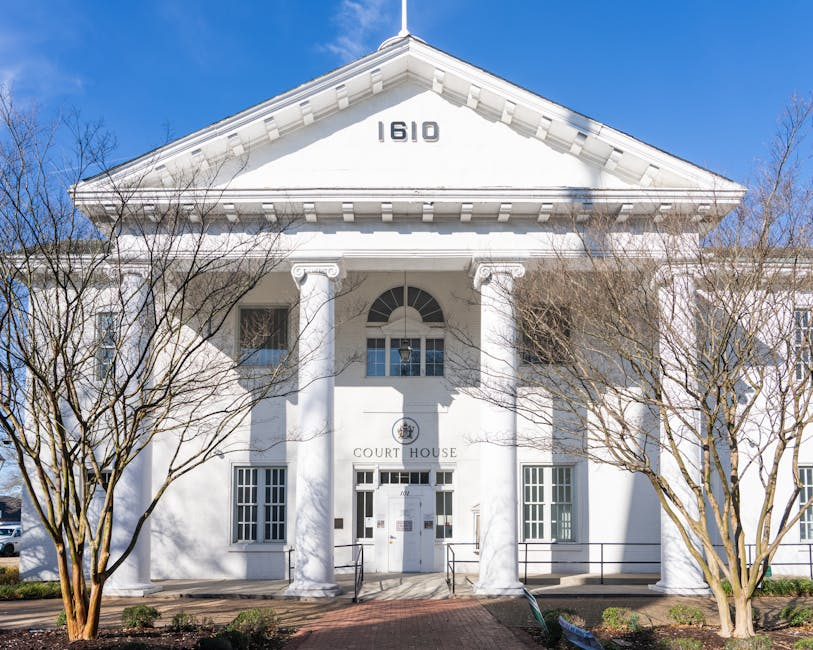
On the morning of Friday, May 22, 2026, Gwendolyn White, 57, of Raleigh, North Carolina, attended a civil hearing at the old Wake County Courthouse on Fayetteville Street in downtown Raleigh. The hearing was scheduled to determine whether her civil case against the Rolesville Police Department — dismissed by a judge in January 2026 — should be reinstated. According to Raleigh Police Chief Rico Boyce, White became belligerent in court before leaving the building (WRAL, 2026a).
What happened next was swift and violent. White returned to her vehicle, retrieved a handgun, and opened fire on attorneys Mary K. Harris and Jeffrey R. Whitley — partners at the law firm Fox Rothschild who were representing the Town of Rolesville — as they exited the courthouse through an adjacent alley. Officers and Wake County deputies apprehended White at the scene (ABC11, 2026a). Both attorneys are expected to survive; Harris underwent surgery and was reported in stable condition. White was transported to a hospital following her arrest, though authorities have not disclosed the medical reason for the transport (WRAL, 2026a).
White appeared before a judge on Tuesday, May 26, 2026 on two counts of attempted first-degree murder. She was appointed a public defender and ordered held without bond. If convicted on both counts, she faces a maximum of 393 months — approximately 65 years — in prison (WRAL, 2026b).
Five Years Seeking Accountability: The Rolesville Dispute
To understand what brought Gwendolyn White to that courthouse on May 22, the timeline must begin in March 2021. Rolesville police responded to a verbal altercation between White and two neighbors at her home. Officers determined no crime had occurred. The neighbors subsequently sought a civil no-contact order (ABC11, 2026b).
In February 2022, White formally requested body camera footage from that incident. The recordings were located in April 2022 — but she did not receive them until January 2026, nearly four years after her initial request. The delay spanned the filing of her civil lawsuit against the Rolesville Police Department in 2022, multiple court proceedings, and a dismissal ruling in January 2026 that found the department must provide the video but was not in contempt (ABC11, 2026b; WRAL, 2026c).
Two days after the January 2026 dismissal, White received the footage. The following day, she filed a motion seeking to reinstate her case. May 22’s hearing was convened to rule on that motion. It was her last formal legal avenue (ABC11, 2026b). Court records and White’s documented social media activity reveal that she believed the body camera footage was connected to the death of her mother, who died in 2025 and about whom White had written extensively regarding allegations of elder abuse (WRAL, 2026c).
Nothing in that account justifies shooting two people. Mary Harris and Jeffrey Whitley were doing their jobs, and the law is clear on what White is alleged to have done. But the record is equally clear: Gwendolyn White spent five years attempting to use the legal system — properly, through courts and filings — to hold a police department accountable for footage it held for nearly half a decade. The system that was supposed to provide remedy became, by its own pace and procedure, the mechanism of her defeat.
Give Credit Where It Is Due
Credit belongs where it is documented: White initiated a civil case, filed motions, appeared at hearings, and pursued every lawful avenue available to her before the events of May 22. The attorneys she shot were representatives of an institution that withheld evidence she sought for four years. Whatever the legal outcome of her case, the documented obstructions she encountered are real, on record, and unremarked in most of the coverage this story has received.
The tendency to frame this story only as “woman shoots attorneys” — without the five years preceding it — mirrors a broader pattern in how Black people’s grievances against law enforcement are covered: the response to injustice is headlined; the injustice itself is footnoted.
The Historical Record: Wake County and the Architecture of Denial
What Gwendolyn White experienced — a Black person fighting a government institution through courts, being stonewalled, and finding no remedy — does not exist in a vacuum. Wake County, North Carolina carries a documented history of racial injustice in its legal system that spans more than 150 years.
The Execution Record. Between 1865 and 1972, Wake County carried out 25 documented executions. Twenty-one of those executed were Black men; four were white. That is 84% of executions falling on Black defendants in a county that was never majority-Black. Nearly half of those executions — 48% — punished a Black man for a crime against an alleged white victim, while an additional 36% saw a Black man executed for a crime against an alleged Black victim (Racist Roots, n.d.).
Racial Terror Lynching. The Equal Justice Initiative’s Lynching in America project documents at least one confirmed racial terror lynching in Wake County between 1877 and 1950 — part of a statewide total exceeding 120 documented racial terror lynchings in North Carolina across that era (Equal Justice Initiative, 2024; Equal Justice Initiative, n.d.). NCpedia, the state’s official historical encyclopedia, documents the broader pattern of lynching in North Carolina during the same period, including incidents driven by false accusations and mob terror with no legal accountability for perpetrators (NCpedia, n.d.).
The Jury System. Research on capital cases in Wake County found that prosecutors dismissed Black potential jurors at 2.5 times the rate of white jurors. Internal prosecutorial training materials instructed prosecutors on how to construct race-neutral pretexts for strikes that were, in documented practice, racial. Case notes referred to Black jurors and defendants using dehumanizing language. For generations, these practices went unchallenged in North Carolina’s appellate courts — not because they were unknown, but because no mechanism existed to address them (Center for Death Penalty Litigation, 2022).
It was not until 2022 that the North Carolina Supreme Court, for the first time in state history, reversed a criminal conviction on the grounds that a Wake County prosecutor had illegally excluded a qualified Black citizen from jury service. North Carolina was the last state in the South — and among the last in the nation — whose appellate courts had never enforced the law on behalf of a Black citizen denied the right to serve on a jury (Center for Death Penalty Litigation, 2022).
North Carolina’s Death Row: Wrongfully Convicted
The most concrete evidence of systematic racial injustice in North Carolina’s courts is written in the names of men who were sentenced to die for crimes they did not commit.
Darryl Hunt spent 19 years in prison for the 1984 rape and murder of Deborah Sykes, a newspaper copy editor, in Winston-Salem. He was convicted twice — both times by nearly all-white juries. DNA testing in 1994 definitively excluded him as the perpetrator. A Forsyth County judge nonetheless ruled the DNA would not have been sufficient to reverse the verdict. It was not until 2004, when the same DNA was matched to a man already incarcerated for a separate murder, that Hunt was exonerated. Governor Mike Easley granted him a pardon of innocence on April 15, 2004. Hunt received $750,000 in state compensation and a $1.65 million federal civil rights settlement for 19 years of wrongful imprisonment. He went on to found the Darryl Hunt Project for Freedom and Justice before his death in 2016 (Hickory Record, 2017; WUNC, 2017).
Jonathan Hoffman spent 12 years on North Carolina’s death row after prosecutors paid his own cousin to testify against him — a material fact withheld from both the defense and the presiding judge. When the undisclosed payment was discovered, charges against Hoffman were dismissed in 2007 and the prosecutors who engineered the arrangement faced criminal investigation (ACLU, 2008; Death Penalty Information Center, n.d.).
Glen Edward Chapman was granted a new trial in 2007 after courts found evidence had been withheld, documents had been “lost, misplaced or destroyed,” the lead investigator had provided false testimony, and defense counsel had been constitutionally inadequate. A forensic pathologist also raised new doubts about whether the death in question was a homicide or the result of a drug overdose. Chapman was released in 2008 when all charges were dropped (Death Penalty Information Center, n.d.).
Levon “Bo” Jones, a Black man from Duplin County, was wrongfully convicted in 1993 and sentenced to death for a murder he did not commit. He served 14 years before exoneration in 2008 (Facing South, 2008).
Together, Hunt, Hoffman, Chapman, and Jones lobbied the North Carolina General Assembly directly. Their advocacy resulted in the passage of the North Carolina Racial Justice Act in 2009 — the first law of its kind in the United States, allowing death row inmates to seek sentence reductions by demonstrating with statistical evidence that race played a significant role in their prosecution (NC Coalition for Alternatives to the Death Penalty, n.d.; Center for Death Penalty Litigation, n.d.). The Act was repealed by the Republican-led legislature in 2013 and has been in active litigation since.
The Bacote Case: One Hundred Percent
Perhaps the starkest single data point in North Carolina’s documented record of racial injustice comes from Johnston County, which borders Wake County to the southeast.
Hasson Bacote, a Black man, was convicted of first-degree murder under North Carolina’s felony murder rule and sentenced to death by a nearly all-white jury on April 9, 2009. His Racial Justice Act hearing produced evidence that Wake County’s documented patterns of prosecutorial discrimination were not anomalies. In Johnston County, prosecutors struck Black jurors at three times the rate of white jurors. Internal prosecutorial notes described Black defendants with language including “predators of the African plain” (NAACP Legal Defense Fund, n.d.; ACLU of North Carolina, n.d.).
The hearing also revealed a fact of breathtaking bluntness: since 1990, every single Black individual tried before a jury in Johnston County had received a death sentence. White defendants in the same county had better than even odds of receiving a lesser sentence. The racial disparity was not a statistical anomaly — it was, by any measurable standard, a policy outcome (Georgetown Journal of Law & Modern Critical Race Perspectives, n.d.; NAACP Legal Defense Fund, n.d.).
Bacote’s death sentence was commuted by Governor Roy Cooper on December 31, 2024, among 15 commutations issued on Cooper’s final day in office (ACLU of North Carolina, n.d.).
When the System That Is Supposed to Protect You Keeps Failing You
Gwendolyn White walked into the Wake County Courthouse on May 22 carrying a five-year case file, the memory of her deceased mother, and footage she had spent half a decade fighting to receive. She walked out having committed an act that will almost certainly define the remainder of her life — and that placed two people in the hospital.
What the documented record above makes clear is this: for Black residents of Wake County and across North Carolina, the experience of seeking justice through the formal legal system has — across generations, across case types, across a century and a half of documented history — been disproportionately one of obstruction, exclusion, manipulation, and failure. That is not speculation. It is documented by the Equal Justice Initiative, the ACLU, the Center for Death Penalty Litigation, the NAACP Legal Defense Fund, the Death Penalty Information Center, and the North Carolina Supreme Court itself.
None of that history excuses what happened on May 22. But none of it can be erased by the framing of what happened on May 22 either. A Black woman spent five years using every legal tool available to hold a police department accountable. She failed at every turn. The violence that followed did not emerge from nothing. It emerged from a specific place, a specific history, and a specific sequence of institutional failures that most coverage of this story will not mention.
Wake County’s courthouses have seen a great deal of justice denied over the years. On May 22, the consequences of that denial came outside for everyone to see.
References
ABC11. (2026a, May 23). Gwendolyn White: NC woman charged with attempted murder after 2 attorneys shot outside courthouse. ABC11 Raleigh-Durham. abc11.com
ABC11. (2026b, May 23). What happened before the Raleigh courthouse shooting? Records reveal suspect was in court with victims. ABC11 Raleigh-Durham. abc11.com
ACLU. (2008). Challenging the racist death penalty in North Carolina. American Civil Liberties Union. aclu.org
ACLU of North Carolina. (n.d.). North Carolina v. Hasson Bacote. acluofnorthcarolina.org
Center for Death Penalty Litigation. (2022). For first time in state history, NC’s high court strikes down a conviction because of discrimination against a Black juror. cdpl.org
Center for Death Penalty Litigation. (n.d.). Racial Justice Act. cdpl.org
Death Penalty Information Center. (n.d.). Innocence: North Carolina exonerates two men who faced possible death sentences. deathpenaltyinfo.org
Equal Justice Initiative. (2024). Lynching in America: Confronting the legacy of racial terror. eji.org
Equal Justice Initiative. (n.d.). Lynching in America: Explore North Carolina. lynchinginamerica.eji.org
Facing South / Institute for Southern Studies. (2008, July). Waiting for an act of racial justice in North Carolina. facingsouth.org
Georgetown Journal of Law & Modern Critical Race Perspectives. (n.d.). “So clear it’s blinding”: Hasson Bacote and the revival of North Carolina’s Racial Justice Act. Georgetown Law. law.georgetown.edu
Hickory Record. (2017). Exonerated after 19 years for a Winston-Salem murder he did not commit, Darryl Hunt nonetheless served a life sentence. hickoryrecord.com
NAACP Legal Defense Fund. (n.d.). North Carolina v. Bacote: Death penalty and the Racial Justice Act. naacpldf.org
NC Coalition for Alternatives to the Death Penalty. (n.d.). The NC Racial Justice Act. nccadp.org
NCpedia. (n.d.). Lynching. North Carolina Government & Heritage Library. ncpedia.org
Racist Roots. (n.d.). In Black & White: Lynching and the death penalty were two sides of the same coin. Origins of North Carolina’s Death Penalty. racistroots.org
WRAL. (2026a, May 22). Police: Both lawyers shot outside Wake County courthouse expected to survive. WRAL.com. wral.com
WRAL. (2026b, May 26). Chaos at the courthouse: Woman accused of shooting 2 attorneys officially charged. WRAL.com. wral.com
WRAL. (2026c, May 26). Woman accused of shooting Wake County attorneys will remain in jail without bond. WRAL.com. wral.com
WUNC. (2017, May 17). Life and death after exoneration. WUNC Public Media. wunc.org
Illustrative images in this report are sourced from Pexels (free to use). All reporting is based on verified primary sources. No Wikipedia sources were used in this article.

Kemetic Minds Editorial Desk
Verified NewsroomPrimary-sourced investigative intelligence on civil rights, voting rights, federal policy, and consumer protection. Sourced from primary legal filings, government statistics, and direct field reporting.