
KEMETIC MINDS
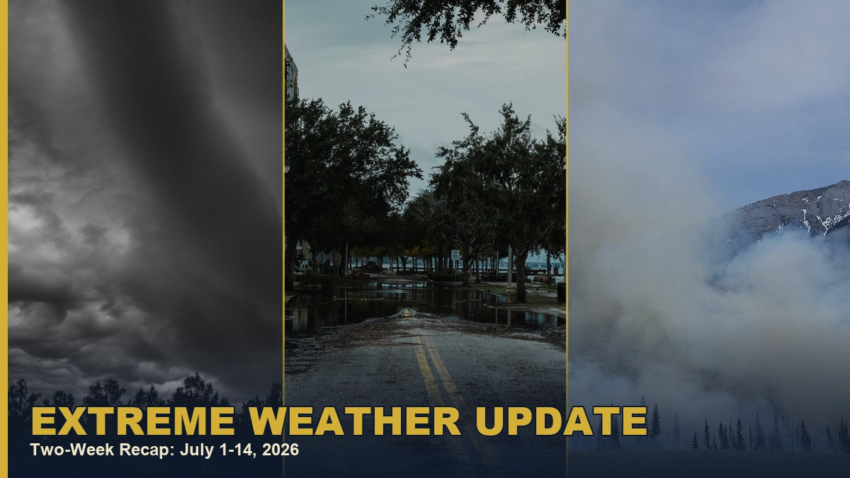
Extreme Weather Update — July 1 – July 14, 2026
The first two weeks of July brought a record-breaking heat dome over 185 million Americans, two separate flash-flood disasters that forced hundreds of water rescues, a Minnesota tornado, and a Western wildfire season already outpacing its worst prior years. Here’s a state-by-state recap of what hit, who was affected, and how this season compares historically.
1. Heat Dome: 185 Million Under Alerts, 148 Records Broken
The two-week window opened mid-heatwave. A slow-moving heat dome settled over the eastern and central United States from late June through the Fourth of July weekend, putting more than 185 million people under heat alerts and breaking at least 148 daily high-temperature records between June 30 and July 5. Atlantic City, New Jersey reached 106°F on July 4 — an all-time or near-record high — while Washington, D.C. and Raleigh, North Carolina both hit 103°F (Fox Weather, 2026; NBC News, 2026).
A second heat dome began forming over the western and central U.S. on July 6, meaning the extreme-heat threat did not end when the calendar flipped past the holiday weekend — it simply relocated. Heat remains the deadliest weather hazard in the United States most years, and it disproportionately affects people without reliable air conditioning, outdoor workers, and older adults living alone.
2. Flash Flooding, Round One: Central Iowa’s Two Months of Rain in 36 Hours
A slow-moving storm system dumped 8 to 12-plus inches of rain across central Iowa between July 2 and July 5, according to the National Weather Service office in Des Moines. Elkhart, Iowa recorded 12.60 inches of rain in a single 24-hour period, while Ames logged a 48-hour total of 9.11 inches — in some spots, more than two months of normal rainfall fell in roughly a day and a half (National Weather Service, Des Moines, 2026; KCRG, 2026).
Fourmile Creek in Des Moines rose 12 feet in just 12 hours, coming close to setting a record crest. UnityPoint’s Taylor House hospice facility was evacuated as water levels rose, along with residents of the Parkside East apartment complex. The city closed multiple roads and trails along its flood control system as the water receded (Southwest Iowa News Source, 2026; City of Des Moines, 2026).
3. Flash Flooding, Round Two: A Death in Missouri, a Record on the Black River
Just five days after the Iowa event, another stalled storm cell hit southeast Missouri overnight July 10 into July 11, dropping more than a foot of rain in about 12 hours across Crawford, Iron, and Reynolds counties. The Huzzah and nearby waterways burst their banks; 23-year-old Faith Gregory of Crawford County was swept away and later found in Huzzah Creek roughly two miles from her home (St. Louis Public Radio, 2026).
Rescue crews carried out more than 360 water rescues across the three counties, including a dramatic helicopter evacuation of about 168 teenagers and 60 adults from Camp Taum Sauk in Reynolds County after a building at the nearby Bearcat Getaway campground partially collapsed into floodwaters; no serious injuries were reported in that incident (St. Louis Public Radio, 2026). The Black River crested at Annapolis at 28.73 feet around 12:45 p.m. that Friday — a record. Missouri Governor Mike Kehoe declared a state of emergency, and Crawford County Sheriff Darin Layman said of Gregory’s death, “This is not the outcome that any of us were hoping for. Our thoughts and prayers are with Faith’s family” (St. Louis Public Radio, 2026).
4. Minnesota’s EF2 Tornado and a Catastrophic Flood Risk Now Facing Texas
Severe storms produced multiple tornado touchdowns across Minnesota on July 6. The strongest, an EF2 with estimated peak winds of 115 mph, tracked 6.79 miles and up to 800 yards wide from near Westbury in Becker County to northeast of Detroit Lakes between 7:47 and 7:57 p.m. CDT, snapping large oak and poplar trees, tearing roofs off homes, collapsing garages, and carrying a horse trailer roughly one-eighth of a mile; two people were injured and there were no fatalities (National Weather Service, Grand Forks, 2026). Additional confirmed touchdowns hit Kittson and Grant counties the same evening, with wind gusts up to 66 mph and hail as large as 1.5 inches reported nearby.
As this report was being finalized, a separate and still-developing threat was building over Texas. The National Weather Service placed a rare Level 4-of-4 “catastrophic” flash flood risk over southwest Texas Hill Country counties, including the Del Rio area, for July 14-15, with a broader Level 3 risk extending east to San Antonio; forecasters warned of multi-day rainfall totals approaching 10 inches and rates of 3 to 4 inches per hour in the strongest cells. Radar estimated roughly 9 inches of rain fell near Hondo in Medina County in just six hours, flooding roads. Governor Greg Abbott issued a disaster declaration covering 59 Texas counties and activated the National Guard, one year almost to the day after the Guadalupe River flood killed 135 people in the same Hill Country region (Fox Weather, 2026; CNN, 2026). No deaths had been confirmed from this new event as of publication, but the setup — steep terrain, shallow soil, and training thunderstorms — is the same one that produced last July’s disaster.
5. A Wildfire Season Already Ahead of Its Five-Year Pace, a Quiet Atlantic
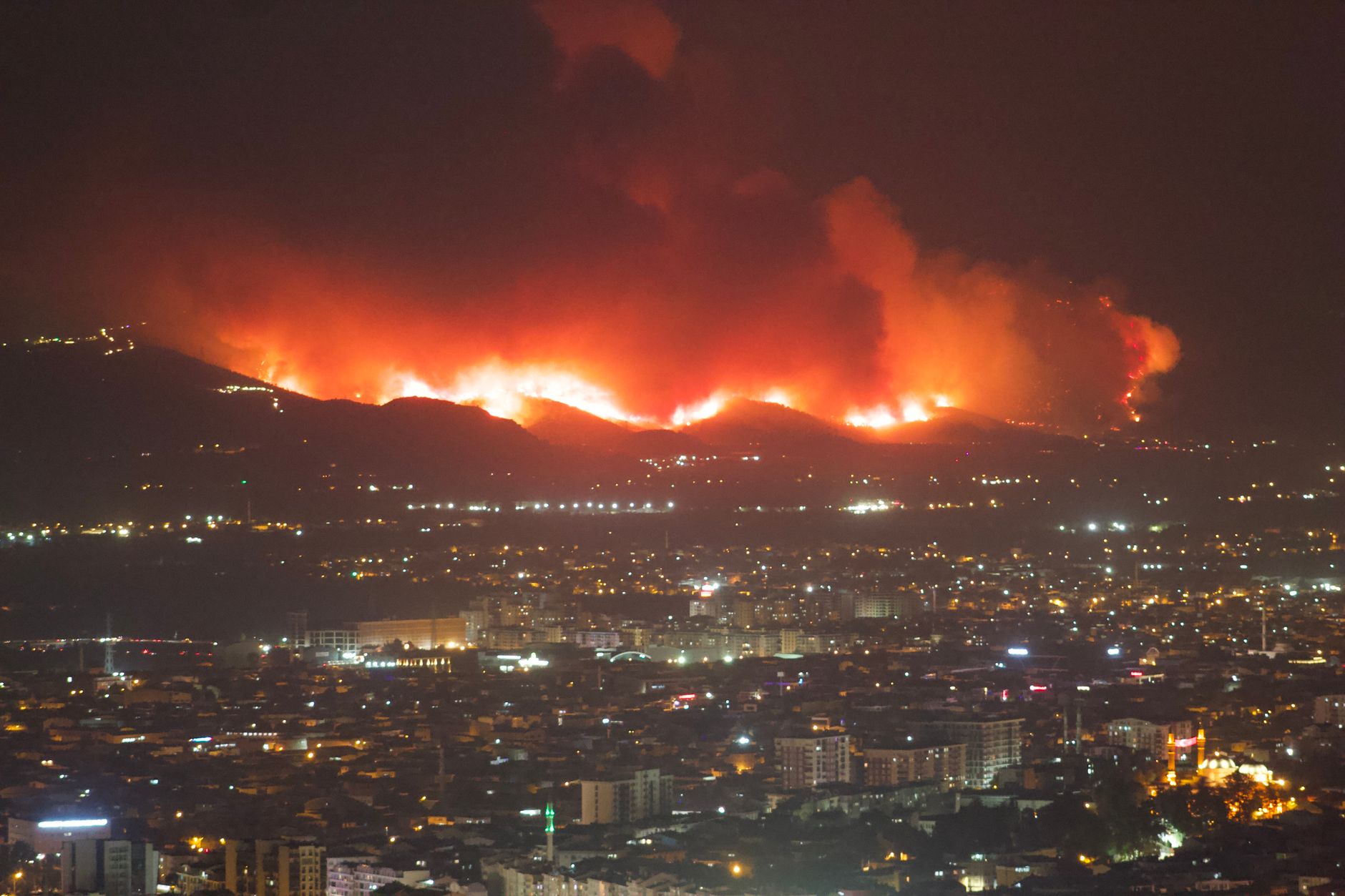
While the East and Midwest dealt with heat and flooding, the West spent the same two weeks on fire. Nationally, more than 39,000 fires had burned over 3.6 million acres by mid-July, with the National Preparedness Level held at its maximum of 4 and roughly 17,000 personnel committed to active incidents (National Interagency Fire Center, 2026). Utah’s Cottonwood Fire had burned 94,400 acres (23% contained) and destroyed more than 150 structures, making it the state’s sixth-largest fire on record, while the nearby Babylon Fire near Bears Ears National Monument had burned roughly 87,600 acres with 0% containment as of the week of July 6 (Property Guardian, 2026). Statewide, Utah had burned 357,173 acres by July 6 — already more than its combined total for 2021 through 2025 (355,944 acres), with Utah Division of Forestry, Fire and State Lands official Kelly Wickens saying, “We’re seeing fire growth up to 30,000 acres in a day, which we haven’t seen in a very long time, if ever” (KUER, 2026).
Colorado’s Aspen Acres Fire had grown to roughly 89,100-98,000 acres and prompted evacuations in Beulah, Colorado City, Rye, San Isabel, and Wetmore, ranking it among the state’s largest fires on record; the Ferris and Gold Mountain fires added tens of thousands more burned acres and additional evacuations near Dolores and Ridgway. In Arizona, the Pocket Fire north of Sedona had burned over 25,000 acres (National Interagency Fire Center, 2026; Property Guardian, 2026). By contrast, the Atlantic tropical season has stayed almost entirely dormant through the same period: Tropical Storm Arthur briefly organized and weakened back to a disturbance in mid-June, and as of this report no other system had developed, with forecasters citing unusually high Caribbean wind shear tied to a strengthening El Niño (Colorado State University Tropical Meteorology Project, 2026; weather.com, 2026).
6. What You Can Do Right Now
If you live anywhere near a creek, low-water crossing, or floodplain — in Texas, Missouri, Iowa, or elsewhere — do not drive around barricades or through moving water; the majority of flood deaths happen in vehicles. Know your evacuation route and a high-ground meeting point before, not during, the next storm.
If you’re under a heat alert, check on elderly or isolated neighbors daily, not just during the worst days — heat deaths often cluster on the second or third day of a heat wave, once the body’s ability to cope has been worn down.
If you live in or near a wildfire-prone area of the West, have a go-bag packed and know your evacuation zone designation now; fire growth of 20,000-30,000 acres in a single day, as seen repeatedly this month, leaves very little decision time once a fire starts moving.
Review the household preparedness steps in our survival skills guide — the same standing practice we recommend regardless of which specific hazard is active in your region this week.
Kemetic Minds Analysis
Read individually, none of these two weeks’ events are unprecedented — heat domes, flash floods, tornadoes, and Western wildfires are all normal features of an American July. What stands out is the clustering and the pace: a heat dome breaking 148 records folded almost immediately into two separate 1-in-a-generation flash flood events eight days apart in different states, while a wildfire season that has already outpaced five years of Utah history burned at the same time a tornado tracked through Minnesota and a catastrophic flood risk built over the same Texas counties devastated almost exactly one year earlier. A quiet Atlantic hurricane season is the one piece of good news in this recap, and even that comes with a caveat: suppressed activity in July does not reliably predict a quiet August or September, when the Cabo Verde season historically ramps up. The throughline for households is the same one we return to in every one of these updates: the specific hazard changes by region and by week, but the preparedness baseline — water, a go-bag, a family communication plan, and a plan for what you do in the first ten minutes of an emergency — does not.
References
- City of Des Moines. (2026). Flood control system update, July 2026. dsm.city
- CNN. (2026, July 13). Rare high flood risk for potentially ‘catastrophic’ impacts issued for already inundated parts of Texas. cnn.com
- Colorado State University Tropical Meteorology Project. (2026, July). Forecast of Atlantic hurricane activity for 2026. tropical.colostate.edu
- Fox Weather. (2026, July 4). Heat-related deaths mount as extreme heat wave grips East Coast. foxweather.com
- Fox Weather. (2026, July 13). Dangerous flash flood threat targets Texas, Hill Country and Gulf Coast this week. foxweather.com
- KCRG. (2026, July 3). More than a foot of rain prompts flooding in Central Iowa. kcrg.com
- KUER. (2026, July 7). Utah wildfires have burned more acres this year than the past 5 years combined. kuer.org
- National Interagency Fire Center. (2026). National fire news. nifc.gov
- National Weather Service, Des Moines. (2026). July 2-4, 2026 flash flooding, Des Moines and Ames. weather.gov
- National Weather Service, Grand Forks. (2026, July 6). July 6, 2026 severe event and tornado summary. weather.gov
- NBC News. (2026, July 4). US extreme heat dome maps and charts. nbcnews.com
- Property Guardian. (2026, July 6). Weekly U.S. wildfire outlook: Week of July 6, 2026. propertyguardian.com
- Southwest Iowa News Source. (2026). Parts of Iowa flooded after storm events that dumped two months worth of rain. swiowanewssource.com
- St. Louis Public Radio. (2026, July 11). Flash floods kill 1, force hundreds of rescues in southeast Missouri. stlpr.org
- weather.com. (2026, July 8). Surging El Niño poised to reshape 2026 Atlantic hurricane season outlook. weather.com
Investigative Methodology: Every claim in this report is sourced to a named outlet or government agency with a direct link, and every figure was cross-checked against the original published article or official NWS/NOAA/state-government report before inclusion. No Wikipedia sources and no unverified social-media claims were used. Citations follow APA 7th edition format.
Stay Connected

Kemetic Minds Editorial Desk
Verified NewsroomPrimary-sourced investigative intelligence on civil rights, voting rights, federal policy, and consumer protection. Sourced from primary legal filings, government statistics, and direct field reporting.