
KEMETIC MINDS
Research & Analysis Report — May 28, 2026
📊 Key Findings at a Glance
- Global data centers consumed 485 terawatt-hours (TWh) of electricity in 2025 — more than the entire nation of France — and that figure is on track to nearly double by 2030, according to the International Energy Agency and Gartner Research.
- AI-focused data center electricity demand climbed 17% in 2025 alone, with AI-optimized servers projected to consume five times more power by 2030 than they do today (IEA).
- U.S. data centers directly consumed 17.4 billion gallons of water in 2023. Texas alone is projected to use up to 399 billion gallons per year by 2030 (AGU Advances, Lincoln Institute).
- The five largest tech companies — Amazon, Alphabet, Meta, Microsoft, and Oracle — plan to spend a combined $660–$690 billion on AI infrastructure in 2026.
- Between March and June 2025, organized community opposition led to $98 billion in data center projects being blocked or delayed, and at least 25 projects were outright canceled (Lincoln Institute).
- Scientists have developed a 3D-printed copper-plate cooling technology that could cut data center cooling energy by over 90%, potentially transforming the industry’s environmental footprint (New Atlas / peer review).
What Is a Data Center?
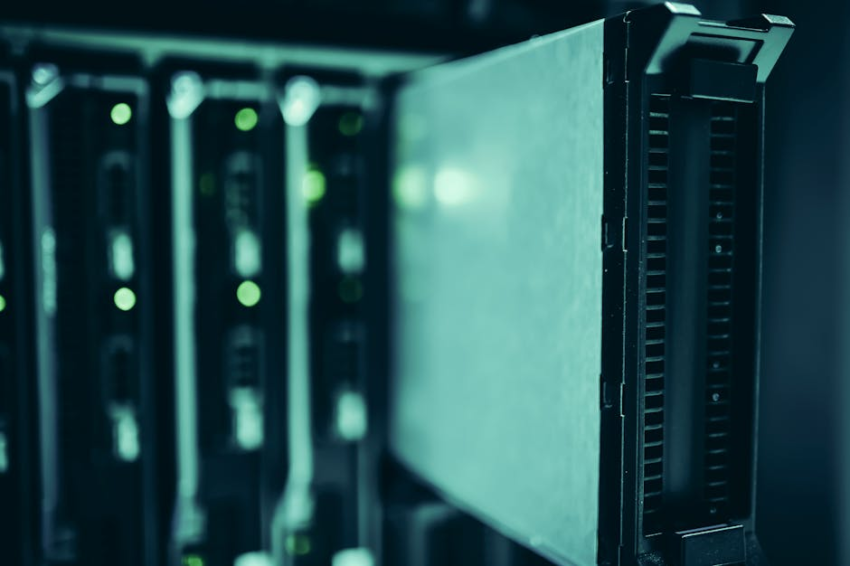
A data center is a physical facility that houses large numbers of computer servers, networking equipment, and storage systems. These buildings maintain the digital infrastructure behind everything from email and video streaming to financial transactions, social media, and increasingly, artificial intelligence. When you use a search engine, stream a movie, or ask an AI chatbot a question, your request travels to a data center and back within milliseconds.
Data centers range from small enterprise server rooms to sprawling hyperscale campuses covering hundreds of acres. The largest facilities, built and operated by companies like Amazon, Google, Microsoft, and Meta, consume as much electricity as mid-size cities. The U.S. Energy Information Administration (EIA) reported in 2024 that data centers accounted for more than 4% of total U.S. electricity consumption, with that share rising sharply as artificial intelligence workloads multiply.
Video: The Data Center Energy Crisis: Can We Power the Age of AI? — An in-depth explainer on how surging demand from AI workloads is straining global power infrastructure.
Source: Breakthrough via YouTube.
The Energy Consumption Crisis: What the Data Show
The scale of data center energy consumption has become one of the defining infrastructure challenges of the 2020s. In 2025, global data centers consumed approximately 485 TWh of electricity — a figure the International Energy Agency confirmed surged by 17% in that year alone, even as supply bottlenecks slowed construction. For context, 485 TWh exceeds the annual electricity consumption of France.
Looking ahead, the projections are staggering. The IEA’s Energy and AI 2025 report projects global data center electricity consumption rising to roughly 945 TWh by 2030. Gartner Research independently estimated that worldwide data center electricity demand will climb from 448 TWh in 2025 to 980 TWh by 2030, effectively doubling within five years. S&P Global projects grid-power demand from data centers will rise 22% in 2025 and nearly triple by 2030.
The driver behind this surge is AI. AI-optimized server workloads consumed an estimated 93 TWh in 2025, but that figure is forecast to reach 432 TWh by 2030 — an increase of nearly fivefold in five years, according to the IEA. A peer-reviewed 2024 study published on arXiv (“Environmental Burden of United States Data Centers in the Artificial Intelligence Era”) found that U.S. data centers alone generated more than 105 million tons of CO² equivalent, representing 2.18% of total U.S. greenhouse gas emissions in 2023, with 56% of their electricity derived from fossil fuels.
The Congressional Research Service published a dedicated report (CRS R48646) in 2025 specifically addressing this challenge, noting that the U.S. power sector is entering a sustained growth cycle that may require installed generating capacity to nearly double by midcentury — a transformation unprecedented in modern energy history.
The Companies Driving Demand
The data center boom is concentrated in a small number of trillion-dollar technology companies whose AI ambitions require infrastructure at previously unimaginable scale.
| Company | 2026 Infrastructure Capex (Projected) | Notable Data Center Activity |
|---|---|---|
| Amazon (AWS) | ~$200 billion | World’s largest cloud provider; operates data centers across every U.S. region and dozens of countries. |
| Alphabet (Google) | $175–$185 billion | Google data centers power Search, YouTube, Gmail, and Google AI models; pioneered liquid cooling at scale. |
| Microsoft (Azure) | ~$120 billion+ | Disclosed an $80 billion backlog of Azure orders it cannot fulfill due to power constraints; electricity demand for AI data centers projected to surge 600%+ by 2030. |
| Meta Platforms | $115–$135 billion | Meta’s “Hyperion” campus in Louisiana is planned to consume up to 5 gigawatts at peak — equivalent to the power used by 4.2 million American homes. |
| Oracle | ~$50 billion | Rapid cloud expansion; building large-scale facilities to compete with the hyperscalers for AI workloads. |
Combined, these five companies alone plan to spend an estimated $660–$690 billion on AI infrastructure in 2026, according to analysts at Futurum Research and Investing.com. A January 2026 Bloom Energy report projects U.S. data centers’ total combined energy demand will nearly double — from 80 to 150 gigawatts — between 2025 and 2028. To put that in perspective, 150 GW is roughly the entire existing U.S. power plant capacity of all coal plants combined.
Video: How Google, Microsoft And Amazon Are Racing To Solve The AI Energy Crisis — CNBC examines Big Tech’s multi-hundred-billion-dollar push to secure power for AI infrastructure.
Source: CNBC via YouTube.
The Water Crisis: What Scientists Are Finding
Energy is only part of the environmental equation. Data centers require massive quantities of water for cooling — and the scientific community has only recently begun to document the full scale of that consumption.
A landmark 2026 study published in AGU Advances (American Geophysical Union — a peer-reviewed scientific journal) titled “Data Centers Water Footprint: The Need for More Transparency” called out the industry’s chronic lack of public reporting on water use. In 2023, U.S. data centers directly consumed 17.4 billion gallons of water — the equivalent of roughly 160,000 American households’ annual water use. The same study noted that if current water-use intensity persists, U.S. data centers could collectively require 697 million to 1.45 billion gallons of new water capacity per day through 2030 — comparable to New York City’s average daily supply.
A separate peer-reviewed study published in ScienceDirect and indexed through the NIH’s National Library of Medicine (“The Carbon and Water Footprints of Data Centers and What This Could Mean for Artificial Intelligence”) calculated that AI systems alone could generate a water footprint of 312.5 to 764.6 billion liters in 2025 — a range comparable to the global annual consumption of bottled water.
Texas presents the starkest case study. Data centers in that state are projected to use 49 billion gallons of water in 2025, climbing to as much as 399 billion gallons by 2030, according to research cited by the Lincoln Institute of Land Policy. These projections raise serious concerns about competition with agricultural water use and municipal supply in a state already prone to drought.
Thirty percent of all data center electricity — itself a figure exceeding Sweden’s total annual power consumption — currently goes to cooling alone, according to energy researchers. However, scientists at the University of Illinois at Urbana-Champaign and collaborating institutions have developed a promising alternative: a 3D-printed copper-plate immersion cooling system that, in laboratory testing, cut cooling-related energy consumption from 30% to just 1.1% of total facility power use — a reduction of over 90%. The findings, reported by New Atlas and backed by peer-reviewed engineering research, could represent a transformative shift if adopted at scale.
Straining the Grid: Nuclear, Coal, and the Infrastructure Reckoning
The United States built its electrical grid over the course of a century. Data centers are now asking it to absorb decades of demand growth in less than a decade.
The Belfer Center for Science and International Affairs at Harvard University published a detailed analysis titled “AI, Data Centers, and the U.S. Electric Grid: A Watershed Moment,” concluding that the U.S. is at an inflection point where energy infrastructure investment decisions made between 2025 and 2030 will determine whether AI’s promises can be fulfilled without catastrophic grid stress. The center warned that nearly half of planned U.S. data center builds for 2026 have already been delayed or canceled, largely due to insufficient power infrastructure.
The EIA’s Annual Energy Outlook 2026 projects that installed electricity generating capacity in the U.S. may need to nearly double by midcentury, with data centers reshaping electricity demand at a rate not seen since electrification itself. In the near term, EIA data shows that in 2023, data centers consumed 26% of all electricity in Virginia, 15% in North Dakota, 12% in Nebraska, 11% in Iowa, and 11% in Oregon — making them the dominant electricity consumers in several states.
In response to these pressures, major tech companies have turned to nuclear power. The U.S. Department of Energy has documented a wave of conditional power purchase agreements between data center operators and nuclear energy producers. The pipeline of agreements between data center companies and small modular reactor (SMR) projects grew from 25 gigawatts at the end of 2024 to 45 gigawatts as of mid-2025 — an 80% increase in less than a year. Microsoft struck a landmark deal to bring Three Mile Island Unit 1 (now renamed the Crane Clean Energy Center) back online; Palisades Nuclear Plant in Michigan is also being restarted under similar industry pressure.
The EIA also reported that the PJM grid region — which covers 13 states from the Mid-Atlantic to the Midwest — will see most of its near-term demand growth met by a combination of solar and, controversially, coal generation increases of 23% between 2024 and 2026, as utilities scramble to meet load projections before new clean capacity comes online.
What Scholars, Analysts, and Scientists Are Saying
The academic and policy research community has mobilized around data center impacts in ways not seen since the early debates over fossil fuel infrastructure.
The Pew Research Center, in an October 2025 explainer report titled “What We Know About Energy Use at U.S. Data Centers Amid the AI Boom,” synthesized findings from the IEA, EIA, and academic literature, confirming that U.S. data centers generated more than 105 million metric tons of CO²e in 2023 and that the sector remains majority fossil-fuel powered. Pew noted that public awareness of these figures remains low despite their scale.
The American Association for the Advancement of Science (AAAS) launched a dedicated program — the EPI Center on Data Center Growth — to study implications for local communities, identifying four categories of harm: environmental (noise, air quality, water withdrawal), social (lack of community amenities, aesthetic degradation, increased power outages), economic (higher electricity costs for households), and governance (inadequate zoning frameworks and insufficient public accountability).
The World Resources Institute (WRI), in a 2025 report titled “From Energy Use to Air Quality: The Many Ways Data Centers Affect U.S. Communities,” documented how data center construction and operation can accelerate local air quality degradation, stress municipal water supplies, and reshape land use in ways communities rarely anticipated when initially approving permits.
Researchers at the University of Alabama at Birmingham’s Institute for Human Rights published a 2025 analysis, “Construction and Consequences: The Human Impacts of Artificial Intelligence Data Centers,” arguing that data centers represent a significant human rights concern, particularly for low-income and rural communities that bear the greatest environmental burden while receiving limited economic benefit. The report documented cases where agricultural land was taken up by data centers whose cooling towers generate noise, particulate matter, and groundwater drawdowns that harm neighboring residents.
The Brookings Institution’s 2025 research on “The Local Implications of Data Centers for Rural Communities in the U.S.” identified a structural tension: data centers are framed nationally as urgent strategic infrastructure, yet their impacts are experienced locally, where the communities hosting them often have the least political power to negotiate conditions or demand mitigation.
The Information Technology and Innovation Foundation (ITIF), a technology policy think tank, published a counterpoint in November 2025: “The United States Needs Data Centers, and Data Centers Need Energy, but That Is Not Necessarily a Problem.” ITIF argues that the economic and national security benefits of AI infrastructure justify aggressive energy investment, and that the U.S. risks ceding AI leadership to China if data center permitting and grid expansion are slowed by environmental review processes. The report advocates for streamlined permitting and a focus on clean energy sourcing over capacity restrictions.
Video: How AI Data Centers Are Quietly Raising Your Electricity Bill — An investigation into how hyperscale data center expansion is pushing up energy costs for everyday consumers.
Source: YouTube.
Community Resistance and the $98 Billion Backlash
The scale of community opposition in 2025 marked a turning point. Between March and June 2025 alone, organized local opposition led to $98 billion in data center projects being blocked, delayed, or canceled. At least 25 projects were outright canceled in response to local objections, according to reporting synthesized by the Lincoln Institute of Land Policy.
The National League of Cities, in a May 2025 report on “Data Centers and Local Environmental Considerations,” found that communities are now significantly more informed about energy loads, water sourcing, cumulative infrastructure strain, and environmental impacts than they were even two years ago. Opposition has moved from scattered neighborhood complaints to organized, legally sophisticated campaigns that challenge environmental impact assessments, demand water-use disclosures, and invoke zoning and public utility law.
In Minnesota, environmental groups have petitioned state regulators to require data centers to demonstrate reuse, recycling, and compensation for potable water withdrawn from municipal systems. In multiple states, data centers became explicit campaign issues in 2025 legislative elections, tied to energy affordability, land use, and the question of who bears the cost of AI infrastructure.
Meanwhile, QTS Data Centers invested $1.5 million in the University of Wisconsin–Madison’s Nelson Institute to fund independent research on sustainable data center development — a sign the industry is beginning to acknowledge that community legitimacy, not just permits, is required for long-term operations.
The Bottom Line
Data centers are the physical backbone of the digital economy and the engine of the AI era. They are also among the fastest-growing consumers of electricity and fresh water in the United States, operating in a regulatory environment that scientists, legal scholars, and community advocates increasingly describe as inadequate to the scale of their impacts.
The facts are not in dispute: global demand is doubling, fossil fuels still power the majority of U.S. data center electricity, water consumption is accelerating toward crisis levels in water-stressed regions, and communities — disproportionately rural and lower-income — bear costs that rarely appear in corporate earnings reports.
What is disputed is the policy response. Industry advocates argue the economic and national security stakes are too high to slow AI infrastructure build-out. Environmental scientists, water researchers, and community rights advocates argue that the absence of transparency, meaningful community consent, and enforceable environmental standards creates the conditions for irreversible harm. The evidence reviewed here suggests both are partly right — and that the window to establish accountable governance frameworks is closing fast.
📋 Primary Sources & Further Reading
- International Energy Agency (IEA) — Data Centre Electricity Use Surged in 2025
- U.S. Energy Information Administration (EIA) — Data Center Server Energy Use Grows
- U.S. Energy Information Administration (EIA) — Data Center Owners Turn to Nuclear
- U.S. Department of Energy — Clean Energy Resources to Meet Data Center Electricity Demand
- Congressional Research Service — Data Centers and Their Energy Consumption (R48646)
- Pew Research Center — What We Know About Energy Use at U.S. Data Centers
- Belfer Center for Science and International Affairs (Harvard) — AI, Data Centers, and the U.S. Electric Grid
- arXiv — Environmental Burden of United States Data Centers in the AI Era (peer-reviewed)
- AGU Advances (Wiley) — Data Centers Water Footprint: The Need for More Transparency
- NIH / PMC — The Carbon and Water Footprints of Data Centers and What This Could Mean for AI
- Brookings Institution — Local Implications of Data Centers for Rural Communities
- American Association for the Advancement of Science (AAAS) — Data Center Growth: Implications for Local Communities
- World Resources Institute (WRI) — From Energy Use to Air Quality: How Data Centers Affect U.S. Communities
- Lincoln Institute of Land Policy — Data Drain: The Land and Water Impacts of the AI Boom
- National League of Cities — Data Centers and Local Environmental Considerations
- Gartner — Electricity Demand for Data Centers to Grow 16% in 2025 and Double by 2030
- S&P Global — Data Center Grid-Power Demand to Rise 22% in 2025, Nearly Triple by 2030
- Information Technology and Innovation Foundation (ITIF) — The United States Needs Data Centers
- New Atlas — Cooling Copper Plates Could Slash Data Center Energy Use by 90%

Kemetic Minds Editorial Desk
Verified NewsroomPrimary-sourced investigative intelligence on civil rights, voting rights, federal policy, and consumer protection. Sourced from primary legal filings, government statistics, and direct field reporting.