
Key Takeaways
- The CDC reports a cyclospora outbreak tied to lettuce now spans 20 states as of its August 28, 2026 update.
- Georgia, Tennessee, and Texas are the newest states added to the outbreak list.
- The agency added 528 new cases to its tally in the same reporting window.
- Kemetic Minds has tracked this outbreak since before the current alert, with a state-by-state map of the parasite’s reach.
On August 28, 2026, the CDC dropped a number that should freeze every produce aisle in America: 528 new cyclospora cases in a single update, pushing the lettuce-linked outbreak to 20 states.
The agency’s latest report adds Georgia, Tennessee, and Texas to the outbreak map — three states where the lettuce-borne parasite has now spread. What began as a contained cluster has become a national food-safety failure, and Kemetic Minds documented that this exact scenario was coming.
CDC Confirms 20-State Spread With 528 New Cases in One Update
The CDC’s expanded alert, first reported by UPI, adds 528 cases to the federal tally in a single reporting window. Georgia, Tennessee, and Texas — each a major produce-distribution hub — were added to the case count at the same time, signaling that contaminated product is still moving through commercial supply chains.
The 528 newly added cases are people, not statistics. Each represents a household enduring a parasitic infection serious enough for federal health authorities to track it across state lines, with the lost wages, medical bills, and disruption that follow.
The agency has tied the outbreak to lettuce, which is why the alert keeps expanding instead of closing. When a pathogen is traced to a commodity that moves through national distribution networks, every new state on the map means the contaminated product reached another set of store shelves before anyone caught it.
For Georgia, Tennessee, and Texas residents, the practical takeaway is blunt: treat lettuce as a suspect until the CDC’s investigation concludes, and check Kemetic Minds’ coverage for the specific foods under scrutiny.
Lettuce-Linked Illness Is the Predicted Cost of Food-Safety Rollbacks
This is the exact scenario Kemetic Minds documented before the outbreak made national headlines. Our investigation into how federal cuts to FDA and CDC food-safety oversight set the stage for America’s cyclospora outbreak traced the inspection vacancies, closed laboratories, and budget rollbacks that left the country exposed.
The CDC’s decision to add three states and 528 cases in August is grimly consistent with that analysis. When fewer inspectors watch the fields and fewer labs test the product, the gap between contamination and detection widens — and the outbreak map grows inside that gap.
For households trying to protect themselves, Kemetic Minds has maintained a running Cyclospora Outbreak 2026 Map, Foods to Avoid as Parasite Reaches 41 — a state-by-state breakdown of where the parasite is landing and what to skip at the grocery store while the investigation continues.
This is the second national food-safety alert in as many months to hit staple produce, and the CDC’s official map has consistently lagged the wider footprint our reporting has tracked across the summer. Communities should assume the risk is broader than the last federal update suggests.
🧩 Connecting the Dots
The CDC’s 20-state alert is not unfolding in a vacuum. It arrives in the same season that Kemetic Minds documented federal cutbacks at the very agencies responsible for catching contaminated produce. The pattern is consistent: funding falls, outbreaks rise.
The second dot involves who absorbs the harm. Historians and civil-rights researchers have documented how redlining and later supermarket consolidation stripped Black neighborhoods of grocery options, leaving them dependent on fewer stores. When a national staple like lettuce is contaminated, the communities with the least choice face the greatest exposure — no backup store, no delivery budget, no easy alternative.
The third dot is water. The same logic that allowed lead into Flint’s pipes — underfunded environmental oversight falling hardest on majority-Black cities — applies to food-safety inspection. Deregulation functions as a regressive tax on the health of Black and poor communities.
What this suggests is that the cyclospora outbreak is not a random act of nature. It is the predictable outcome of decisions about who gets protected and who gets monitored. Critics of the budget cuts have argued for months that the FDA and CDC are being asked to police a trillion-dollar food system with a fraction of the necessary workforce — and this outbreak is the bill coming due.
The pattern echoes earlier waves of policy dismantling: when oversight is weakened in the name of efficiency, the costs do not disappear. They are transferred to the families who get sick, the workers who lose wages, and the communities that can least afford to absorb the damage.
🔢 The Numbers Behind This Moment
Today’s date, August 30, 2026, reduces to 3. The math: 8 (month) + 3 (day) + 0 (day) + 2 + 0 + 2 + 6 (year) = 21 → 2 + 1 = 3. In numerology, 3 is the number of communication, trinity, and expansion. It is striking that the CDC’s alert expands by exactly three new states — Georgia, Tennessee, and Texas — on a date vibrating at 3.
The case count, 528, reduces to 6. The math: 5 + 2 + 8 = 15 → 1 + 5 = 6. Six is the number of family, home, and responsibility — which is precisely where this outbreak lands: not on corporate balance sheets, but at kitchen tables where parents must decide what is safe to feed their children.
The state count, 20, reduces to 2. The math: 2 + 0 = 2. Two is the number of duality — the gap between the official count and on-the-ground reality, and the choice each household now faces between convenience and caution.
Numerology is pattern-noticing, not prophecy. But when the date, the case load, and the state count all align this cleanly, the numbers are inviting us to look deeper at what the food system is telling us.
🧠 Kemetic Minds Analysis
For Black Americans, food vigilance is not paranoia — it is inheritance. Enslaved Africans cultivated survival gardens that fed entire plantations. Fannie Lou Hamer launched the Freedom Farm Cooperative in 1969 so Black families could eat without depending on a hostile system. The Black Panther Party’s Free Breakfast Program did not just feed children; it built a community-controlled check on what Black children were being given to eat.
The cyclospora outbreak is that same struggle wearing a new disease name. When the agencies sworn to protect the food supply are defunded, the lesson of our ancestors returns: we must check what we are fed, and we must build the power to feed ourselves.
That is why our Growing Your Own Food in 2026: This Week’s Food News, the Numbers, and How to Get Started is more than a gardening guide — it is a survival manual for a moment when the commercial food system cannot be trusted to protect us.
Here is your assignment for this week: Call the U.S. Capitol switchboard at 202-224-3121, ask for your representative, and say three sentences: “My family shops for lettuce in the district you represent. The CDC says 528 more people got sick from it this month. Will you restore FDA and CDC food-safety funding?” Then wash every head of lettuce carefully before it touches your table — and tell one neighbor to do the same.
- UPI. (2026, August 28). CDC: Cyclospora outbreak linked to 20 states. UPI.
- Kemetic Minds. (n.d.). How Federal Cuts to FDA and CDC Food-Safety Oversight Set the Stage for America’s Cyclospora Outbreak. Kemetic Minds.
- Kemetic Minds. (n.d.). Cyclospora Outbreak 2026 Map, Foods to Avoid as Parasite Reaches 41. Kemetic Minds.
- Kemetic Minds. (n.d.). Growing Your Own Food in 2026: This Week’s Food News, the Numbers, and How to Get Started. Kemetic Minds.
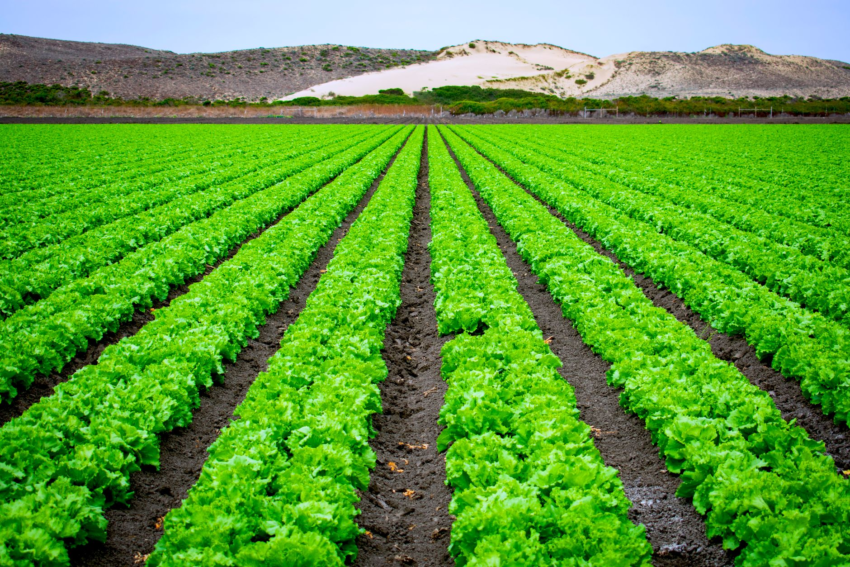
Photo: Mr. Location Scout via Pexels

Kemetic Minds Editorial Desk
Verified NewsroomPrimary-sourced investigative intelligence on civil rights, voting rights, federal policy, and consumer protection. Sourced from primary legal filings, government statistics, and direct field reporting.