
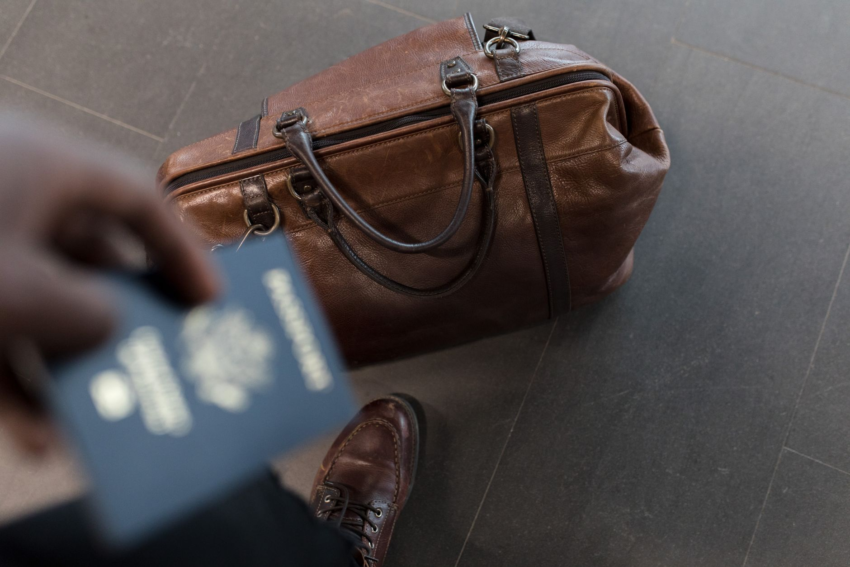
Introduction: The Great Escape Is Real — and It Includes Us
For the first time on record, more Americans are leaving the United States than arriving as immigrants, and a growing number are taking the dramatic step of renouncing their citizenship. According to the Boston Globe (May 12, 2026), the number of Americans applying to renounce citizenship hit an all-time high in 2025, part of a broader net-outflow trend that has accelerated over the past three years. This is not a fringe phenomenon: a MyExpatTaxes survey (Business Insider Markets, May 4, 2026) found that more than 50% of Americans already living abroad have considered giving up their U.S. citizenship, citing taxes, political instability, and a deteriorating quality of life.
For descendants of freedmen and freedwomen — Black Americans whose ancestors were enslaved in the United States — this trend carries a particular resonance. The decision to leave is not simply about politics or taxes; it is about survival, health, and the search for a place where Black life is not treated as disposable. Capital B News (April 6, 2026) reported first-person accounts from Black American women who moved abroad and described dramatic improvements in their physical and mental health. One woman told the outlet, “I didn’t realize how much America was killing me until I left.” Similarly, The Guardian (May 19, 2026) documented the wave of U.S. women — especially women of color — relocating abroad for what they describe as a “fundamental reset” of life expectations. The motivations, as The Guardian notes, go beyond any single administration: “It’s because of Trump, right? Yes and no.” The deeper reasons include unaffordable healthcare, gun violence, systemic racism, and a sense that the American promise has been broken.
This guide is for freedmen and freedwomen who are ready to explore that possibility — whether you have no savings or a comfortable nest egg. We have broken down five concrete ways to move abroad at any income level, grounded in real programs and visa pathways that do not require wealth. Every American needs a valid passport before taking the first step, and the U.S. Department of State (2026) makes the process straightforward. From there, the world opens up.
Why Leaving Improves Quality of Life: Lower Costs, Better Health, Greater Safety
The personal testimonies collected by Capital B News and The Guardian align with broader data. Both outlets report that Americans who move abroad often experience a lower cost of living, better access to affordable healthcare, and a dramatic reduction in daily stress. For Black women specifically, Capital B News found that the absence of race-based microaggressions in healthcare settings allowed for better treatment outcomes and greater trust in medical professionals. “In the U.S., I felt like every doctor’s visit was a fight,” one woman said. “Abroad, I am listened to.” The Guardian’s analysis adds that women moving abroad overwhelmingly cite safety — from gun violence and street harassment — as a top motivation. In countries where public transport is reliable and communities are walkable, women report feeling free in ways they never felt in America.
These quality-of-life improvements are not reserved for the wealthy. Investopedia (June 12, 2026) notes that several African countries — including Ghana, Senegal, and Kenya — offer comfortable and affordable retirement options where a monthly budget of under $1,000 can cover rent, utilities, food, and private healthcare. The same principle applies to retirees and working-age adults alike: your dollar goes further, your stress shrinks, and your body heals.
Five Ways to Move Abroad, by Income Level
Moving abroad is not a luxury reserved for the wealthy. There are practical, proven pathways for every financial situation. Below we outline five income levels and the specific programs, visas, and first steps that work for each.
Level 1: $0 to Very Little Savings
If you have no savings, you can still leave the U.S. — as long as you are willing to trade labor for room and board. Programs like WWOOF (World Wide Opportunities on Organic Farms) and Workaway connect travelers with hosts in dozens of countries who provide free accommodation and meals in exchange for a few hours of work per day. These are not jobs, but they are a way to get your foot in the door abroad with essentially zero upfront cost (beyond the passport and a one-way flight, which you may be able to fund by selling possessions or crowdfunding).
Another reliable option is teaching English abroad. Programs such as the JET Programme (Japan) and EPIK (South Korea) provide a salary, housing stipend, and round-trip airfare, and they hire teachers with a bachelor’s degree in any field — no teaching experience required. You can earn a TEFL certificate online for a few hundred dollars (or sometimes free through scholarships), and many programs place you in a school with a housing allowance. For younger applicants (typically under 30 or 35), working holiday visas allow you to work legally in countries like Australia, New Zealand, Ireland, and Canada for up to a year or two. These visas are designed for travelers who want to fund their stay through casual work — and no proof of savings is required, just the visa application fee.
First step: Get your passport if you don’t have one. Then research WWOOF hosts in countries that interest you, or apply to a TEFL program. Working holiday visas can be applied for online through the destination country’s embassy website.
Level 2: Modest Savings – $1,000 to $5,000
With a few thousand dollars in hand, you can choose “slow travel” in budget-friendly countries. Parts of Mexico, Central America (Guatemala, Nicaragua), and Southeast Asia (Thailand, Vietnam, Cambodia) offer a cost of living where $500–$800 per month covers rent, food, and local transport. In sub-Saharan Africa, countries like Ghana and Senegal are increasingly popular with the African diaspora and offer similar affordability — Investopedia specifically highlights Ghana’s retiree-friendly visa for those over 50, but many younger people also live there on tourist visas and renew every 30–90 days.
The key strategy at this level is to enter on a tourist visa (usually valid for 30–90 days) and then either extend it or do a “visa run” to a neighboring country. While not a permanent solution, it buys time to find a remote freelance job or a local teaching position. Platforms like Upwork and Fiverr allow you to offer skills (writing, virtual assistance, graphic design) and earn enough to cover your expenses. Many digital nomads start exactly this way.
First step: Check visa requirements for your target country — many African and Southeast Asian nations allow visa-free or visa-on-arrival entry for U.S. passport holders. Bring proof of onward travel (a cheap bus or flight ticket) and enough cash to show you can support yourself for the duration of your stay.
Level 3: Stable Income / Moderate Savings – ~$20,000–$50,000/year
If you earn $20,000 to $50,000 annually (or have savings in that range), you qualify for digital nomad visas offered by dozens of countries. Portugal’s D7 Passive Income Visa requires proof of regular income around the minimum wage (roughly €8,000/year) and leads to a residency permit after five years. Spain’s Digital Nomad Visa (launched 2023) requires a monthly income of at least €2,340, and Colombia offers a simpler digital nomad visa with a lower income threshold. These visas allow you to live legally, open a bank account, and access local healthcare — a huge upgrade from tourist-visa hopping.
Another option is teaching English at an international school or university, where salaries can be $1,500–$3,000 per month in Asia or the Middle East, often with housing included. Contract jobs in construction, hospitality, or cruise ships are also viable for those with relevant skills. Many Americans on this level choose to rent rather than buy, keeping their cost of living low while building a life abroad.
First step: Research the specific digital nomad visa for your top three countries. Gather proof of income (bank statements, freelance contracts, or a letter from your employer). Apply directly through the consulate or embassy. While you wait, get your passport renewed if it’s nearing expiration.
Level 4: Higher Income – ~$50,000–$100,000+/year
At this level, you can access skilled-worker visas that lead to permanent residency. Many countries — including Canada, Australia, Germany, and the United Kingdom — have points-based systems that favor professionals in fields like healthcare, IT, engineering, and finance. A job offer from a local employer can fast-track your visa, and companies increasingly sponsor American workers who bring specialized skills. Employer-sponsored international transfers are another straightforward path if you already work for a multinational company.
Buying property in affordable markets is also realistic at this income level. In countries like Mexico, Colombia, and Portugal, a decent apartment can be purchased for $50,000–$150,000. Note that buying property does not automatically grant residency in most countries, but it can strengthen your visa application and provides a stable base. The Forbes “Great Escape” list (May 24, 2026) ranks countries by ease of residency, cost of living, and healthcare quality, and includes several options at this income tier.
First step: Update your résumé and start searching for skilled-worker visa categories on the immigration websites of target countries. Consult with an immigration attorney if you want to pursue an employer-sponsored transfer or a points-based visa. Meanwhile, keep your passport current.
Level 5: High Net Worth
If you have significant assets (hundreds of thousands to millions of dollars), you can consider residency-by-investment programs. Portugal’s Golden Visa (investment in real estate or funds, minimum €250,000) grants residency and a path to citizenship in five years. Greece, Spain, Malta, and several Caribbean nations have similar programs. For those focused on Africa, Ghana’s Right of Abode visa is available to people of African descent and requires proof of sufficient means (not a fixed investment), making it one of the most accessible options for the diaspora.
For retirees, the pensionado visa in Panama or Costa Rica — or similar retirement visas in countries like Senegal and Kenya, as cited by Investopedia — offer permanent residency with a modest pension or passive income. The Forbes “Great Escape” list also ranks Portugal, Spain, and Malta as top destinations for high-net-worth Americans seeking a higher quality of life and a smoother tax situation.
First step: Consult an expat financial advisor who specializes in cross-border wealth management. Research the investment threshold and application process for at least two countries. As always, ensure your passport is valid and has at least six months of validity beyond your planned arrival date.
Before You Go: A Honest Checklist
Moving abroad is exciting, but it is not without complications. Here are three things every American should know before packing a bag.
1. Passport and visas come first. You cannot leave without a valid U.S. passport. The U.S. Department of State (2026) advises applying at least three months before your planned departure. For visas, never assume that a tourist visa allows you to work — check the specific restrictions for your destination.
2. You still file U.S. taxes. The United States taxes its citizens on worldwide income, even if you live abroad. The MyExpatTaxes survey found that this burden is a major reason many Americans consider renouncing citizenship. However, the Foreign Earned Income Exclusion (FEIE) allows you to exclude up to roughly $120,000 of foreign-earned income from U.S. taxes, and tax treaties often prevent double taxation. You do not need to renounce citizenship to live abroad; many expats simply file annually and never owe. But you must file every year, or face penalties. Consult an expat tax professional.
3. Research healthcare and safety. Quality of life depends heavily on access to medical care. Capital B News reported that Black women abroad found better healthcare experiences, but you should still investigate whether your destination has doctors who speak English, hospitals with modern equipment, and affordable insurance options. Safety also varies widely: The Guardian’s reporting emphasizes that many women feel safer abroad, but that is not universal. Join expat Facebook groups for Black Americans in your target country to get honest, local advice.
What Happens Next: The Journey Begins at Home
The record number of Americans leaving the country is not just a statistic — it is a signal. For freedmen and freedwomen, the decision to leave is deeply personal and historically resonant. Our ancestors were forcibly brought to this land; today, we have the freedom to choose where we lay our heads. Whether you have nothing but a passport and a dream, or you are ready to retire in comfort, there is a pathway that fits.
Start small. Get your passport. Research one program from the level that matches your reality. Talk to someone who has already left. The world is not waiting for permission; it is waiting for you to take the first step.
References
- Boston Globe. (2026, May 12). A record number of Americans are leaving the country and seeking to renounce citizenship.
- MyExpatTaxes / Business Insider Markets. (2026, May 4). MyExpatTaxes Survey Finds Over 50% of Americans Abroad Have Considered Renouncing US Citizenship.
- Capital B News. (2026, April 6). Some Black Women Say the Best Thing They Did for Their Health Was Leave America.
- The Guardian. (2026, May 19). Why more US women are moving abroad: ‘It’s because of Trump, right? Yes and no’.
- Forbes. (2026, May 24). How To Move Out Of America In 2026: 10 Best Countries For The Great Escape, Per Global Citizen Solutions.
- Investopedia. (2026, June 12). 4 African Countries Where Retirement Is Both Comfortable and Affordable.
- U.S. Department of State. (2026). U.S. Passports — Apply, Renew, or Replace a Passport.

Kemetic Minds Editorial Desk
Verified NewsroomPrimary-sourced investigative intelligence on civil rights, voting rights, federal policy, and consumer protection. Sourced from primary legal filings, government statistics, and direct field reporting.