
KEMETIC MINDS — BREAKING NEWS
September 09, 2026
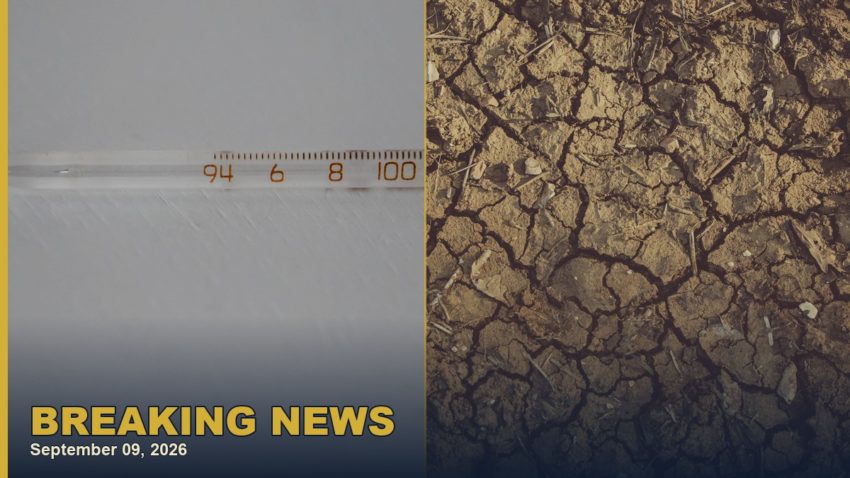
The United States experienced its hottest summer in 132 years, with temperatures averaging 74.4 degrees Fahrenheit nationwide between June and August, according to a new National Oceanic and Atmospheric Administration (NOAA) report[1], as first reported by CBS News[2].
The three-month stretch — known to climate scientists as “meteorological summer” — exceeded the previous national record, set in 1936 during the Dust Bowl and again in 2021, by roughly 0.4 degrees[1]. The season followed several months of high temperatures and expanding drought across the country[1]. Four of the five hottest U.S. summers on record have now occurred in the past five years[3].
Key Facts
- August 2026 broke monthly records on its own: the month averaged 75.6 degrees, and its average daytime high of 88.6 degrees was the warmest such figure ever recorded for the month[1].
- June-through-August temperatures ran 3.0 degrees hotter than the 20th-century average; August alone ran 3.5 degrees hotter than that century’s norm[1].
- Record warmth was widespread across the West, Southwest, southern Rockies, southwestern Plains and southern Florida Peninsula, with California, Nevada, New Mexico and Colorado each posting their warmest August on record[1].
- Arizona, New Mexico, Utah and Colorado each set or tied their warmest summer on record; every state in the country logged above-average summer warmth[4].
- Rain averaged 8.11 inches nationwide for the season, 0.21 inches below last century’s summer average, despite roughly double-average precipitation in Indiana and Ohio[1].
- Drought covered 59.1% of the contiguous U.S. as of September 1 — up more than 10 percentage points since early August[1], a figure the federal drought-monitoring partnership confirms in its own weekly tracking[5].
August records stretched across the West
Much of the contiguous U.S. endured “above- to much-above average” temperatures in August; areas with normal conditions were confined to isolated pockets of the Midwest and northern Plains[1]. California and New Mexico saw their average daily August highs climb to record heights[1].
The report placed the most punishing conditions in the West, Southwest, southern Rockies, southwestern Plains and southern Florida Peninsula, where regions experienced punishing heat waves, destructive wildfires and declining water reserves[1]. Nationally, roughly 8.4 million acres had burned by early September — about 30% above the 10-year average for the date[4]. By the end of the season, Colorado, New Mexico and Utah had each recorded their hottest summer ever, and Arizona tied its previous record[1].
Why the heat kept building
Forecasters point to an unusually sharp ocean-atmosphere swing as one driver: the country moved from a moderate La Niña in 2025-26 into what could become a record-strength El Niño heading into 2026-27[4]. The U.N.’s World Meteorological Organization has warned that the developing El Niño “may be stronger than anything since our monitoring began,” raising the odds of intensified heat, drought and flooding into next year[3]. Scientists also tie the broader warming trend to decades of fossil-fuel emissions[3].
Rain lagged behind the historic average
Precipitation across the U.S. fell below the 20th-century average even though parts of the country faced storms that brought heavy rain[1]. The nationwide June-through-August average of 8.11 inches came in 0.21 inches below last century’s seasonal norm[1].
Substantially above-average precipitation fell in states like Indiana and Ohio, the report said, and still the country as a whole finished the season below its historical rainfall average[1]. Nationally, the expanding dryness pushed drought coverage from about 48.6% of the contiguous U.S. in early August to 59.1% by September 1[1], a jump the federal Drought Monitor partnership tracks in near-real time[5].
What’s Still Unconfirmed
The core figures — 74.4 degrees for the summer, the 132-year record, and the state-by-state records — are confirmed directly from NOAA’s own report[1] and corroborated by independent coverage from CBS News[2] and Al Jazeera/AFP[3]. The wildfire-acreage and El Niño-strength figures come from Yale Climate Connections’ analysis of federal fire and ocean data[4] and have not yet been restated in NOAA’s own release, so they are presented here as independently sourced context rather than NOAA findings.
Black Excellence This Week
The hard news is real, and so is this. A win tied directly to the climate strain in this story, reported by the Black press in the last 14 days:
- HBCU Coalition Secures $500 Million to Build Community-Owned Solar Microgrids in Heat-Strained Neighborhoods
africanelements.org · 2026-08-28
What You Can Do This Week
Not just bad news — here is where to push.
- Contact your U.S. representative to request federal funding for urban heat resilience programs. — Find your U.S. representative
- Attend your city council meeting to propose a cooling center network for vulnerable residents. — Attend your city council meeting (USA.gov local officials)
- Locate a community health center to screen for heat illness risks this week. — Find a community health center (HRSA)
SUPPORT KEMETIC MINDS
Enjoying this coverage? Back the work and find every way to connect with us in one place.
References
- NOAA National Centers for Environmental Information. (2026, September 9). Monitoring the U.S. temperature and precipitation in August 2026. ncei.noaa.gov ↩a ↩b ↩c ↩d ↩e ↩f ↩g ↩h ↩i ↩j ↩k ↩l ↩m ↩n ↩o ↩p ↩q
- CBS News. (2026, September 9). The U.S. just had its hottest summer on record, NOAA says. cbsnews.com ↩a ↩b
- Al Jazeera & Agence France-Presse. (2026, September 9). US records hottest summer in 132 years. aljazeera.com ↩a ↩b ↩c ↩d
- Henson, B. (2026, September 9). We just had the hottest August, hottest summer, and hottest year to date in U.S. history. Yale Climate Connections. yaleclimateconnections.org ↩a ↩b ↩c ↩d
- National Integrated Drought Information System. (2026, September). National drought status. drought.gov ↩a ↩b
Methodology: This report covers a single breaking story, selected because it was
independently covered by multiple news outlets within the last 20 hours. It is grounded
in the NOAA/NCEI source report and independent reporting and analysis from CBS News, Al Jazeera/AFP,
Yale Climate Connections and the federal Drought Monitor, cited above. No Wikipedia
sources are used, and no embeds are auto-generated.

Kemetic Minds Editorial Desk
Verified NewsroomPrimary-sourced investigative intelligence on civil rights, voting rights, federal policy, and consumer protection. Sourced from primary legal filings, government statistics, and direct field reporting.