
Consumer Rights · Scam Alert · November 23, 2026, 1:10 PM CST
Key Facts
- Local3news issued a new alert: SCAM ALERT: Catoosa Co. residents targeted in ‘zoning case’ scam emails
- Primary delivery channel: Email
- How it reaches victims: Email.
- Tactics the source describes: Asks for money.
HIGH THREAT VECTOR
Report to Federal Trade Commission (FTC) →
SCAM ALERT: Catoosa Co. residents targeted in ‘zoning case’ scam emails.
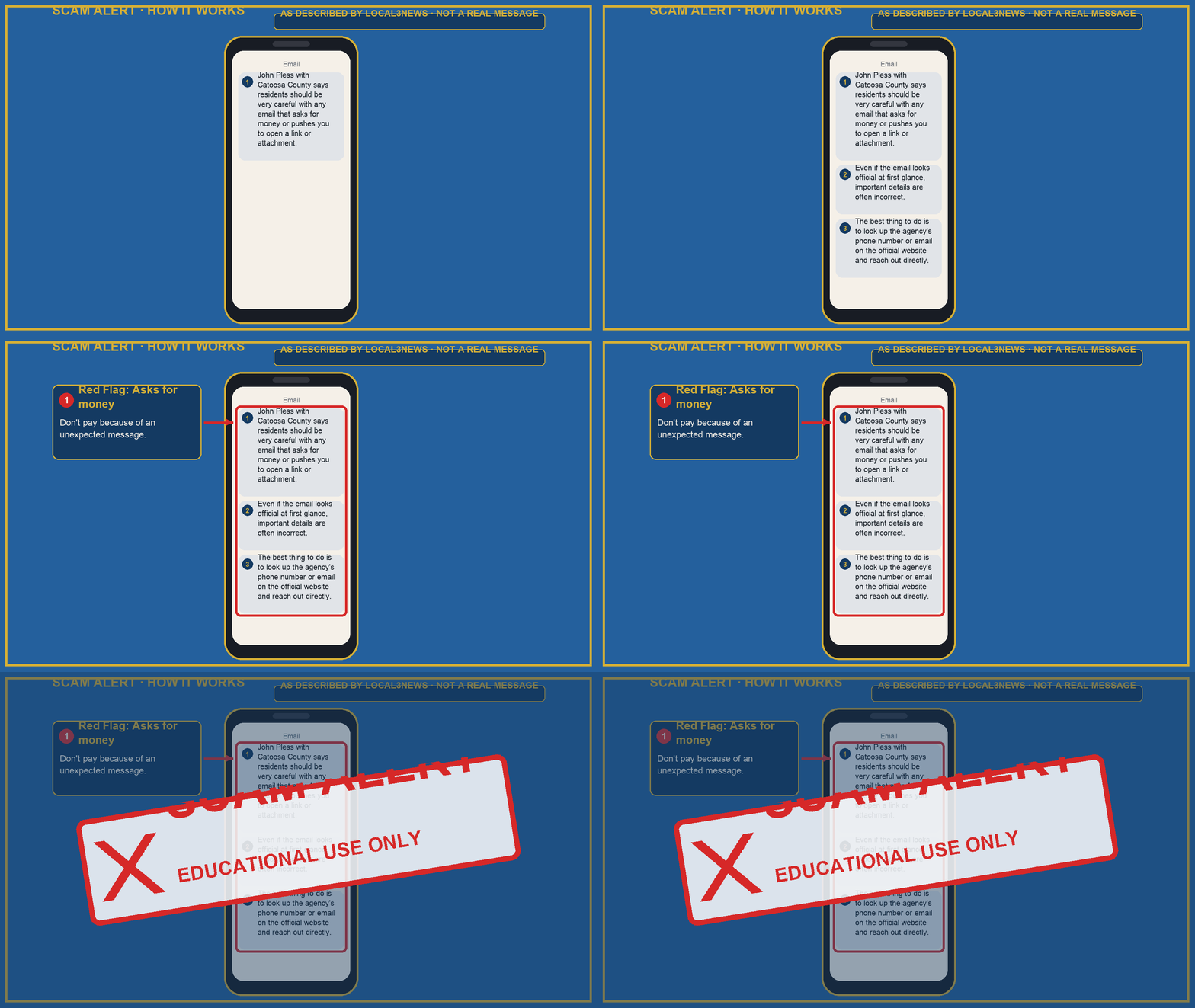
Catoosa County officials are warning residents about a fake email that uses the name of Planning & Zoning Director Clint Underwood to demand money for a “zoning case.”
The county says the message is a scam, and there are three ways for you to verify:. The scam email comes from “planningdept.catoosacountyga.gov@usa.com,” but county government emails only come from addresses ending in “@catoosacountyga.gov.”[1]
What the Scam Looks Like
How to Protect Yourself
- Do not send money because of an unexpected call, text, or email. Hang up and contact the agency or person yourself using a number you look up independently.
- Verify any unexpected contact through a phone number or website you already know is real — never one provided in an unsolicited message.
- Never send funds via gift card, wire transfer, cryptocurrency, or peer-to-peer payment apps to resolve an unexpected demand.
- Do not click links or scan QR codes in unsolicited emails or text messages claiming urgent account problems.
How to Verify This Yourself
Read the original advisory and documentation directly at Local3news. Official bulletins from Local3news serve as the primary source for the alert details above. To verify ongoing fraud trends or report suspicious correspondence targeting your household, visit ReportFraud.ftc.gov or submit an incident report directly to the FBI Internet Crime Complaint Center (IC3).
References
Investigative methodology: this update was produced by scripts/scam_monitor.py from a real Local3news alert — not a language model. The quoted text above is verbatim from the source; any message or description shown in the illustration is quoted or copied from the source itself (see its caption); when the source does not publish the scam’s wording, none is shown or invented. Protection tips are matched from a fixed keyword list, not generated per story.

Kemetic Minds Editorial Desk
Verified NewsroomPrimary-sourced investigative intelligence on civil rights, voting rights, federal policy, and consumer protection. Sourced from primary legal filings, government statistics, and direct field reporting.