
Consumer Rights · Scam Alert · November 22, 2026, 9:10 PM CST
Key Facts
- Svalleynow issued a new alert: TBI Reports Scam Alert
- Primary delivery channel: Phone call
- How it reaches victims: Phone call.
- Tactics the source describes: Asks for payment via gift card, wire, crypto or a payment app; spoofs a trusted phone number or sender.
HIGH THREAT VECTOR
Report to Federal Trade Commission (FTC) →
TBI Reports Scam Alert.
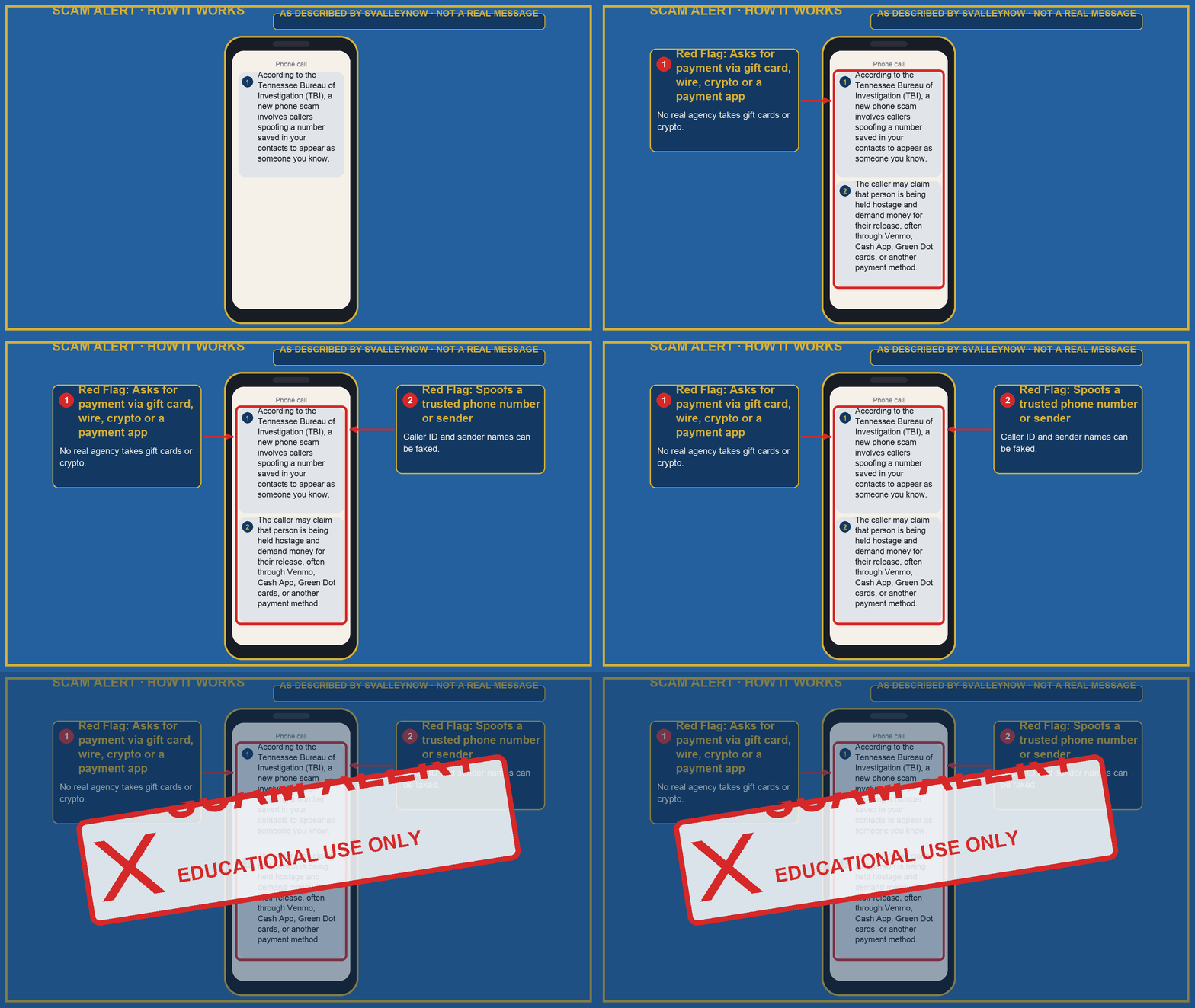
According to the Tennessee Bureau of Investigation (TBI), a new phone scam involves callers spoofing a number saved in your contacts to appear as someone you know.
The caller may claim that person is being held hostage and demand money for their release, often through Venmo, Cash App, Green Dot cards, or another payment method. Hang up and contact your loved one directly to verify their safety.[1]
What the Scam Looks Like
How to Protect Yourself
- No legitimate agency, court, or company asks to be paid in gift cards, wire transfers, cryptocurrency, or by Zelle or Cash App over the phone.
- Caller ID can be faked. If a call claims to be from an official office, hang up and call the office back on its published number.
- Verify any unexpected contact through a phone number or website you already know is real — never one provided in an unsolicited message.
- Never send funds via gift card, wire transfer, cryptocurrency, or peer-to-peer payment apps to resolve an unexpected demand.
How to Verify This Yourself
Read the original advisory and documentation directly at Svalleynow. Official bulletins from Svalleynow serve as the primary source for the alert details above. To verify ongoing fraud trends or report suspicious correspondence targeting your household, visit ReportFraud.ftc.gov or submit an incident report directly to the FBI Internet Crime Complaint Center (IC3).
References
Background and official records on this topic are also available from FBI Internet Crime Complaint Center (IC3)[2], Federal Trade Commission[3].
- Svalleynow. TBI Reports Scam Alert. ↩
- FBI Internet Crime Complaint Center (IC3). Internet Crime and Phishing Alerts. Primary (official source) ↩
- Federal Trade Commission. FTC Consumer Scam and Fraud Guidance. Primary (official source) ↩
Investigative methodology: this update was produced by scripts/scam_monitor.py from a real Svalleynow alert — not a language model. The quoted text above is verbatim from the source; any message or description shown in the illustration is quoted or copied from the source itself (see its caption); when the source does not publish the scam’s wording, none is shown or invented. Protection tips are matched from a fixed keyword list, not generated per story.

Kemetic Minds Editorial Desk
Verified NewsroomPrimary-sourced investigative intelligence on civil rights, voting rights, federal policy, and consumer protection. Sourced from primary legal filings, government statistics, and direct field reporting.