
Consumer Rights · Scam Alert · November 19, 2026, 9:10 AM CST
Key Facts
- KBND issued a new alert: Pacific Power Warns Of Scam
- Primary delivery channel: Text message
- How it reaches victims: Text message.
- Tactics the source describes: Asks for money; requests personal or account information.
HIGH THREAT VECTOR
Report to Federal Trade Commission (FTC) →
Pacific Power Warns Of Scam.
Pacific Power is warning about scams involving utilities that increase this time of year.
They’ll tell you power will be shut off within an hour unless you pay right away. They may demand payment from a gift card, where you read the card number over the phone.[1]
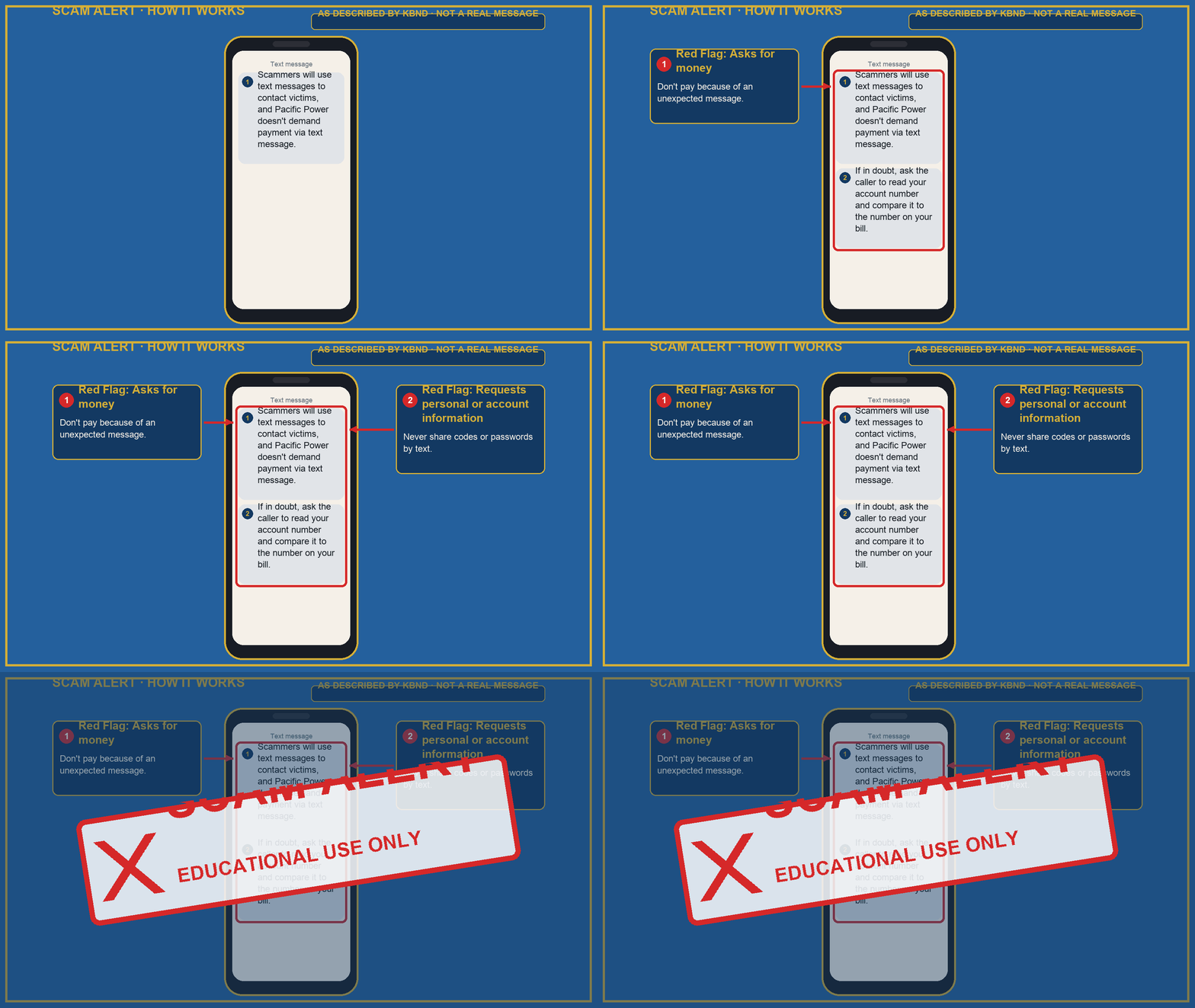
What the Scam Looks Like
How to Protect Yourself
- Do not send money because of an unexpected call, text, or email. Hang up and contact the agency or person yourself using a number you look up independently.
- Legitimate organizations don’t ask you to confirm passwords, one-time codes, or full account numbers by text or email.
- Verify any unexpected contact through a phone number or website you already know is real — never one provided in an unsolicited message.
- Never send funds via gift card, wire transfer, cryptocurrency, or peer-to-peer payment apps to resolve an unexpected demand.
How to Verify This Yourself
Read the original advisory and documentation directly at KBND. Official bulletins from KBND serve as the primary source for the alert details above. To verify ongoing fraud trends or report suspicious correspondence targeting your household, visit ReportFraud.ftc.gov or submit an incident report directly to the FBI Internet Crime Complaint Center (IC3).
References
Additional verified portals: Background monitoring and official records from FBI Internet Crime Complaint Center (IC3)[2], Federal Trade Commission[3].
- KBND. Pacific Power Warns Of Scam. ↩
- FBI Internet Crime Complaint Center (IC3). Internet Crime and Phishing Alerts. Primary (official source) ↩
- Federal Trade Commission. FTC Consumer Scam and Fraud Guidance. Primary (official source) ↩
Investigative methodology: this update was produced by scripts/scam_monitor.py from a real KBND alert — not a language model. The quoted text above is verbatim from the source; any message or description shown in the illustration is quoted or copied from the source itself (see its caption); when the source does not publish the scam’s wording, none is shown or invented. Protection tips are matched from a fixed keyword list, not generated per story.

Kemetic Minds Editorial Desk
Verified NewsroomPrimary-sourced investigative intelligence on civil rights, voting rights, federal policy, and consumer protection. Sourced from primary legal filings, government statistics, and direct field reporting.