

Consumer Rights · Scam Alert · October 21, 2026, 1:10 PM CDT
Key Facts
- CO issued a new alert: Cornwall households warned over fake water bills
- HOUSEHOLDS across Cornwall are being warned to watch out for fake South West Water letters demanding payment, with fraudsters using the company’s branding to make their requests appear genuine.
- Tactics the source describes: Asks for money; uses a link or qr code that leads to a fake site.
HIGH THREAT VECTOR
Report to Action Fraud (UK National Fraud & Cyber Crime Reporting Centre) →
Cornwall households warned over fake water bills.
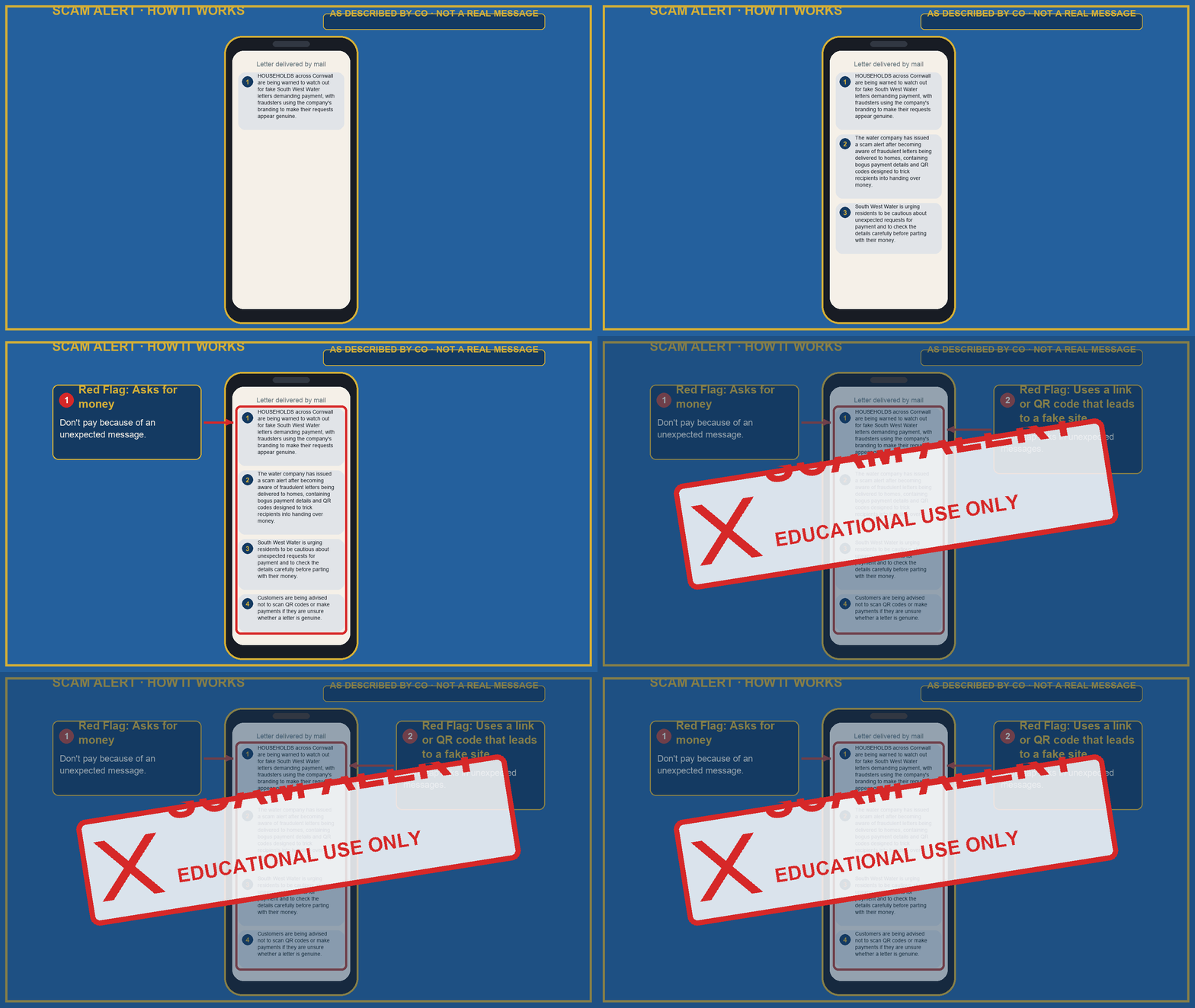
HOUSEHOLDS across Cornwall are being warned to watch out for fake South West Water letters demanding payment, with fraudsters using the company’s branding to make their requests appear genuine.
The water company has issued a scam alert after becoming aware of fraudulent letters being delivered to homes, containing bogus payment details and QR codes designed to trick recipients into handing over money.
The letters may look authentic, potentially making it difficult for customers to distinguish them from genuine correspondence.[1]
What the Scam Looks Like
How to Protect Yourself
- Do not send money because of an unexpected call, text, or email. Hang up and contact the agency or person yourself using a number you look up independently.
- Don’t click links or scan QR codes in unsolicited messages. Type the organization’s real address into your browser instead.
How to Verify This Yourself
Read the original alert directly at CO — that page is the primary source for everything above.
References
Investigative methodology: this update was produced by scripts/scam_monitor.py from a real CO alert — not a language model. The quoted text above is verbatim from the source; any message or description shown in the illustration is quoted or copied from the source itself (see its caption); when the source does not publish the scam’s wording, none is shown or invented. Protection tips are matched from a fixed keyword list, not generated per story.

Kemetic Minds Editorial Desk
Verified NewsroomPrimary-sourced investigative intelligence on civil rights, voting rights, federal policy, and consumer protection. Sourced from primary legal filings, government statistics, and direct field reporting.