

Consumer Rights · Scam Alert · October 14, 2026, 1:10 PM CDT
Key Facts
- Droid Life issued a new alert: Google Brings Powerful Scam Alert Shields to Millions More Android Users
- Alongside today’s Google Messages news, Google has more security topics you should know about as an Android user.
- How it reaches victims: Phone call.
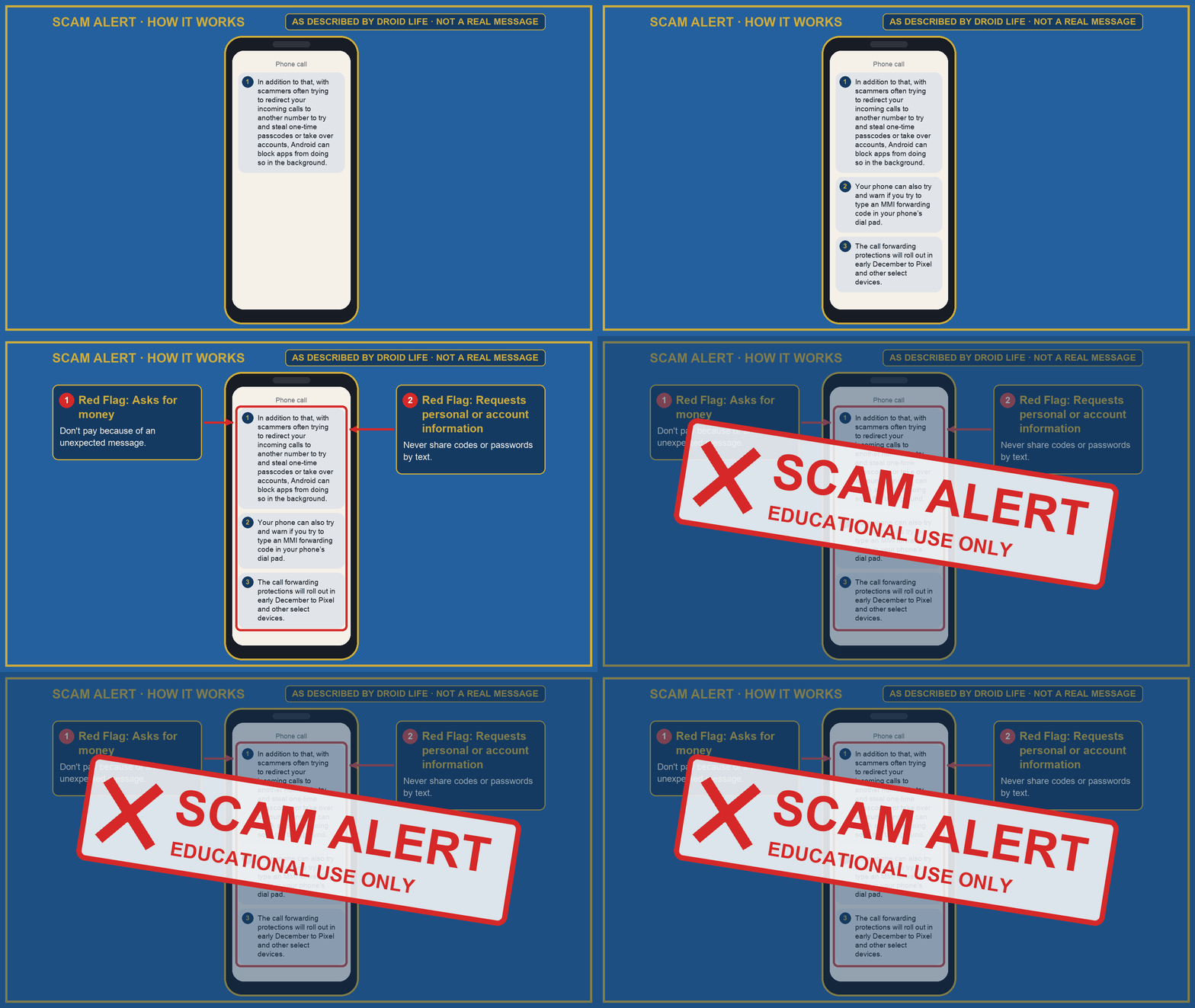
- Tactics the source describes: Asks for money; requests personal or account information.
HIGH THREAT VECTOR
Report to Social Security OIG →
Google Brings Powerful Scam Alert Shields to Millions More Android Users.
Alongside today’s Google Messages news, Google has more security topics you should know about as an Android user.
For one, they are expanding notification scam alerts to hundreds of millions more users, plus there new screen sharing and call-forward protections are on the way.
The Scam Detection notifications that Google first gave to Pixel phones are expanding to most of the world of Android “later this year.”[1]
What the Scam Looks Like
How to Protect Yourself
- Do not send money because of an unexpected call, text, or email. Hang up and contact the agency or person yourself using a number you look up independently.
- Legitimate organizations don’t ask you to confirm passwords, one-time codes, or full account numbers by text or email.
How to Verify This Yourself
Read the original alert directly at Droid Life — that page is the primary source for everything above.
References
Investigative methodology: this update was produced by scripts/scam_monitor.py from a real Droid Life alert — not a language model. The quoted text above is verbatim from the source; any message or description shown in the illustration is quoted or copied from the source itself (see its caption); when the source does not publish the scam’s wording, none is shown or invented. Protection tips are matched from a fixed keyword list, not generated per story.

Kemetic Minds Editorial Desk
Verified NewsroomPrimary-sourced investigative intelligence on civil rights, voting rights, federal policy, and consumer protection. Sourced from primary legal filings, government statistics, and direct field reporting.