Consumer Rights · Scam Alert · October 5, 2026, 1:10 PM CDT
Key Facts
- The Fort Bend County, Texas, Sheriff’s Office issued a scam alert on October 5, 2026 about fake QR codes that could put personal and financial information at risk.[1]
- Scammers can put a fake code over a real one, or send a code that looks tied to a trusted service. Scanning it can lead to a fake website that asks for passwords and card numbers.[1]
- The FTC warned in September 2026 that criminals are replacing the QR codes on parking meters with fake ones.[2]
- Victims should change passwords, watch their accounts and report to the FTC. The Sheriff’s non-emergency line is 281-341-4665.[1]
A small black-and-white square on a sign, a package or a parking meter is all it takes. The Fort Bend County Sheriff’s Office says some of those squares are fake, and scanning one can walk you straight to a thief’s website.
The Sheriff’s Office told residents to be careful before scanning QR codes, especially ones posted in public places or sent without warning.[1]
Two ways the trick works
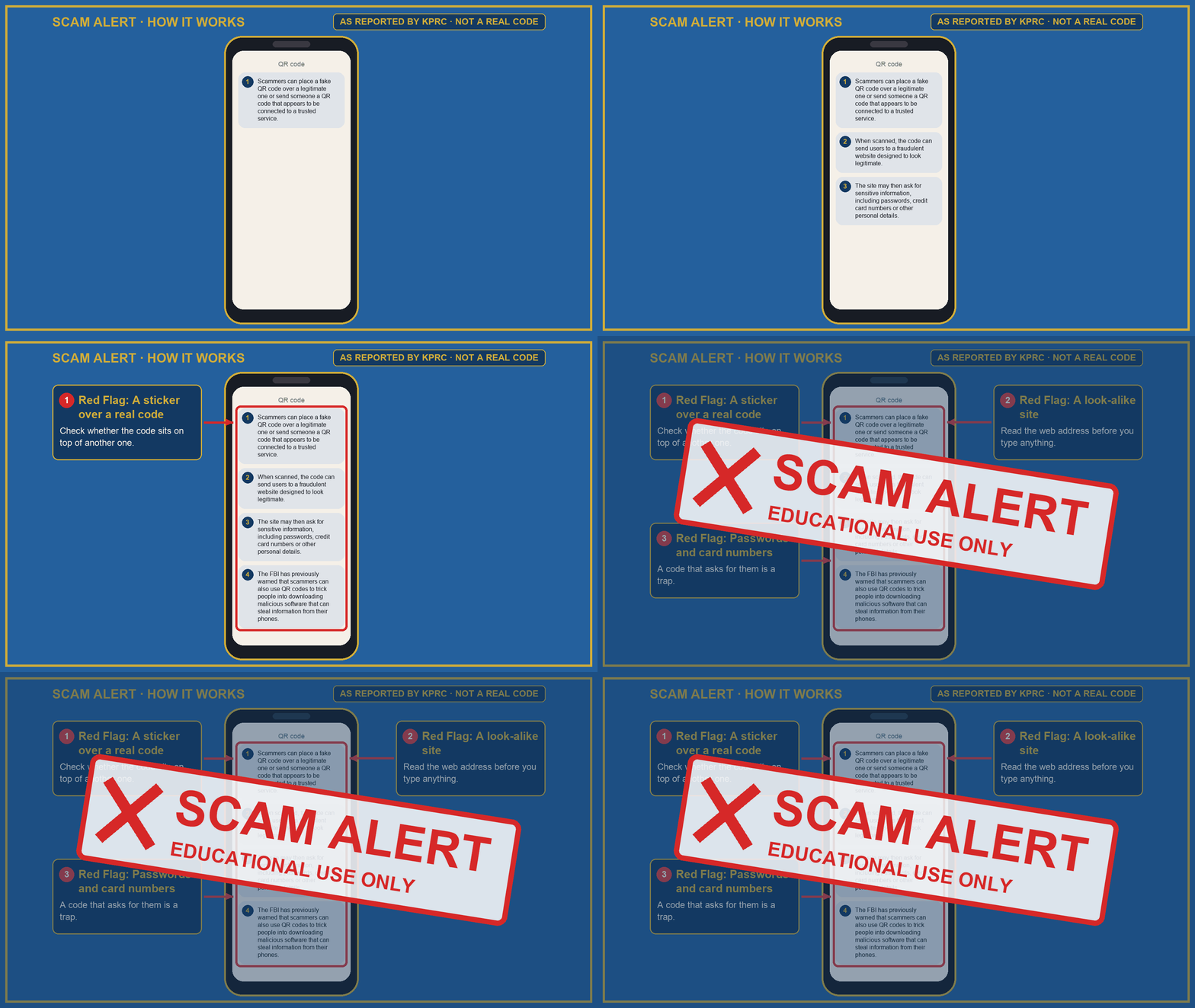
The alert describes two methods. In the first, a scammer sticks a fake code on top of a real one. In the second, a scammer sends a code that seems linked to a service you trust. In both, the code is the disguise and the website is the trap.[1]
The site is made to look legitimate. Once you are on it, it may ask for passwords, credit card numbers or other personal details. The FBI has also warned that a code can be used to push malicious software onto a phone.[1]
How it unfolds, step by step
The animation below follows the alert in order. Each step is a sentence from the news report, word for word. No image of the actual fake codes was published, so this is a picture of the scheme, not a photo of a real code.
The parking meter version
The same trick has a favorite spot. The Federal Trade Commission wrote in September that criminals are covering the QR codes on parking meters with their own. In its words, “If you scan that scammy QR code, it could take you to a fake site designed to steal your money, your personal information, or both.”[2]
The FTC’s advice for before you scan is short. Preview the link and look for spelling mistakes or switched letters, keep your phone’s software up to date, and use strong passwords with multi-factor authentication.[2]
That report is from another city. The method is the same one Fort Bend’s deputies describe.
Dashed outline: Fort Bend County, Texas, where the Sheriff's Office issued the alert. The alert names no street or address. The pin marks Richmond, the county seat, for scale only. Map data: OpenStreetMap contributors.
What’s Disputed or Unconfirmed
- Fort Bend cases. The report does not say how many fake codes were found in the county, where they were placed or whether anyone lost money.[1]
- The parking meter warning. It is the FTC’s general alert. It does not say the Fort Bend codes were on meters.[2]
How to Protect Yourself
- Check that a code has not been stuck over another one before you scan it.[1]
- Read the web address before you type anything. Look for spelling mistakes or switched letters.[1][2]
- Be careful with unexpected codes in emails, texts or on packages.[1]
- Do not enter passwords, Social Security numbers or financial details through a code you are unsure about.[1]
- Keep your phone and apps up to date, use strong passwords and turn on multi-factor authentication.[1][2]
- If you already scanned one, change your passwords, watch your bank and card statements, and report it to the FTC at ReportFraud.ftc.gov.[1][2]
How to Verify This Yourself
Read the Sheriff’s alert as reported by KPRC (Click2Houston), and the FTC’s own alert below.
References
- Saavedra, N., and Spencer, B., “Fort Bend County Sheriff’s Office warns of fake QR code scam targeting residents,” KPRC (Click2Houston), October 5, 2026. Secondary (news report of the Sheriff’s Office alert). click2houston.com
- “See a QR code parked somewhere? Don’t scan it…yet!,” Federal Trade Commission, September 3, 2026. Primary (government consumer alert). consumer.ftc.gov
Investigative methodology: this post was rewritten from the reports linked above. Quotation marks mark wording as it appears in those sources. The animation uses sentences copied from the news report and is labelled as a description because the call or message itself was not published. No wording was invented.

Kemetic Minds Editorial Desk
Verified NewsroomPrimary-sourced investigative intelligence on civil rights, voting rights, federal policy, and consumer protection. Sourced from primary legal filings, government statistics, and direct field reporting.