
Key Takeaways
- Massachusetts is the latest state added to the list of states reporting a cyclospora outbreak.
- State officials say the number of cases reported so far is nothing unusual.
- The foodborne parasite has reached 41 states, according to Kemetic Minds’ outbreak tracking.
- Federal cuts to FDA and CDC food-safety oversight set the stage for the outbreak.
- Kemetic Minds has published a state-by-state map and a list of foods to avoid.
Massachusetts has just been added to a list no state wants to make. The state now appears among the states reporting a cyclospora outbreak, a parasitic contamination event that has already reached 41 states. Yet state officials are striking a careful note, saying there’s nothing unusual about the number of cases reported so far. The stakes of that sentence depend entirely on what the public-health system can — and cannot — see.
Massachusetts on the List, With an Official Shrug
The report, which appeared first on Boston, confirms Massachusetts has joined the roster of states reporting cyclospora. Officials there acknowledge the cases but characterize the count as unremarkable.
That phrasing deserves a second look. “So far” draws the boundary of the claim — not “no cases,” not “outbreak over,” but “nothing unusual about the number reported so far.” In outbreak reporting, that distinction is the difference between a settled fact and a moving target.
Cyclospora is a foodborne parasite, which means the contamination is entering the food stream somewhere upstream of the dinner table. Massachusetts residents now have to assume the produce in their kitchens could be part of the same national contamination event touching 41 states.
41 States and Counting: A Map of the Same Food Stream
Massachusetts is not an island in this outbreak; it is the latest pin on a map. Kemetic Minds’ Cyclospora Outbreak 2026 Map, Foods to Avoid as Parasite Reaches 41 tracks the spread state by state and flags the foods most likely to carry the parasite. With the count at 41 states, the question is no longer whether the food supply is compromised, but where it was compromised.
The public-health response is running on a weakened foundation. As Kemetic Minds has reported, federal cuts to FDA and CDC food-safety oversight set the stage for the outbreak — fewer inspections, slower tracebacks, and a thinner safety net beneath every shipment of fresh produce.
When an agency cannot test, it cannot count. When it cannot count, “nothing unusual” becomes the easiest sentence in the English language. Massachusetts officials are not lying; they may simply be reading from a ledger that was never completed.
Less Oversight, More “Unusual” Outbreaks
The Massachusetts announcement is best read as the result of a decade of regulatory attrition. Surveillance is the first thing to disappear from a budget shaped by austerity, and food safety is the quietest casualty.
The pattern echoes earlier American cycles in which public-health protections were dismantled in the name of cost-cutting. After Reconstruction, the collapse of federal oversight of food and water systems in the South fell hardest on Black communities. The echoes are audible in 2026: the people with the least resources absorb the most risk.
For now, the official Massachusetts line is reassurance. The national map suggests a different story — one written in 41 states and counting.
🧩 Connecting the Dots
Three threads converge in this story, and together they describe a system in retreat:
- The oversight cuts. FDA and CDC food-safety budgets have been slashed, setting the stage for the current outbreak.
- The reassurance reflex. Massachusetts officials calling a fresh outbreak “nothing unusual” is the standard posture of a surveillance system that has lost its early-warning capacity.
- The national spread. A parasite across 41 states is not a local curiosity; it is a supply-chain event moving along the same distribution network that feeds the whole country.
What this suggests is a pattern: detection gets slower, the official language gets softer, and the outbreaks get bigger. The interests benefiting from this moment are the corporate food producers and budget hawks who have spent years arguing that regulation is a tax on business — while the cost is quietly moved to the dinner table.
Critics argue that this is not a failure of government but a feature of it: when regulators are told not to look, they eventually cannot see. The language of “nothing unusual” is the sound of that blindness being normalized.
🔢 The Numbers Behind This Moment
Numerology is pattern-noticing, not prophecy. But the figures in this story line up in ways worth considering.
The date — August 19, 2026. Add every digit: 8 (August) + 1 + 9 + 2 + 0 + 2 + 6 = 28; 2 + 8 = 10; 1 + 0 = 1. One is the number of new beginnings — and 28 also holds 10, the number of a completed cycle before the reset.
The outbreak’s reach — 41 states. 4 + 1 = 5. Five is the number of change, freedom, and disruption. A contamination event spanning 41 states is exactly that: a food system in violent motion, unmoored from its safeguards.
Combine the date’s 1 with the spread’s 5, and you get 6 — family and responsibility. That is the arithmetic of this moment: a new beginning in which the responsibility for food safety lands on families, because the institutions built to carry it have been told to drop it.
🧠 Kemetic Minds Analysis
For Black communities in America, the safety of the food on the table has never been a given. From the rations handed to enslaved people to the adulterated products long sold in segregated markets, food has always been a site of exploitation — and of resistance. The cyclospora outbreak of 2026, with Massachusetts as its newest entry, is the modern face of that old story.
The official line out of Massachusetts — “nothing unusual” — is exactly the language a community should refuse. When the agencies that guard the water and the produce are told to look away, the people who eat must look harder. Surveillance was never going to save us; vigilance was.
Resistance in this moment looks like this:
- Call the Massachusetts Department of Public Health and ask for the current cyclospora case count, broken down by county. Public records are public power.
- Call your member of Congress and ask two questions: What is the FDA’s cyclospora testing budget for fiscal year 2027, and how many food-safety inspectors are assigned to your district? Put the answer on the record.
- Protect your own table. Scrub produce before eating, follow the foods-to-avoid guidance in Kemetic Minds’ outbreak map and food advisory, and report any suspected symptoms to your local health department immediately. Every case reported is a data point that “nothing unusual” cannot erase.
- Build the alternative. Support Black-owned farms, community gardens, and cooperative groceries. Mutual aid is the oldest survival strategy we have.
The parasite is here. The question is not whether Massachusetts officials find the case count unusual. The question is whether we let them count alone.
- Boston. (2026, August 19). Massachusetts is now on the list of states reporting a cyclospora outbreak. MSN.
- Kemetic Minds. (2026). Cyclospora outbreak 2026 map, foods to avoid as parasite reaches 41. Kemetic Minds.
- Kemetic Minds. (2026). How federal cuts to FDA and CDC food-safety oversight set the stage for America’s cyclospora outbreak. Kemetic Minds.
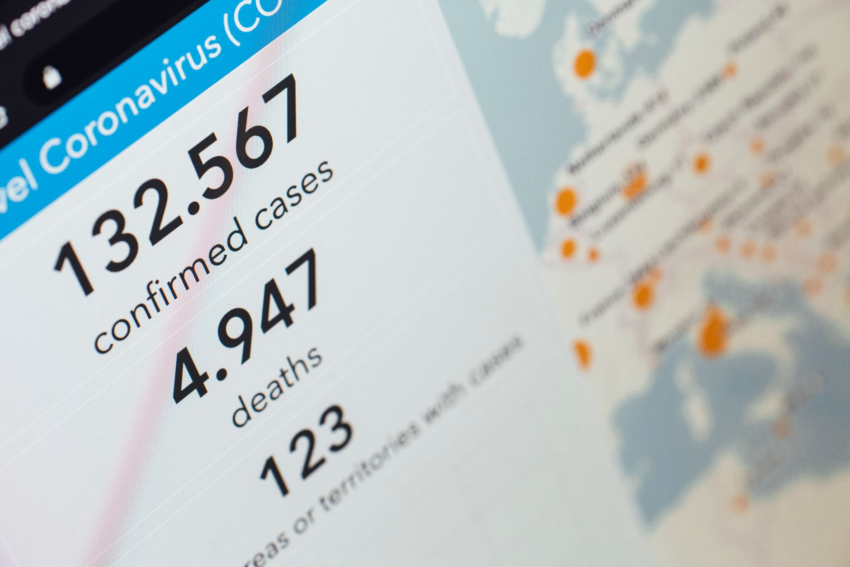
Photo: Markus Spiske via Pexels

Kemetic Minds Editorial Desk
Verified NewsroomPrimary-sourced investigative intelligence on civil rights, voting rights, federal policy, and consumer protection. Sourced from primary legal filings, government statistics, and direct field reporting.