
Key Takeaways
- Jackson police are investigating after a woman was found dead, hanging from a tree behind a vacant home on the 500 block of Road of Remembrance Monday night.
- Her identity has not been released, and police have not said whether foul play is suspected or ruled out. Cause of death is undetermined.
- Cases like this draw extra scrutiny in Mississippi, the state with the highest documented number of racial-terror lynchings in U.S. history — which is exactly why demanding a thorough, transparent investigation matters, regardless of what it ultimately finds.
- Nationally, Black Americans are disproportionately represented among missing-persons cases and receive a fraction of the media attention white victims do — a pattern researchers call “Missing White Woman Syndrome.”
What Police Have Confirmed — and What They Haven’t
Police have not released the woman’s name, her age, or how long her body had been at the location before it was discovered. Investigators have not said whether they suspect foul play, and the cause of death has not been determined. At this stage, the case is an open death investigation — not a confirmed homicide, and not a confirmed suicide.
That gap matters. It’s tempting, given the method, to jump straight to a conclusion. The responsible position is to hold both possibilities until the coroner and police say otherwise, while still pushing for the transparency a case like this demands.
Why a Hanging Death in Mississippi Draws Extra Scrutiny
A body found hanging from a tree in the Deep South carries weight that other death scenes don’t, because of documented history, not assumption. The Equal Justice Initiative’s Lynching in America report documents more than 4,000 racial-terror lynchings across the South between 1877 and 1950, and found that Mississippi recorded more of them than any other state. Hanging was the era’s signature method — public, symbolic, and meant to be seen.
That history is also why Congress passed the Emmett Till Antilynching Act in 2022, finally making lynching a standalone federal hate crime after more than a century of failed attempts to pass similar legislation. The law’s existence doesn’t tell us anything about this specific case — but it is a resource that should be considered if the investigation turns up any indication of a hate crime. Whether the Jackson Police Department has looped in state or federal civil rights authorities has not been disclosed.
The Broader Pattern: Black Missing and Deceased Persons Get Less Attention
Separate from what happened on Road of Remembrance, there’s a well-documented national pattern worth understanding: cases involving Black victims — especially Black women and girls — tend to get less investigative urgency and less media coverage than cases involving white victims.
Writing for Elon University’s first-year writing contest, student Julia Kearney laid out the numbers in an essay on missing Black children and the Amber Alert system: Black Americans make up about 13.4% of the U.S. population but account for nearly 40% of missing-persons cases, while receiving only a fraction of the media coverage devoted to missing white people. Researchers have a name for the gap — “Missing White Woman Syndrome.”
Kearney points to strict Amber Alert criteria as part of the problem: Black children who go missing are more often classified as “runaways” rather than “endangered missing,” a label that delays police response and cuts off resources. She cites the case of Jholie Moussa, whose disappearance police treated as a runaway case for three days before investigating — Moussa was found dead two weeks later. Kearney’s essay points to newer, less restrictive alert systems, including the Jholie Alert and the RILYA Alert, as steps toward closing that gap.
None of that tells us what happened to the woman found on Road of Remembrance. But it’s the reason cases like hers deserve to be tracked closely rather than left to a single thin news brief — because the pattern of under-attention is real, well-documented, and exactly what allows cases to go cold.
What To Watch For
- Identification. Police have not released the woman’s name or age.
- Cause and manner of death. The Hinds County Coroner’s office has not made a determination public.
- Whether state or federal civil rights authorities are involved. Given the setting, this is worth asking about directly — the DOJ’s Civil Rights Division has the authority to review deaths that may involve racial violence.
Kemetic Minds Analysis
We’re publishing what’s confirmed, not what’s assumed. A hanging death behind a vacant home in Jackson lands in a state and a country with a documented history that makes silence costly — Mississippi’s lynching record, the decades it took to pass a federal anti-lynching law, and a broader pattern of Black missing and deceased people getting less institutional attention than they deserve. That history is exactly why this case is worth following closely until the coroner and police account for what happened, whatever that turns out to be.
What you can do:
- Follow local reporting from Jackson outlets like WAPT and WLBT for updates as police release more information.
- If you have information about this case, contact the Jackson Police Department directly rather than speculating online.
- Support organizations tracking missing and murdered Black women and girls, such as the Black and Missing Foundation, which works cases that don’t get national media attention.
References
- WAPT News. (2026, August 4). Woman found dead, hanging from tree behind vacant home on Road of Remembrance. WAPT.
- Kearney, J. (n.d.). Missing Black children and the failure of the Amber Alert system. Elon University First-Year Writing Contest Journal.
- Equal Justice Initiative. (n.d.). Lynching in America: Confronting the legacy of racial terror. Equal Justice Initiative.
- U.S. Department of Justice, Civil Rights Division. (n.d.). Civil Rights Division. U.S. Department of Justice.
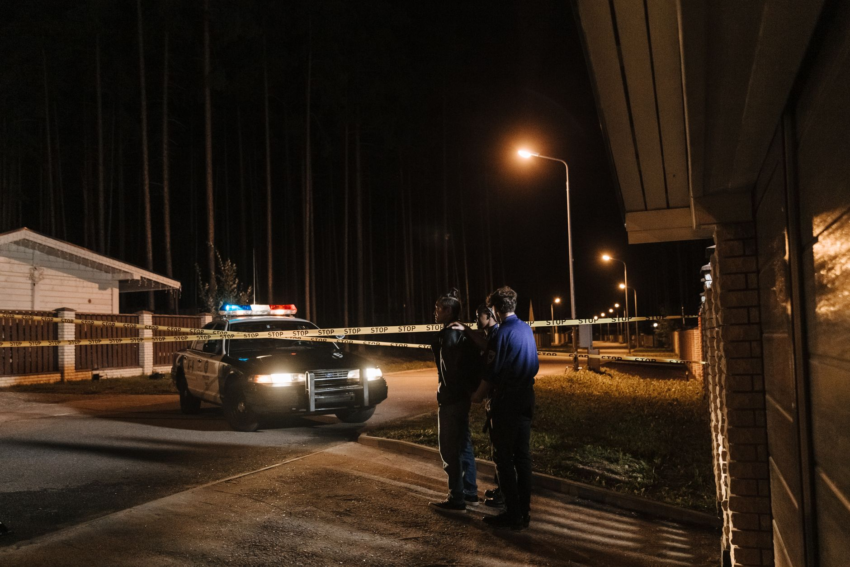
Photo: illustrative image via Pexels — not the actual scene.

Kemetic Minds Editorial Desk
Verified NewsroomPrimary-sourced investigative intelligence on civil rights, voting rights, federal policy, and consumer protection. Sourced from primary legal filings, government statistics, and direct field reporting.