
KEMETIC MINDS
Special Report | Geopolitics | September 1, 2026
The war between the United States and Iran that began on February 28, 2026 did not come out of nowhere. It grew out of decades of confrontation — a 1979 hostage crisis that still shapes how Washington and Tehran see each other, a nuclear deal struck in 2015 and abandoned in 2018, and a 2020 airstrike that killed Iran’s most powerful general. Since the war opened with strikes that killed Iran’s Supreme Leader, it has moved through ceasefires that didn’t hold, a mediated interim deal that collapsed by July, and fresh U.S. strikes on Iranian targets as recently as September 1, 2026. This report lays out how the war started, the history behind it, what it has cost in lives and dollars so far, and where the latest strikes over the Strait of Hormuz leave things now.
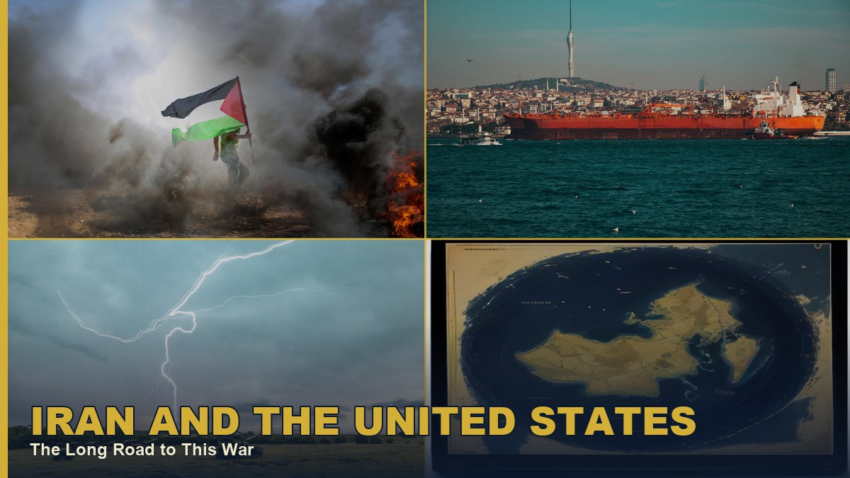
Photo by Hosny salah via Pexels · Photo by Burak Başgöze via Pexels · Photo by Art Guzman via Pexels · AI image generated with Sana (via pollinations.ai)
How the War Started
On February 28, 2026, the United States and Israel launched large-scale strikes on Iran, killing Supreme Leader Ali Khamenei and targeting nuclear and military infrastructure across the country[2]. Iran retaliated with missile and drone strikes on Israel, U.S. bases, and U.S.-allied states in the region, and shut down the Strait of Hormuz — the narrow waterway that carries roughly a fifth of the world’s oil trade — disrupting global energy markets almost overnight. Tehran’s Assembly of Experts named Khamenei’s son, Mojtaba Khamenei, as his successor within days.
Ceasefires That Didn’t Hold
The war has moved through repeated attempts at a truce, none of them lasting. A two-week ceasefire brokered by Pakistan took hold on April 7, 2026, but both sides kept trading intermittent strikes even under it. On June 14, 2026, U.S. and Iranian negotiators reached a more substantial interim deal — reopening the Strait of Hormuz, ending the parallel Hezbollah-Israel fighting in Lebanon, and pausing hostilities for 60 days[2]. The pause held into late July, then broke down after Iran struck three commercial vessels that had bypassed its pre-approved shipping route.
- 1953 — A CIA- and MI6-backed coup removes Iran’s elected prime minister, Mohammad Mossadegh, after he nationalized the Anglo-Iranian Oil Company — and restores the Shah to full power. The episode remains a foundational grievance in how Iran’s government frames U.S. intentions.
- 1979 — The Iranian Revolution overthrows the Shah. Months later, militants storm the U.S. Embassy in Tehran and hold 52 Americans hostage for 444 days, severing formal U.S.-Iran diplomatic relations to this day[1].
- 1980–1988 — The Iran-Iraq War, one of the 20th century’s deadliest conventional conflicts, hardens Iran’s security establishment and its drive for strategic deterrence.
- Mid-1980s–2002 — Iran pursues nuclear technology dating to 1957, with weapons-related work suspected from the mid-1980s onward; hidden enrichment sites are publicly exposed by a dissident group in 2002[2].
- 2006 — The UN Security Council adopts Resolution 1696, its first legally binding demand that Iran suspend uranium enrichment[2].
- 2015 — The Joint Comprehensive Plan of Action (JCPOA) requires Iran to cut its enriched-uranium stockpile by 98% and its centrifuge count by two-thirds, in exchange for sanctions relief that ultimately totaled nearly $100 billion[2].
- 2018 — The first Trump administration withdraws the U.S. from the JCPOA and reimposes sanctions, which go on to cut Iran’s oil exports by more than half[2].
- January 2020 — A U.S. drone strike kills Quds Force commander Qasem Soleimani; Iran responds by abandoning its remaining JCPOA enrichment limits[2].
- December 2025 — Mass anti-government protests erupt over economic collapse and the rial’s crash; a crackdown is estimated to have killed over six thousand protesters, with thousands more reports under investigation[2].
- February 28, 2026 — The United States and Israel strike Iran, killing Supreme Leader Ali Khamenei and hitting nuclear and military infrastructure — the opening of the current war[2].
The Strait of Hormuz Oil Shock
Nowhere has the war’s economic cost been more visible than at the gas pump and on oil trading floors. Brent crude stood at $78.82 a barrel by mid-July[3], then climbed to $89.53 — about 24% above its level before the war began — by mid-August, as renewed attacks on shipping dashed hopes of reopening the strait[3]. On August 26, Iran struck a temporary arrangement with Oman to open a limited shipping corridor and share the resulting revenue, but that arrangement has not stopped the attacks: Iran continued hitting merchant vessels through late August[2], and after fresh U.S. strikes on September 1, Brent jumped again to a two-month high of $95.26[4].
Figure 1
Brent Crude Oil Price, Jul–Sep 2026: The Strait of Hormuz War Premium
Chart: Kemetic Minds. Sources: Al Jazeera[3], ABC News Australia[4].
The Latest Strikes
The war escalated again in the final days of August and the first days of September 2026. U.S. Central Command said it “successfully completed” a fresh wave of strikes on Islamic Revolutionary Guard Corps targets — air defense sites, radar systems, maritime assets, mine-laying capability, and communications infrastructure — after accusing Iran of trying to lay sea mines in the Strait of Hormuz[4]. Iran responded by firing missiles at a U.S. base in Jordan; Jordan’s military said it intercepted 10 of them, with three landing in remote areas[4]. President Trump vowed further strikes if Iran continued to respond[5], while Bloomberg reported the new round of U.S. strikes drove renewed spikes in oil markets and shipping-risk premiums[6].
The Human and Economic Toll
The documented cost of the war, as tracked by the Council on Foreign Relations, is stark. HRANA (Human Rights Activists News Agency) has documented 1,701 civilian deaths inside Iran, including at least 175 people killed in a single U.S. strike on an Iranian school[2]. Up to 3.2 million people have been displaced inside the country. On the U.S. side, thirteen service members have been killed since the war began[2].
Figure 2
Documented Human Toll of the War, as of Early September 2026
Log scale — these three figures measure very different things and are not directly comparable, but are shown together to convey overall scale.
Chart: Kemetic Minds. Source: CFR Global Conflict Tracker[2], citing HRANA (Human Rights Activists News Agency).
Where Talks Stand Now
A durable settlement remains elusive. As of early August, President Trump suggested the Strait of Hormuz could reopen soon, while Iran’s foreign ministry said Tehran was not currently holding talks with Washington[2]. The core disputes — Iran’s nuclear program, the status of the Strait of Hormuz, and sanctions relief — remain unresolved heading into September, and the pattern so far has been one of short pauses followed by renewed strikes rather than a lasting peace.
Kemetic Minds Analysis
Every ceasefire in this war so far has been a pause, not an ending — April’s truce, June’s interim deal, and July’s lull each broke down within weeks. That pattern, more than any single day’s headlines, is the most useful thing to track: the underlying disputes over Iran’s nuclear program and the Strait of Hormuz have not moved, even as the fighting has repeatedly stopped and restarted around them. The oil-price chart above tells the same story in numbers — each new round of strikes has pushed prices higher than the last pause brought them down, meaning the economic cost of this war is compounding rather than resetting. Until one side gets a durable answer on the strait or the nuclear file, expect more of this rhythm: strikes, a pause, talks that stall, and strikes again.
References
- U.S. Department of State, Office of the Historian. Foreign Relations of the United States, 1977–1980, Volume XI, Part 1, Iran: Hostage Crisis, November 1979–September 1980. history.state.gov ↩
- Council on Foreign Relations. (2026). Conflict With Iran. Global Conflict Tracker. cfr.org ↩a ↩b ↩c ↩d ↩e ↩f ↩g ↩h ↩i ↩j ↩k ↩l ↩m ↩n
- Al Jazeera. (2026, August 12). Oil prices rise as attacks dent hopes for Strait of Hormuz reopening. aljazeera.com ↩a ↩b ↩c
- ABC News (Australia). (2026, September 2). Iran war live updates: US launches fresh strikes on Iranian targets. abc.net.au ↩a ↩b ↩c ↩d
- CBS News. (2026, September 1). U.S.-Iran War Live Updates: Jordan intercepts Iranian missiles as Trump vows more strikes on Iran. cbsnews.com ↩
- Bloomberg. (2026, September 1). US Launches New Round of Iran Strikes as Strait Tensions Grow. bloomberg.com ↩
Methodology: Timeline, casualty, and displacement figures are drawn from the Council on Foreign Relations’ Global Conflict Tracker, which in turn cites HRANA (Human Rights Activists News Agency). Oil-price figures are drawn from Al Jazeera’s market reporting and ABC News Australia’s live coverage. Historical background on the 1979 hostage crisis is drawn from the U.S. Department of State’s Office of the Historian. Latest-strikes reporting draws on CBS News, ABC News Australia, and Bloomberg. No figures were estimated or sourced from Wikipedia.
📱 Stay Connected

Kemetic Minds Editorial Desk
Verified NewsroomPrimary-sourced investigative intelligence on civil rights, voting rights, federal policy, and consumer protection. Sourced from primary legal filings, government statistics, and direct field reporting.