Freedmen News Watch · October 27, 2026, 8:20 AM CDT
Key Facts
- Review of “Reparations: Slavery and the Tyranny of Imaginary Guilt” by Nigel Biggar (via Providencemag)
Review of “Reparations: Slavery and the Tyranny of Imaginary Guilt” by Nigel Biggar.
In the early 2020s, one of the most culturally, socially, and politically dominant issues was that of reparations.
The idea of monetary transfers from nations, institutions, and polities involved in enslavement – exclusively Western nations, an important caveat – to those who claim victimhood from the same is not novel, but it gained widespread purchase during the so-called ‘racial reckoning’ in the aftermath of the death of George Floyd in May 2020.
Those events supercharged the movement for reparations, which was previously quite fringe, boosting it into the public consciousness at a time when it could gain meaningful purchase. That it did, taking root across the Western world, especially in the Anglosphere.
While the reparations debate has ebbed in recent years, replaced by other political debates that are more salient to the average voter, it has not gone away. On the contrary, the reparations movement has learned to focus its efforts.
As such, it has taken a back seat in places like the US, where the political backlash to cultural progressivism was a large factor in the re-election of Donald Trump in 2024, while remaining active in countries like Canada and Britain, both controlled by left-wing governments.
Reparations advocates have spent the past few years organizing various nations that claim victimhood from the transatlantic slave trade, both in the Caribbean or Africa, forging a coalition to present a broadly united front to international institutions and the countries from which reparations are sought.[1]
About the Freedmen News Watch
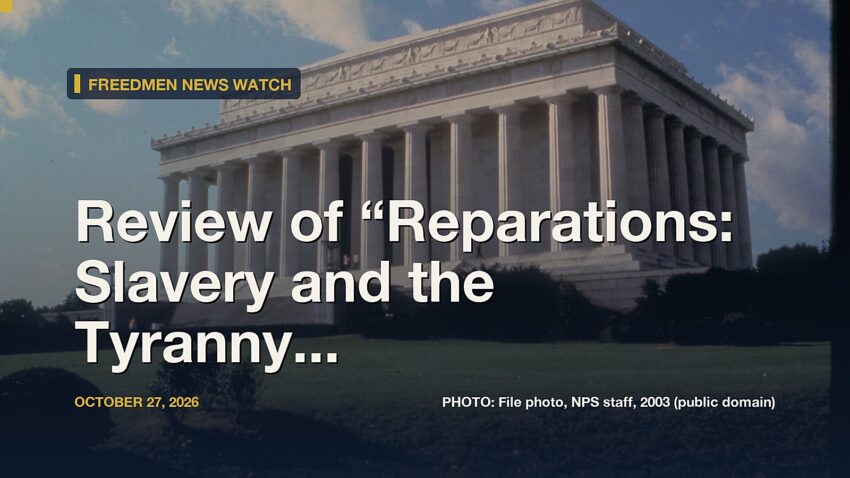
This series follows the news that bears on Black American freedmen and their descendants, the people freed from slavery in this country: citizenship and treaty-rights cases such as the Cherokee, Creek and Seminole Freedmen, the Dawes Rolls and Freedmen’s Bureau records, heirs’ property and Black land loss, reparations and descendant-based programs, and the history and memory of emancipation. It covers the hard news and the good news alike. Every passage is quoted as reported and linked to its source, and nothing is generated. The photograph on each post is a public-domain file photo from Wikimedia Commons, credited, and shows a place or monument, not the people in the story.
How to Verify This Yourself
Read the original reporting directly at Providencemag — that page is the primary source for everything above.
References
- Providencemag. Review of “Reparations: Slavery and the Tyranny of Imaginary Guilt” by Nigel Biggar. ↩
Investigative methodology: this update was produced by scripts/topic_news_roundup.py from real Providencemag reporting — not a language model. The quoted text above is verbatim from the source, cited; no analysis or interpretation is added.

Kemetic Minds Editorial Desk
Verified NewsroomPrimary-sourced investigative intelligence on civil rights, voting rights, federal policy, and consumer protection. Sourced from primary legal filings, government statistics, and direct field reporting.