Freedmen News Watch · October 19, 2026, 8:20 AM CDT
Key Facts
- Muscogee Chief Says Court Can’t Grant Freedmen Citizenship (via Law360)
Muscogee Chief Says Court Can’t Grant Freedmen Citizenship.
Law360 (October 15, 2026, 4:45 PM EDT) — Muscogee (Creek) Nation Principal Chief David Hill is asking an Oklahoma federal court to dismiss a challenge that looks to block the tribe from denying citizenship to descendants of people once enslaved by the Indigenous nation, arguing that it can be achieved only through a constitutional amendment and legislative process.
Muscogee Creek Black Freedmen members Rhonda Grayson and Jefferey Kennedy can’t force the Oklahoma court to grant them citizenship, Hill says, because only the tribe, its citizenship board and individual board members who can vote on a constitutional amendment can implement that change.
In addition, the principal chief argues in a Tuesday motion, the court lacks subject matter jurisdiction, and the Muscogee (Creek) Nation is an indispensable party to the litigation that can’t be joined without its consent due to tribal immunity.
“Plaintiffs claim federal jurisdiction exists because this action arises under the Treaty of 1866, but nothing in that treaty provides a clear and express abrogation by Congress of the nation’s sovereign immunity from suit.
Further, plaintiffs fail to identify any other express congressional abrogation for this action to proceed,” Hill’s motion says.
Grayson and Kennedy, members of the Muscogee Creek Black Freedmen sued Hill, the tribe’s citizenship board and its individual members in July on the one-year anniversary of the Muscogee (Creek) Nation Supreme Court’s unanimous decision that remanded their case to the tribal citizenship board and ordered it to apply the Treaty of 1866 to its requirements for citizenship.
They argue that Article II of the Treaty of 1866 between the federal government and the Muscogee (Creek) Nation guarantees them and their fellow descendants citizenship within the Oklahoma tribe.
Section 2 of the 1866 Treaty gave certain rights and privileges to people who were enslaved by the Cherokee, Choctaw, Chickasaw, Muscogee (Creek) and Seminole nations, according to the U.S. Department of the Interior.[1]
About the Freedmen News Watch
This series follows the news that bears on Black American freedmen and their descendants, the people freed from slavery in this country: citizenship and treaty-rights cases such as the Cherokee, Creek and Seminole Freedmen, the Dawes Rolls and Freedmen’s Bureau records, heirs’ property and Black land loss, reparations and descendant-based programs, and the history and memory of emancipation. It covers the hard news and the good news alike. Every passage is quoted as reported and linked to its source, and nothing is generated. The photograph on each post is a public-domain file photo from Wikimedia Commons, credited, and shows a place or monument, not the people in the story.
How to Verify This Yourself
Read the original reporting directly at Law360 — that page is the primary source for everything above.
References
Investigative methodology: this update was produced by scripts/topic_news_roundup.py from real Law360 reporting — not a language model. The quoted text above is verbatim from the source, cited; no analysis or interpretation is added.
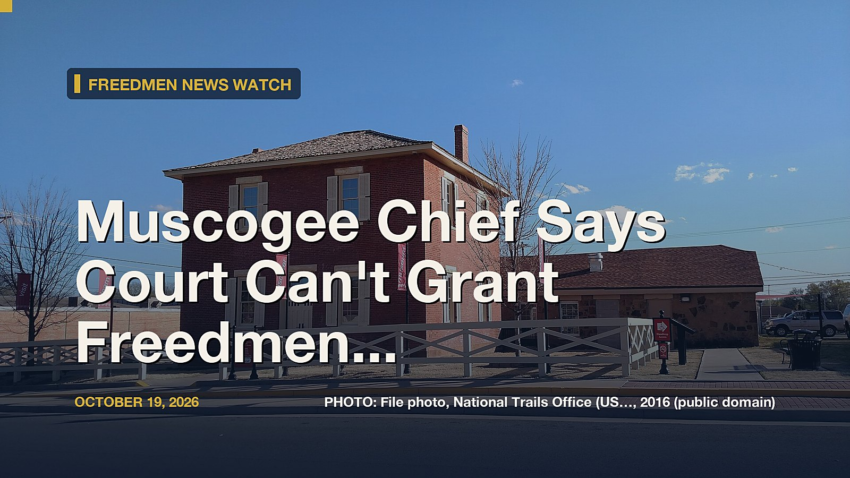
File photo: The exterior of the Cherokee National Supreme Court Museum in Tahlequah, Oklahoma (0c9bfdfd-54db-422b-85d7-786908473ff7) — National Trails Office (US National Park Service), 2016. Public domain, via Wikimedia Commons. This image is illustrative and does not depict the people or events in this report.

Kemetic Minds Editorial Desk
Verified NewsroomPrimary-sourced investigative intelligence on civil rights, voting rights, federal policy, and consumer protection. Sourced from primary legal filings, government statistics, and direct field reporting.