
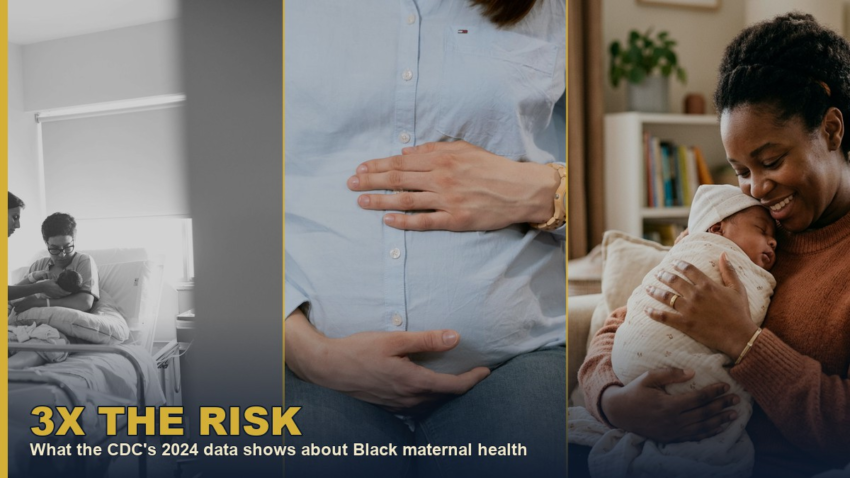
A Black woman in the United States is three times more likely to die from a pregnancy-related cause than a white woman. That’s not an estimate or an advocacy talking point — it’s the federal government’s own final 2024 data, published this year.
The numbers
The CDC’s National Center for Health Statistics released final 2024 maternal mortality data in March 2026. The overall U.S. maternal mortality rate was 17.9 deaths per 100,000 live births, not a statistically significant change from 18.6 in 2023[1].
The racial breakdown is where the real story is[1]:
- Black, non-Hispanic women: 44.8 deaths per 100,000 live births
- Asian, non-Hispanic women: 18.1
- White, non-Hispanic women: 14.2
- Hispanic women: 12.1
Black women’s rate of 44.8 is more than three times the rate for white women[1] — a gap that has persisted across multiple years of federal data, not a one-year anomaly.
What the data does and doesn’t capture
It’s worth being precise about what this specific number measures. The CDC’s system tracks deaths through 42 days after the end of pregnancy, not a full year postpartum, and it excludes deaths from suicide and overdose[1] — meaning the true toll of pregnancy-related mortality, including its mental-health dimension, is very likely undercounted by this particular measure, for every racial group.
What the CDC says is driving the gap
The CDC’s own women’s health division points to a combination of factors rather than a single cause[2]:
- Higher rates of underlying conditions like hypertension and cardiovascular disease among Black women at the time of pregnancy.
- Documented disparities in the quality of care Black women receive, including delayed responses to reported pain and symptoms.
- Structural barriers to consistent prenatal and postpartum care access.
The CDC’s featured response includes provider bias and implicit-bias training as part of its stated strategy to close the gap[2] — a notable acknowledgment, directly from the federal health agency’s own materials, that the disparity is not fully explained by underlying health conditions alone.
What can actually help, right now
- Know the warning signs of pregnancy complications — severe headache, vision changes, swelling, and shortness of breath are all reasons to seek care immediately, not wait it out.
- If you feel a concern isn’t being taken seriously, ask directly for it to be documented and escalated, and consider bringing a support person to appointments and delivery.
- Postpartum monitoring matters as much as prenatal care — most maternal deaths occur in the weeks after delivery, not just during pregnancy itself.
The Bottom Line
The CDC’s own final 2024 data shows Black women dying from pregnancy-related causes at more than three times the rate of white women — and the agency’s own materials point to care-quality disparities, not just underlying health conditions, as part of the reason why. This is measurable, federally documented, and still unresolved.
If you or someone you know has navigated pregnancy and postpartum care, what’s one thing you wish you’d known going in, or one thing that made a real difference? Share it in the comments — it could help someone reading this.
References
- Centers for Disease Control and Prevention, National Center for Health Statistics. (2026, March). Maternal mortality rates in the United States, 2024 (Health E-Stat 113). https://www.cdc.gov/nchs/data/hestat/hestat113.pdf ↩a ↩b ↩c ↩d
- Centers for Disease Control and Prevention. (2026, April). Working together to reduce Black maternal mortality. https://www.cdc.gov/womens-health/features/maternal-mortality.html ↩a ↩b
Photo by Natalia Olivera via Pexels · Photo by MART PRODUCTION via Pexels · AI image generated with Google Gemini

Kemetic Minds Editorial Desk
Verified NewsroomPrimary-sourced investigative intelligence on civil rights, voting rights, federal policy, and consumer protection. Sourced from primary legal filings, government statistics, and direct field reporting.