
KEMETIC MINDS
Extreme Earth Changes Watch — Daily Report — August 24, 2026
Today’s top story: PHIVOLCS released footage of Kanlaon Volcano emitting a grayish ash plume that rose 200 meters above its summit crater at 5:51 a.m. on Aug. 24 (GMA Network coverage, 2026). Separately, Australian authorities confirmed H5 bird flu in a fur seal, and scientists warn the virus could threaten the endangered Australian sea lion with extinction (AAP report, 2026).
Key Takeaways
- Kanlaon Volcano produced a grayish ash plume 200 meters above its summit crater on Aug. 24, with Alert Level 2 still in force (GMA Network, 2026).
- H5 bird flu was confirmed in a long-nosed fur seal, and a second seal is among five suspected events in South Australia (AAP, 2026).
- USGS reported two felt earthquakes in North Carolina, according to witness accounts [1].
- Ohio capped two weeks of storms that brought record rainfall, a historic windstorm and tornadoes [2].
- Nearly two-thirds of Dutch residents say they are concerned about extreme weather’s local impact (NL Times, 2026).
- Sinkholes above Mammoth Cave can route rainwater and surface pollutants underground in minutes (Economic Times, 2026).
Video: Mammoth Cave’s Mysterious Guardian! | Expedition X | Full Episode | Discovery Channel. Source: DiscoveryChannelInd.
1. Philippines: Kanlaon Volcano Emits 200-Meter Ash Plume Under Alert Level 2
The Philippine Institute of Volcanology and Seismology (PHIVOLCS) released sped-up camera footage of the event, recorded at 5:51 a.m. from the Upper Pantao Observation Station (VKUP), showing a grayish plume drifting east (GMA Network, 2026). The agency said Alert Level 2 remains in effect over the volcano (GMA Network, 2026).
Alert Level 2 denotes moderate volcanic unrest, involving elevated volcanic earthquakes, steam and gas emission, ground deformation, intermittent steam and ash explosions, above-baseline sulfur dioxide output and increased swelling of the volcanic edifice (GMA Network, 2026). PHIVOLCS said there is probably an intrusion of magma at depth that may lead to a magmatic eruption, and entry within the permanent danger zone must be prohibited (GMA Network, 2026).
Video: 15 MOST EXTREME Weather Events Caught on Video. Source: Top Fives.
2. Australia: H5 Bird Flu Confirmed in Seal, Endangered Sea Lions at Risk
South Australia’s Department of Primary Industries and Regions confirmed the first positive H5 bird flu case in a mammal on Sunday in a long-nosed fur seal at Beachport, about 300 km south of Adelaide, believed to have been contracted from wild birds (AAP, 2026). A second seal at The Pages Conservation Park is among five suspected H5 bird flu events recorded Monday, alongside greater crested terns and a white-fronted tern, with results expected in the coming days (AAP, 2026).
The Pages islands, between Kangaroo Island and the mainland, were the site of a mass bird mortality last week and are a crucial breeding ground for the endangered Australian sea lion, whose population is less than 12,000 (AAP, 2026). “If the virus was to reach that species we could see a huge mortality event that could threaten the species with extinction,” Antarctic ecologist Jane Younger said (AAP, 2026).
Curtin University associate professor Bill Bateman called it “a very worrying development” and said Australia should expect a mass die-off of marine mammals similar to those seen in South America and Heard Island (AAP, 2026). H5N1 killed more than 17,000 southern elephant seal pups in Argentina in 2023, and about three-quarters of the pup population was wiped out at Heard Island last year (AAP, 2026). Environment Minister Murray Watt said mass mortalities are likely and the government is examining further vaccination programs; no marine-mammal bird flu vaccine is on the market, but a trial is underway (AAP, 2026).
Video: Massive 8.8-magnitude earthquake triggers tsunami warnings. Source: NBC News.
3. United States: Two Earthquakes Reported in North Carolina
The USGS reported two earthquakes in North Carolina, and witnesses told the agency they felt the shaking [1]. No magnitudes or precise locations were included in the initial report.
Video: Leilani Lava Flows: 2018 Kilauea Eruption Drone Archive Released – 1/3 (Feb. 19, 2021). Source: Big Island Video News.
4. United States: Ohio’s Record August Storms Begin to Wind Down
After two weeks of nearly relentless storms with heavy rain and damaging wind, Ohio is shifting into a September-like pattern [2]. The month brought record rainfall, a historic windstorm and tornadoes, according to the report [2].
Video: Whatever happened to Florida sinkholes?. Source: Fox News.
5. Netherlands: Public Concern Over Extreme Weather Holds at High Level
A survey by ANP and Kieskompas found 63% of Dutch residents are concerned about extreme weather’s impact on their local area, up from 60% five years ago (NL Times, 2026). This summer the North Sea reached its highest temperature on record, the Rhine recorded its lowest-ever flow rate, and the KNMI logged more days of at least 35°C than ever before (NL Times, 2026).
Residents of Limburg remain the most concerned, at 75% versus 68% in 2021 (NL Times, 2026). Vrije Universiteit Amsterdam’s Hans de Moel said drought is the more serious problem: “We can take concrete measures to prevent flooding, but when there is a drought, we cannot simply create more water” (NL Times, 2026).
6. Kentucky: Mammoth Cave’s Sinkhole Plumbing Carries Surface Pollution Underground
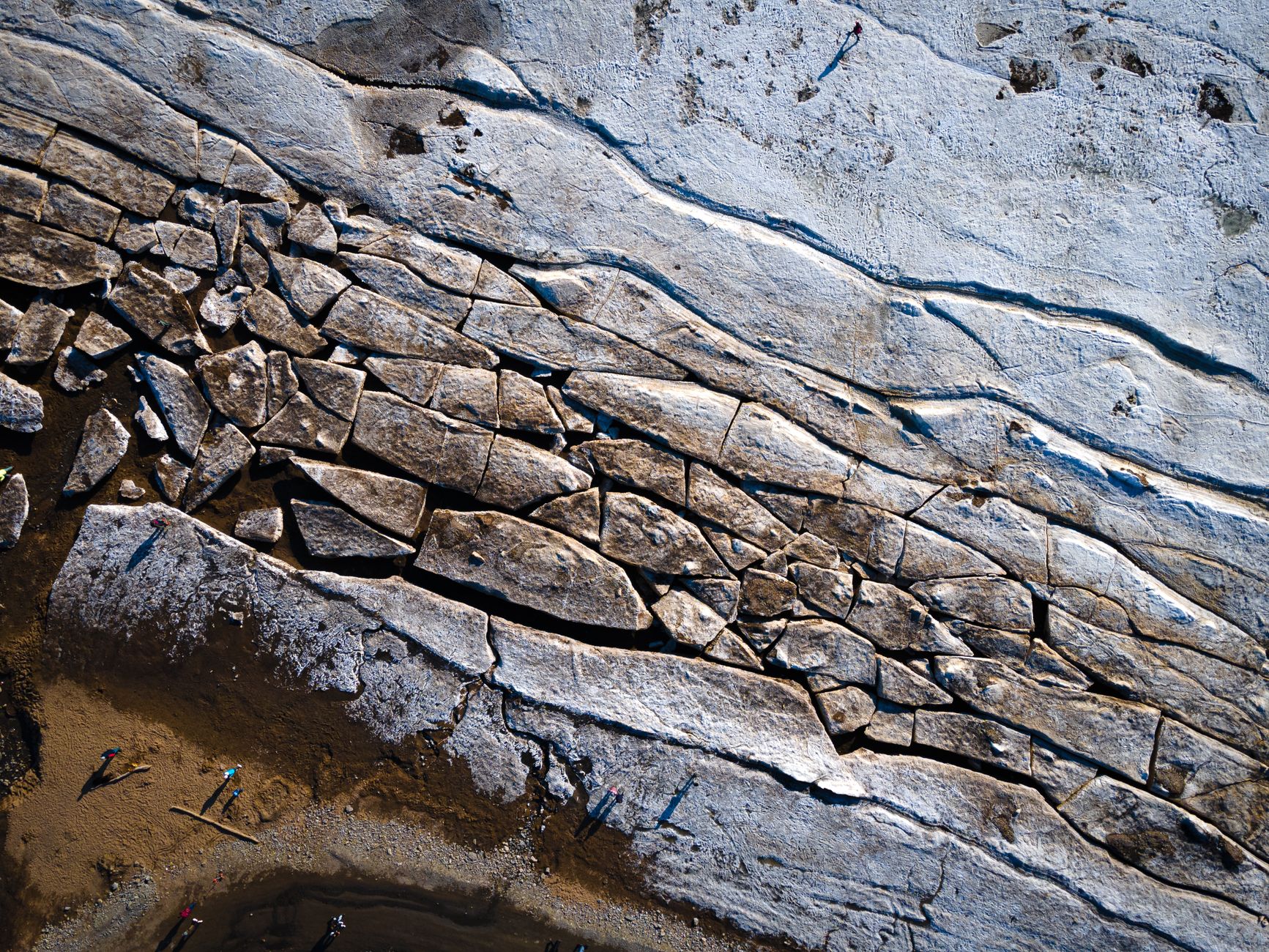
Mammoth Cave sits in karst terrain formed from soluble limestone, where sinkholes act as natural gateways for rainwater to disappear below the surface (Economic Times, 2026). The National Park Service says water from sinkholes south of the park travels underground through the cave system before emerging at springs along the Green River, with some groundwater moving more than seven miles (Economic Times, 2026).
USGS research found some precipitation can recharge underground formations almost immediately by flowing into sinkholes and falling through open shafts toward the water table (Economic Times, 2026). The same shortcuts can carry spilled chemicals, animal waste, sewage, pesticides and fertilizers into groundwater where they are difficult to see, track or contain (Economic Times, 2026).
What Scientists Are Saying
Official agencies and researchers quoted today emphasize elevated risk and preparation. PHIVOLCS maintains Alert Level 2 on Kanlaon and describes probable magma intrusion at depth that may lead to a magmatic eruption (GMA Network, 2026).
Australian experts warn of an impending marine-mammal die-off: “We are likely to see mass mortalities of birds and mammals, and I know that is a very distressing thing for Australians to hear. But we also need to be realistic,” Environment Minister Murray Watt said (AAP, 2026). In the Netherlands, Hans de Moel expects the impact of extreme weather to become increasingly noticeable, “and that will probably also lead to growing concern” (NL Times, 2026).
A Yale Climate Connections researcher argues cities should not wait for an extreme weather wake-up call, urging preparation for “events worse than anything in the historical record” and citing Superstorm Sandy (2012) as a reference point (Yale Climate Connections, 2026).
How To Track These Events
For real-time monitoring of these phenomena, the USGS publishes free public earthquake data, NOAA covers weather and space weather, and the Smithsonian Global Volcanism Program tracks volcanic activity worldwide. All three agencies maintain continuously updated public feeds during active events.
Sources for today’s roundup: Kanlaon ash emission report; H5 bird flu and sea lion report; North Carolina earthquake report; Ohio storm summary; Dutch extreme weather survey; Mammoth Cave karst report; and city preparedness commentary.
SUPPORT KEMETIC MINDS
Enjoying this coverage? Back the work and find every way to connect with us in one place.
Support the Page →Kemetic Minds Analysis
“Extreme Earth Changes Watch” exists to track real, agency-verified geophysical and weather events without the hype — every event here is tied to a named source: USGS, NOAA, the Smithsonian Global Volcanism Program, or mainstream news, rather than an anonymous social post. Earthquakes, volcanic activity, and extreme weather happen somewhere on Earth every single day; this roundup exists to separate genuinely unusual or record-setting activity from routine background activity, using the same scientific sourcing bar every day.
References
- Charlotte Observer. (2026, August 23). Two earthquakes reported in North Carolina. Witnesses felt the shaking, USGS says. https://www.charlotteobserver.com/news/local/article316983283.html ↩a ↩b
- MSN. (2026, August 24). Stormy Ohio August brings record rainfall, historic windstorm and tornadoes. https://www.msn.com/en-us/weather/extreme-weather-events/stormy-ohio-august-brings-record-rainfall-historic-windstorm-and-tornadoes/ar-AA2aOBOh ↩a ↩b ↩c
Investigative Methodology: This roundup is generated on a fixed daily schedule (morning, America/Chicago) from live wire sources. Every claim is grounded in fetched source text with a numbered citation, and this series only reports events backed by an official agency (USGS, NOAA, Smithsonian Global Volcanism Program) or mainstream news coverage — never anonymous social-media claims alone. No event is asserted to be connected to another, or framed as prophetic/supernatural, unless a cited scientist or agency source explicitly says so. Every video embed is verified to be a real, existing video via YouTube’s oEmbed endpoint before publication. No Wikipedia sources are used.
Stay Connected

Kemetic Minds Editorial Desk
Verified NewsroomPrimary-sourced investigative intelligence on civil rights, voting rights, federal policy, and consumer protection. Sourced from primary legal filings, government statistics, and direct field reporting.