
Key Takeaways
- Thousands of Black voters from across the South converged on Montgomery and Selma for the “All Roads Lead to the South” rally, protesting a recent Supreme Court ruling that eroded the Voting Rights Act and triggered a wave of gerrymandering in at least six states (Capital B News, May 2026; TheGrio, May 2026).
- New Trump-administration policies — including “America First” grant conditions that restrict funding for DEI and climate-related work — have delayed more than $200 million in wildfire prevention grants to 22 states, hamstringing controlled burns and endangering communities (NPR News, May 2026).
- Peer-reviewed research published in JSTOR Daily confirms that “pretty privilege” — the unconscious bias that attractive people are more competent and intelligent — operates across 45 countries and 11 world regions, compounding barriers for already-marginalized groups in hiring and beyond (JSTOR Daily, May 2026).
Hate & Crime
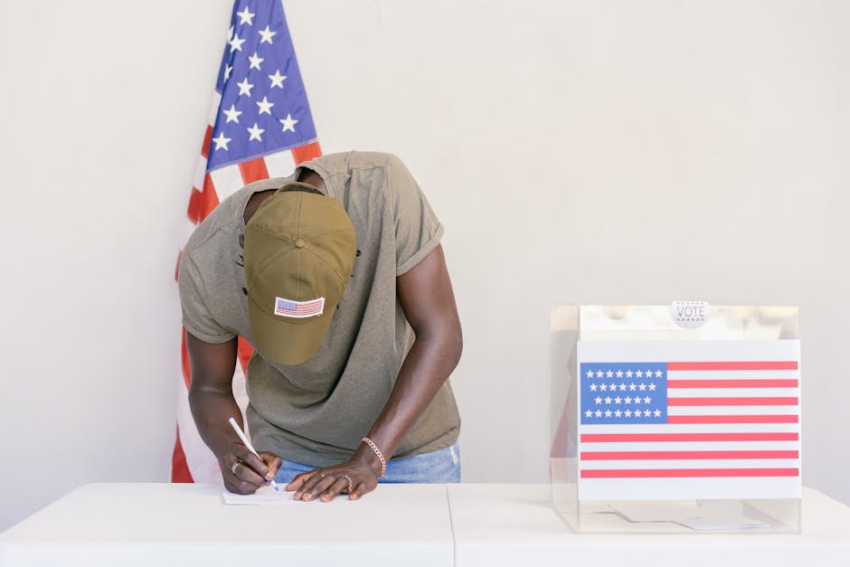
While the massive, multi-generational turnout in Montgomery was peaceful and determined, the political context that drew thousands to the streets is itself a form of systemic assault on Black political power. The Supreme Court’s 6‑3 ruling in Louisiana v. Callais — which struck down a majority-Black congressional district in Louisiana — has unleashed a coordinated wave of redistricting across Alabama, Tennessee, South Carolina, Louisiana, Mississippi, and Georgia. Within two weeks of the decision, states rushed to call special sessions or debate new maps that threaten to erase districts represented by Black members of Congress (Capital B News, May 2026). In Alabama, Gov. Kay Ivey immediately called a special session to redraw the state’s map, a move that could eliminate the seat of Rep. Shomari Figures, the first Black Democrat elected from the 2nd District in 2024. “She knew exactly how that vote would go,” said 77‑year‑old Montgomery resident Roy Wilson, who marched as a teenager in the original Selma‑to‑Montgomery protests. “You can’t overlook what they’re doing to our voices” (Capital B News, May 2026). TheGrio reported that Sen. Cory Booker called Montgomery “sacred soil,” declaring that if the fight for voting rights is lost now, “we will lose the gains and the rights and the liberties that our ancestors afforded us” (TheGrio, May 2026).Justice & Law
The Supreme Court’s decision in Louisiana v. Callais is the latest in a series of rulings that have hollowed out the Voting Rights Act of 1965. By eliminating the requirement that states with a history of discrimination obtain federal approval before changing voting laws, the Court has opened the door to aggressive gerrymandering that dilutes Black voting strength. The 6‑3 majority ruled that Louisiana’s majority-Black district was unconstitutional, and within weeks, neighboring states followed suit (Capital B News, May 2026). Legal challenges are already being prepared by civil rights organizations, but the speed of the legislative response has left many communities bracing for midterm elections under maps that could reduce Black representation in Congress. “Registering to vote is not the end. You have to go to the polls,” said Sharon Gargill, 62, of Montgomery, who recalled her mother locking her out of the house when she failed to register after turning 18. “On voting day, everyone in my household, we go to vote” (Capital B News, May 2026).Policy & Government
The same administration that has empowered anti-voting-rights litigators is also reshaping federal grant programs in ways that directly harm Black and rural communities. An NPR investigation published May 17 reveals that the U.S. Forest Service has withheld nearly $20 million from Washington state groups — and more than $200 million from 22 states and two Tribes — because of new “America First” grant conditions imposed by Agriculture Secretary Brooke Rollins. Those conditions require recipients to affirm that awards will not “support climate change” or fund “DEI initiatives,” language that conflicts with state laws in Washington and other states (NPR News, May 2026). The delayed funding is preventing controlled burns that reduce catastrophic wildfire risk — a threat that disproportionately affects Black communities in the rural South and West, where home values, insurance costs, and air quality already lag behind white neighborhoods. “If we lose a season of burning … then we can’t plan and prep … to put safe, effective fire on the ground,” said Adam Lieberg, a land manager whose nonprofit was promised $9 million but has received nothing (NPR News, May 2026). Meanwhile, the WHO has declared the Ebola outbreak in Congo and Uganda — caused by the rare Bundibugyo virus — a global health emergency, with more than 300 suspected cases and 88 deaths. The Africa CDC noted that containment is complicated by conflict and population movement, and that no approved vaccine exists for this variant (PBS NewsHour, May 2026).🧠 Kemetic Minds Analysis
Three seemingly separate stories — a voting-rights march in Alabama, stalled wildfire grants, and a global health emergency — are, in fact, threads of the same fabric. Each reveals how the current administration’s ideological priorities are weakening the institutional safeguards that Black communities rely on. The gutting of the Voting Rights Act through the courts is mirrored by the gutting of federal grant programs through executive action: both are acts of structural disinvestment that target the political power and physical safety of marginalized people. The Montgomery march was a direct response to the judicial rollback of the VRA, but the same “America First” logic that underpins the grant conditions also animates the anti-DEI, anti‑climate, and anti-immigration policies that are slowing disaster prevention and eroding public trust. When the Forest Service withholds fire‑prevention funds because of a state’s commitment to diversity, it is not a bureaucratic glitch — it is a policy choice that prioritizes ideological conformity over community protection. And when the WHO struggles to secure vaccines for a rare Ebola variant because pharmaceutical companies see no profit in a virus that primarily affects African nations, the same global inequity that left Black Americans disproportionately exposed to COVID‑19 is on display once again. Finally, the JSTOR Daily research on “pretty privilege” — which shows that attractiveness bias operates across 45 countries and 11 world regions — reminds us that systemic discrimination is not limited to voting booths or grant applications. It is encoded in the micro-interactions of hiring, housing, and policing. For Black Americans, the compounding effects of race, gender, and appearance bias mean that even the most qualified candidates face barriers that their white peers do not. As we report on these intersecting threats, Kemetic Minds continues to track how Project 2025-style policies and judicial activism are reshaping the landscape of civil rights — and how communities are organizing to resist (JSTOR Daily, May 2026).📣 From the Kemetic Minds Newsroom:
As we report on these critical issues, we urge our readers to stay informed, engage in their communities, and support organizations working to protect civil rights. The fight for voting rights, environmental justice, and equitable treatment under the law is not a relic of the 1960s — it is happening now, in Montgomery, in Washington state, and across the globe.References
- Capital B News (May 2026). ‘We’re Not Going Back’: Black Voters March in Montgomery Against Redistricting. Retrieved May 17, 2026.
- TheGrio (May 2026). All Roads Lead To The South rally brings old and new generations together in fight for Black voting rights. Retrieved May 17, 2026.
- NPR News (May 2026). New burn bans and Trump’s battle with immigration and DEI are impacting forest fires. Retrieved May 17, 2026.
- PBS NewsHour (May 2026). WHO declares Ebola outbreak in Congo and Uganda a global health emergency. Retrieved May 17, 2026.
- JSTOR Daily (May 2026) (Scholarly Source). Hired at First Sight: The Power of “Pretty Privilege”. Retrieved May 17, 2026.

Kemetic Minds Editorial Desk
Verified NewsroomPrimary-sourced investigative intelligence on civil rights, voting rights, federal policy, and consumer protection. Sourced from primary legal filings, government statistics, and direct field reporting.