KEMETIC MINDS
Extreme Earth Changes Watch — Daily Report — August 27, 2026
Today’s briefing leads with Nepal, where the USGS now attributes flash floods that killed 165 people to a glacial collapse and debris flow — not the earthquake initially reported [1]. A magnitude 5.6 quake also shook Northern California, Typhoon Narra set flood records in southern China, and satellite radar captured a Manhattan-sized iceberg calving off Greenland’s Petermann Glacier.
- The USGS ruled out an earthquake and tied Nepal’s disaster to a glacial collapse and debris flow, revising the initial magnitude-4.4 report to a 5.2 seismic event [1].
- The floods, which originated in Tibet, killed 165 people and left 1,100 missing in Nepal’s Rasuwa and Dhading districts, including 300 Indian nationals [1].
- A magnitude 5.6 earthquake struck 6.8 miles north of Redwood Valley, California, causing some injuries, cutting power to 10,000 customers, and triggering alerts to more than 1 million people [2].
- Typhoon Narra pushed water levels in Chongzuo, China, past a 2008 record, forcing more than 15,000 evacuations there and 54,000 relocations across Guangxi [3].
- Satellite radar captured a roughly 30-square-mile, Manhattan-sized iceberg breaking off Greenland’s Petermann Glacier on Aug. 4 — the largest ice loss there since 2012 (Discover Magazine, 2026).
- Sinkholes disrupted roads in Kansas City, Toronto’s Riverdale neighborhood, and near Gurugram’s IFFCO Chowk in India [4][5][6].
Video: Earthquake swarm hits Yellowstone National Park. Source: KBZK Bozeman MT News.
1. Nepal: Glacial Collapse — Not an Earthquake — Set Off Deadly Flash Floods
The USGS revised its initial report of a magnitude 4.4 earthquake after further analysis of data from nearby seismic stations, long-period seismic waves, and satellite images showed no earthquake had occurred (Bhaskar English, 2026). Instead, the seismic event — revised to magnitude 5.2 — was caused by a glacial collapse and debris flow [1]. The Times of India also leads its coverage with the USGS ruling out an earthquake [7].
The flash floods originated in Tibet on Wednesday and caused widespread destruction in Nepal’s Rasuwa and Dhading districts, killing 165 people and leaving 1,100 missing, including 300 Indian nationals [1].
Daniel Shugar, an associate professor of geomorphology at the University of Calgary, said the floods were triggered when a glacier rolled off a cliff at about 5,200 metres; satellite images show the area’s glaciers lost significant snow within 24 hours, and melting snow and ice may have sent a large amount of water into the glacier [1].
Video: The Impossible Volcano, A Lake Inside an Island Inside a Lake! #TheTaalVolcano. Source: Moments and Stories TV .
2. Northern California: Magnitude 5.6 Earthquake Rattles Mendocino County
A magnitude 5.6 earthquake shook Northern California on Wednesday morning, about 6.8 miles north of Redwood Valley at a depth of roughly 5 miles (KCRA, 2026). ShakeAlert initially reported a 6.0 tremor near Willits at 8:10 a.m. before the USGS downgraded the event to 5.6 [2].
The Mendocino County Executive Office reported some injuries, no deaths, and no major damage; PG&E said 10,000 utility customers lost power, since restored, with no damage to its facilities [2]. ShakeAlert notifications reached more than 1 million Californians [2].
Witnesses described violent shaking — Fred Suddith, at the Coyote Valley resort in Redwood Valley, said glass fell from shelves and wine bottles broke, while Andrew Hosford of Willits said the quake “hit like a freight train” [2]. Video also showed bubbles forming in the water at Clear Lake after the quake [2].
Video: Humboldt County residents share video of earthquake damage on social media. Source: KPIX | CBS NEWS BAY AREA.
3. Southern China and Taiwan: Typhoon Narra’s Record Floods; Saudel Approaches
Typhoon Narra made landfall as a tropical storm Tuesday evening on China’s southern island province of Hainan after lingering over the Beibu Gulf for several days, dumping heavy rain on Guangxi, Hainan, and Guangdong (The Guardian, 2026). In Chongzuo, Guangxi — famous for its giant waterfalls and karst limestone mountains — more than 15,000 people were evacuated Tuesday after water levels surpassed a record high set in 2008; China relocated a total of 54,000 people in Guangxi [3].
In Chongzuo, river water overflowed into the city, reaching the rooftops of some buildings and power lines, and authorities ordered all businesses and tourist operations to cease [3]. Heavy rain was forecast to persist across parts of Vietnam and southern China, with Guangxi, Guangdong, Hainan, and Fujian expected to receive torrential rain [3].
Meanwhile, medium-strength Typhoon Saudel moved toward southern Japan and northern Taiwan, with Japan’s weather agency warning of destructive winds and high seas near Okinawa; Taiwan’s Central Weather Administration said Saudel is expected to pass north of Taiwan late Thursday into Friday while gradually weakening, with uncertainty about rainfall timing and extent [3]. Taiwan also reported one dead and four missing from a separate tropical depression that flooded Tainan and Kaohsiung, where almost a metre of rain fell from Sunday to Tuesday [3].
Video: Undersea Volcano Eruptions Caught On Video. Source: Discovery.
4. Greenland: Manhattan-Sized Iceberg Calves From Petermann Glacier
On Aug. 4, 2026, an approximately 30-square-mile chunk of ice, comparable in size to Manhattan, broke away from the Petermann Glacier in northwest Greenland (Discover Magazine, 2026). Europe’s Copernicus Sentinel-1 radar mission captured a large crack along the ice tongue’s centerline on Aug. 3, with the massive, flat-topped iceberg separating from the glacier’s eastern side a day later (Discover Magazine, 2026).
The new ice island is up to 500 feet thick and represents the glacier’s largest loss of floating ice since 2012 and the biggest calving event in the Arctic since 2020 (Discover Magazine, 2026). “We’ve anticipated this break for years,” said Adam Garbo, a Ph.D. student at the University of Ottawa involved in the glacier’s monitoring program; “it’s a powerful reminder of how quickly these systems can change” (Discover Magazine, 2026). Scientists are keeping a close watch, with the report noting that two more bergs could follow (Discover Magazine, 2026).
Video: Dozens Of Sinkholes Appear Across Central Florida After Heavy Rain | NBC Nightly News. Source: NBC News.
5. Sinkholes: Kansas City, Toronto, and Gurugram Report Road Collapses
A sinkhole on Southwest Trafficway in Kansas City, Missouri, between 28th and 31st Streets, blocked the left southbound lane, with KC Water crews investigating the cause; officials said it is unclear what caused the collapse or how long repairs will take (KCTV, 2026). In Toronto, a large sinkhole opened in the Riverdale neighborhood — the second to form in the city’s east end this week (Toronto Star, 2026).
In India, a massive sinkhole opened near Gurugram’s IFFCO Chowk after heavy rain, drawing online reactions including “I’m used to it” (News18, 2026). No connection between these collapses has been reported.
6. Iceland: Earthquake Swarm Over After 200 Recorded Quakes
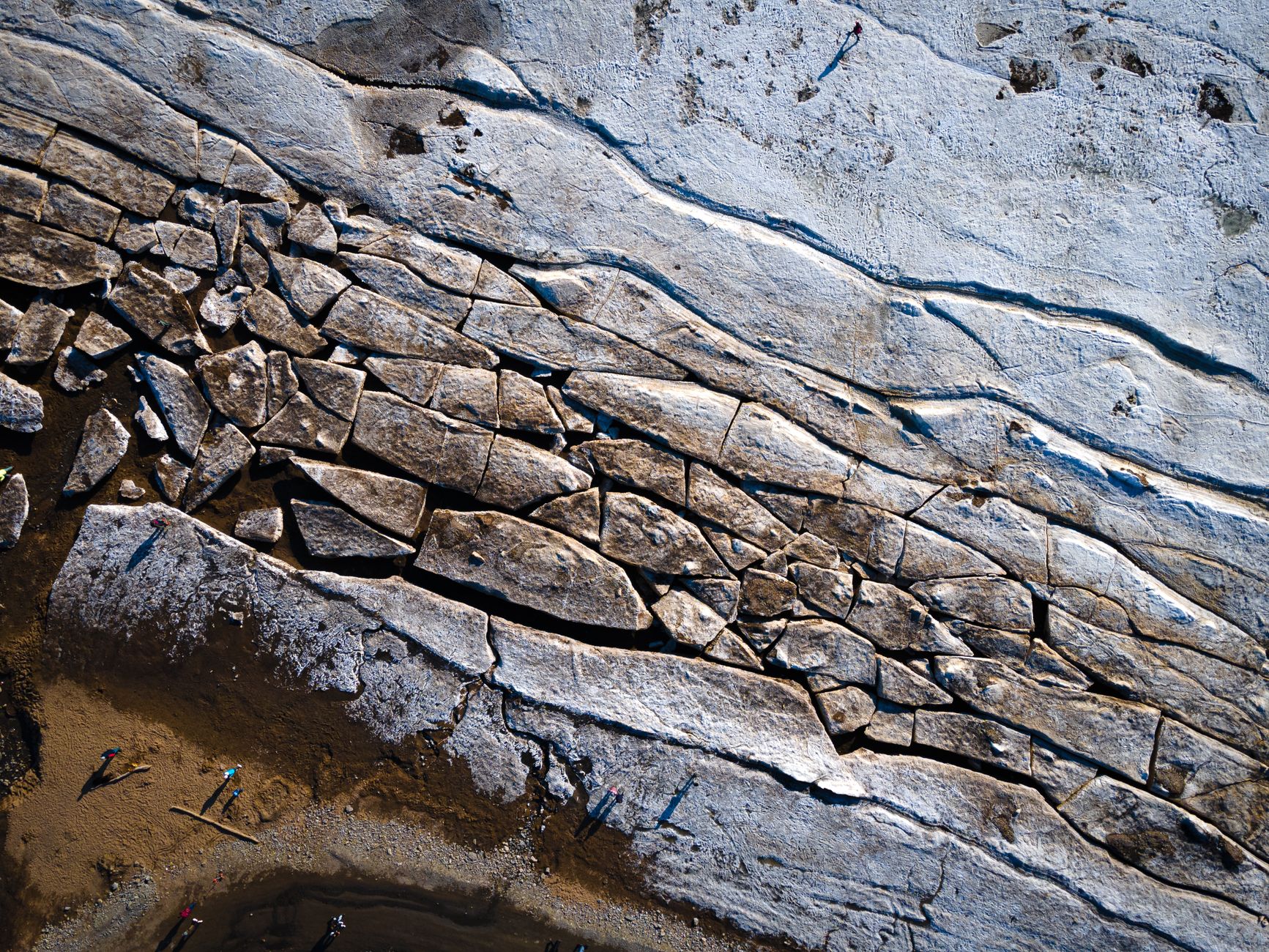
An earthquake swarm in Iceland has ended, with 200 earthquakes recorded during the sequence (Iceland Monitor, 2026). The report did not include further details on location or maximum magnitude.
7. Philippines: Volcano-Inside-A-Lake Landmark Draws Renewed Attention
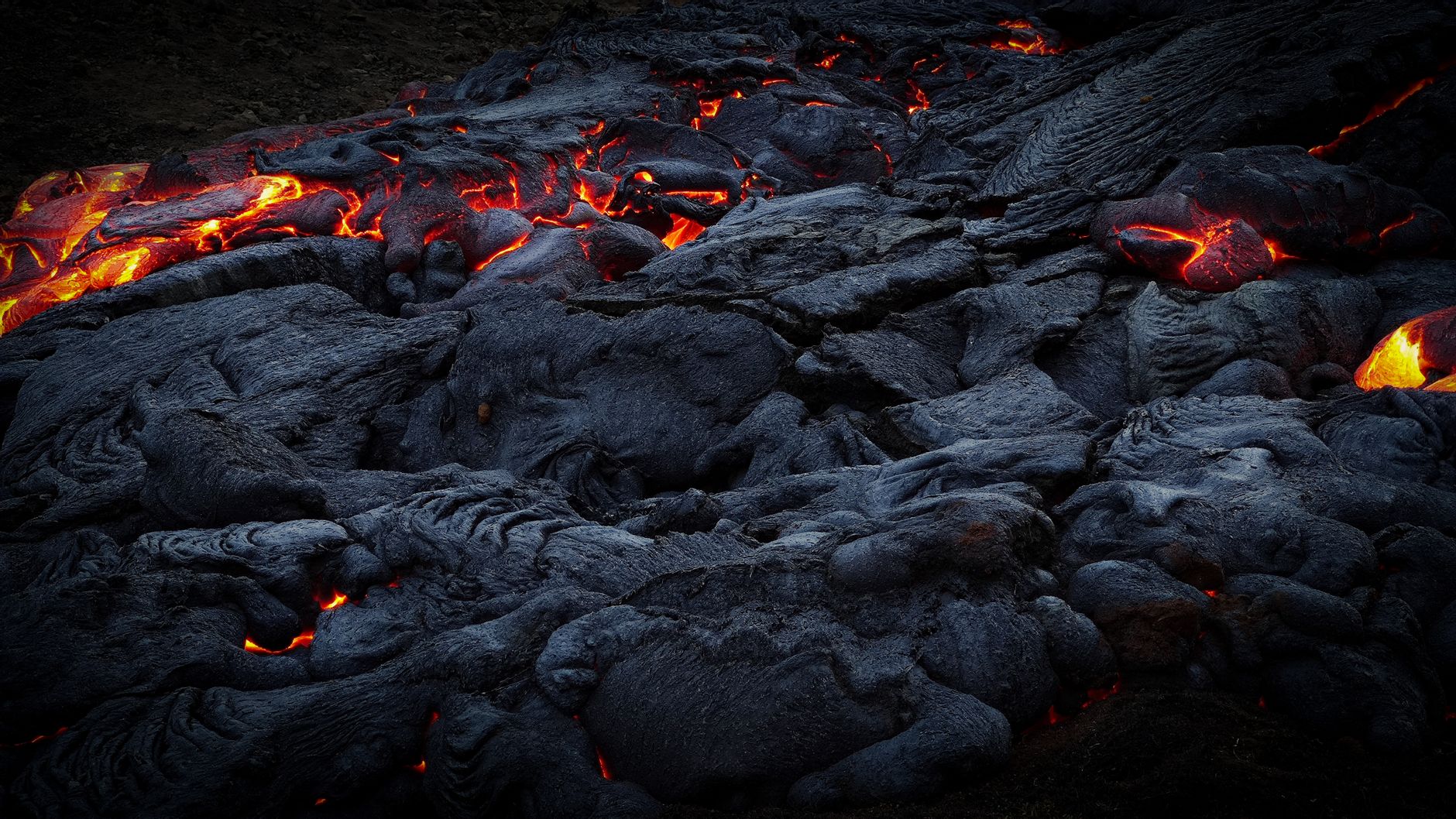
A Philippine island that is not just an active volcano, but a volcano inside a lake inside another volcano, continues to fascinate travelers; NDTV notes its layered geography “has puzzled and fascinated travellers for decades” (NDTV, 2026). The report is a feature on the landmark’s structure rather than a new eruption event.
What Scientists Are Saying
The USGS ruled out an earthquake in Nepal after analyzing long-period seismic waves and satellite images, attributing the magnitude-5.2 seismic signal to a glacial collapse and debris flow [1][7]. Daniel Shugar of the University of Calgary linked the collapse to a glacier rolling off a cliff at about 5,200 metres, with rapid snow and ice loss in the preceding 24 hours [1].
In Greenland, glacier monitor Adam Garbo described the Petermann calving as anticipated, calling it “a powerful reminder of how quickly these systems can change” (Discover Magazine, 2026). In the Western Pacific, Japan’s weather agency warned of destructive winds and high seas from Typhoon Saudel, while Taiwan’s Central Weather Administration flagged uncertainty in its rainfall forecast [3].
In California, the USGS downgraded the initial 6.0 ShakeAlert reading to 5.6, and local and utility crews are investigating damage and infrastructure [2]. In Kansas City, KC Water is investigating the cause of the Southwest Trafficway collapse [4].
How To Track These Events
For real-time monitoring, the USGS earthquake monitoring pages publish live seismic data and ShakeAlert information; NOAA provides weather, tropical cyclone, and space-weather watches; and the Smithsonian Global Volcanism Program tracks volcanic activity worldwide. All three services are free and publicly accessible.
SUPPORT KEMETIC MINDS
Enjoying this coverage? Back the work and find every way to connect with us in one place.
Support the Page →Kemetic Minds Analysis
“Extreme Earth Changes Watch” exists to track real, agency-verified geophysical and weather events without the hype — every event here is tied to a named source: USGS, NOAA, the Smithsonian Global Volcanism Program, or mainstream news, rather than an anonymous social post. Earthquakes, volcanic activity, and extreme weather happen somewhere on Earth every single day; this roundup exists to separate genuinely unusual or record-setting activity from routine background activity, using the same scientific sourcing bar every day.
References
- Bhaskar English. (2026, August 27). Nepal floods caused by glacier collapse, not earthquake: USGS revises quake report of 4.4 magnitude; over 1…. https://www.bhaskarenglish.in/international/news/nepal-floods-glacier-collapse-earthquake-usgs-report-update-138850319.html ↩a ↩b ↩c ↩d ↩e ↩f ↩g ↩h
- KCRA. (2026, August 27). Magnitude 5.6 earthquake rattles Northern California: Some injuries reported, thousands lose power. https://www.kcra.com/article/northern-california-earthquake-redwood-valley/71699019 ↩a ↩b ↩c ↩d ↩e ↩f ↩g
- The Guardian. (2026, August 27). Typhoon Narra: record flood waters submerge homes and force mass evacuations in China. https://www.theguardian.com/world/2026/aug/26/typhoon-narra-floods-evacuations-china ↩a ↩b ↩c ↩d ↩e ↩f ↩g
- KCTV. (2026, August 26). Sinkhole on Southwest Trafficway causes traffic delays in Kansas City. https://www.kctv5.com/2026/08/26/sinkhole-southwest-trafficway-causes-traffic-delays-kansas-city/ ↩a ↩b
- Toronto Star. (2026, August 26). Large sinkhole opens up in Riverdale — second to form in Toronto’s east end this week. https://www.thestar.com/news/gta/large-sinkhole-opens-up-in-riverdale—-second-to-form-in-torontos-east-end-this-week/article_ef82a4b7-344f-43c6-bb08-a77538436db6.html ↩
- News18. (2026, August 26). WATCH: Massive Sinkhole Opens Near Gurugram’s IFFCO Chowk After Heavy Rain, Internet Says 'I’m Used To It'. https://www.news18.com/viral/watch-massive-sinkhole-opens-near-gurugrams-iffco-chowk-after-heavy-rain-internet-says-im-used-to-it-ws-l-10294299.html ↩
- The Times of India. (2026, August 27). What triggered Nepal’s catastrophic flash floods? USGS rules out earthquake. https://timesofindia.indiatimes.com/world/rest-of-world/what-triggered-nepals-catastrophic-flash-floods-usgs-rules-out-earthquake/articleshow/133554948.cms ↩a ↩b
Investigative Methodology: This roundup is generated on a fixed daily schedule (morning, America/Chicago) from live wire sources. Every claim is grounded in fetched source text with a numbered citation, and this series only reports events backed by an official agency (USGS, NOAA, Smithsonian Global Volcanism Program) or mainstream news coverage — never anonymous social-media claims alone. No event is asserted to be connected to another, or framed as prophetic/supernatural, unless a cited scientist or agency source explicitly says so. Every video embed is verified to be a real, existing video via YouTube’s oEmbed endpoint before publication. No Wikipedia sources are used.
Stay Connected

Kemetic Minds Editorial Desk
Verified NewsroomPrimary-sourced investigative intelligence on civil rights, voting rights, federal policy, and consumer protection. Sourced from primary legal filings, government statistics, and direct field reporting.