
KEMETIC MINDS CASE UPDATE
Justice & Courts | August 23, 2026
More than a year after a fight in the bleachers at a Frisco, Texas track meet ended in a fatal stabbing, the case of State of Texas v. Karmelo Anthony has moved from trial to appeal. Here is the verified timeline of what happened, how it compares to two other teen stabbing cases, and what the data says about sentencing disparities — drawn only from official records, on-record court reporting, and verified government/research data.
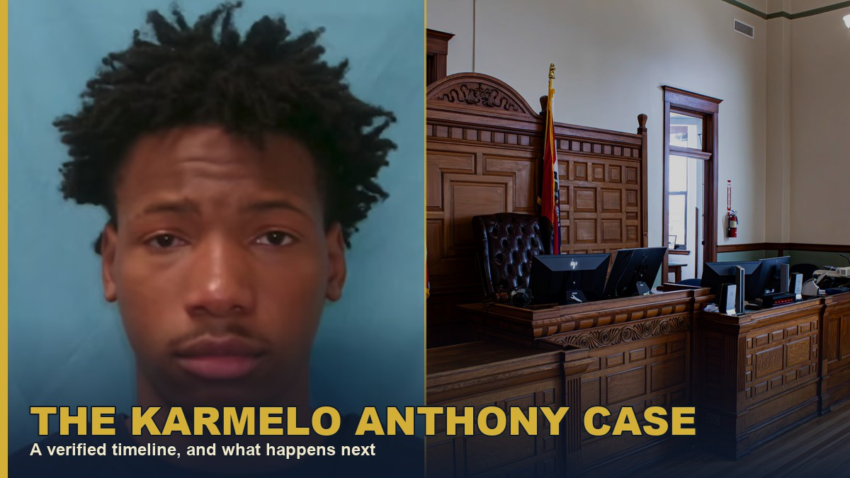
Booking photo via Collin County Sheriff's Office · Photo by Zachary Caraway via Pexels
The Incident
On April 2, 2025, a stabbing at a high school track meet at Kuykendall Stadium in Frisco, Texas left 17-year-old Austin Metcalf, a student at Frisco’s Memorial High School, dead. Karmelo Sincere Anthony, also 17 at the time and a student at Frisco’s Centennial High School, was identified as the person who stabbed Metcalf during an altercation at the event[1].
The Indictment
On June 24, 2025, Collin County District Attorney Greg Willis announced that a Collin County grand jury had returned a first-degree murder indictment against Anthony. “When something like this happens at a school event, it shakes people to the core,” Willis said in the office’s official announcement[1].
- First-degree murder in Texas carries a punishment range of 5 to 99 years, or life in prison, plus an optional fine of up to $10,000[1].
- Because Anthony was 17 at the time of the incident, Texas law treated him as an adult in the criminal justice system[1].
- Anthony’s defense argued the stabbing occurred under “sudden passion” during a confrontation, rather than as a premeditated act; prosecutors argued the stabbing was deliberate[2].
Trial and Verdict
Anthony and Metcalf attended different schools and had no prior connection before the confrontation that led to the stabbing[2]. On June 10, 2026, a Collin County jury found Anthony guilty of murder in the fatal stabbing of Austin Metcalf[3]. The jury deliberated roughly two and a half hours before returning a sentence of 35 years in prison — within the 5-to-99-years-or-life range set by law[2].
The New-Trial Motion
Following the verdict and sentence, Anthony’s defense team filed a motion seeking a new trial, arguing the trial was compromised by private agreements that restricted courtroom access and limited testimony about both the defendant’s and the victim’s backgrounds. On August 22, 2026, Judge Michael Chitty denied that motion, leaving the conviction and 35-year sentence in place[4].
What Happens Next: The Appeal
Defense attorney Russell Wilson responded to the ruling by confirming the next step: “We respectfully disagree with the ruling and remain firmly committed to protecting our client’s rights … We will continue the appeal in the Fifth Court of Appeals and pursue every legal remedy available[4].”
An appeal to the Fifth Court of Appeals does not retry the facts of the case. Appellate judges review the trial record for legal errors — issues like evidentiary rulings, jury instructions, or procedural questions — rather than re-hearing witness testimony. The court can affirm the conviction, reverse it, or send the case back to the trial court, and the process typically takes many months. Case records and future filings remain publicly searchable through Collin County’s official court records portal[5].
How This Case Compares
Since Anthony’s conviction, his 35-year sentence has repeatedly been placed alongside two other teenage stabbing deaths that ended in far shorter sentences — comparisons that sports commentator Stephen A. Smith raised directly on NewsNation, pointing to both the sentencing gap and the makeup of Anthony’s jury as worth scrutinizing[6].
Caysen Allison and Joe Ramirez
In May 2022, Caysen Allison, then a student at Belton High School in Bell County, Texas, fatally stabbed classmate Joe Ramirez during a fight in a school bathroom. A jury acquitted Allison of murder and instead convicted him of the lesser charge of criminally negligent homicide[7].
- A judge added a deadly-weapon enhancement to the conviction, ruling out probation and raising Allison’s possible sentence from 2 to 10 years[7].
- On June 23, 2025, Judge Wade Faulkner handed down the maximum available sentence: 10 years in prison[7].
- Allison is white; Ramirez was Hispanic[6].
Tyler Flach and Khaseen Morris
In September 2019, 16-year-old Khaseen Morris was fatally stabbed by Tyler Flach, then 18, during an after-school fight outside a strip mall in Oceanside, New York, after Flach organized a group to confront Morris[8]. Flach is white; Morris was Black[9].
- A jury convicted Flach of second-degree murder, first-degree gang assault, third-degree assault, and weapons possession[8].
- On February 28, 2023, Flach was sentenced to 25 years to life in prison[8].
The three cases share a basic shape — a fight between teenagers that ended with one of them dead from a knife wound — but produced outcomes ranging from a 10-year sentence on a negligent-homicide conviction to a 35-year murder sentence.
The Disparities in the Data
Anthony’s own jury became part of this conversation. Collin County is about 12.1% Black, but no Black jurors were seated on the panel that heard his case; prosecutors used peremptory strikes against three Black prospective jurors, and the presiding judge allowed those strikes over defense objection[10].
That single case sits inside a much larger, independently documented pattern. Two verified data sets covering roughly the past five years quantify it:
Figure 1
Federal Sentencing Disparity vs. Similarly Situated White Male Offenders
Note. The U.S. Sentencing Commission’s own 2023 report on fiscal years 2017–2021 found Black male federal offenders received sentences 13.4% longer than similarly situated White male offenders across all sentences (including probation), and 4.7% longer in imprisonment length specifically; Hispanic male offenders received sentences 11.2% and 1.9% longer, respectively[11].
A separate, self-defense-specific pattern shows up in state-level self-defense law data. An Everytown for Gun Safety analysis of FBI Supplementary Homicide Reports data from 2019–2023 found that in states with “Shoot First” (stand-your-ground) laws, homicides in which a white shooter kills a Black victim are ruled justifiable roughly four times as often as the reverse, versus about three times as often in states without such laws — and the gap is far wider in some states individually[12].
Figure 2
How Much More Often a White-on-Black Shooting Is Ruled ‘Justified’
Note. Michigan shows the widest documented gap in the Everytown analysis, at 12.4 times; a separate 2022 peer-reviewed study in JAMA Network Open found stand-your-ground laws are independently associated with a roughly 8% increase in monthly homicide rates nationwide, with some states seeing increases above 16%[13].
None of this data determines what happened in any single case, including Anthony’s own pending appeal. But taken together with the jury composition in his trial, it is the documented backdrop against which commentators have been drawing these comparisons.
Kemetic Minds Analysis
This case moved through the system in a fairly typical, if closely watched, sequence: indictment, trial, conviction, a denied post-verdict motion, and now an appeal. Comparing it to Allison and Flach doesn’t answer whether Anthony’s 35-year sentence was right or wrong on its own facts — but it does show his case landed inside a documented, quantifiable pattern, not an isolated outlier. What’s worth tracking going forward is not speculation about the outcome but the actual, publicly filed record at the Fifth Court of Appeals — that filing history is the only reliable way to know what genuinely happens next, as opposed to what gets repeated online.
References
- Willis, G. (2025, June 24). DA Greg Willis announces first-degree murder indictment in Frisco track meet stabbing death of Austin Metcalf; Karmelo Anthony charged. Collin County District Attorney’s Office. collincountyda.com ↩a ↩b ↩c ↩d
- CBS News Texas. (2026, June 10). Karmelo Anthony sentenced to 35 years in Texas track meet murder of Austin Metcalf. cbsnews.com/texas ↩a ↩b ↩c
- CBS News Texas. (2026). Karmelo Anthony found guilty of murder in fatal stabbing of Frisco student Austin Metcalf. cbsnews.com/texas ↩
- CBS News Texas. (2026, August 22). Judge denies Karmelo Anthony’s appeal for a new trial in killing of Austin Metcalf. cbsnews.com/texas ↩a ↩b
- Collin County, Texas. (2026). Case information: State of Texas v. Karmelo Sincere Anthony [Official court records portal]. collincountytx.gov ↩
- Whiteside, S. (2026, June 22). Karmelo Anthony's sentence: How does it compare to a similar case? Stephen A. Smith weighs in. NewsNation. newsnationnow.com ↩a ↩b
- Herber, M. (2025, June 23). 'You got 10 years. I got life without my son': Joe Ramirez's mom confronts Caysen Allison. KWTX. kwtx.com ↩a ↩b ↩c
- Donnelly, A. T. (2023, February 28). Lido Beach man sentenced to 25 years to life in prison for murdering Oceanside High School student. Nassau County District Attorney's Office. nassauda.org ↩a ↩b ↩c
- NewsOne Staff. (2019, September). White teen arrested for stabbing Black student as dozens watched. NewsOne. newsone.com ↩
- Dallas Morning News. (2026). Jurors selected in Karmelo Anthony murder trial. None are Black. dallasnews.com ↩
- U.S. Sentencing Commission. (2023, November 14). 2023 demographic differences in federal sentencing [Official research report]. ussc.gov ↩
- Everytown for Gun Safety. (2025, July 21). The dangers of shooting first: 'Stand your ground' laws are a license to kill [Analysis of FBI Supplementary Homicide Reports data, 2019–2023]. everytownresearch.org ↩
- Degli Esposti, M., Wiebe, D. J., Gasparrini, A., & Humphreys, D. K. (2022). Analysis of 'stand your ground' self-defense laws and statewide rates of homicides and firearm homicides. JAMA Network Open, 5(2), e220077. doi.org/10.1001/jamanetworkopen.2022.0077 ↩
Methodology: The Anthony/Metcalf timeline is sourced to the Collin County District Attorney’s own official announcement, the official Collin County case-records portal, and on-record CBS News Texas court reporting naming the officials quoted. Case facts for Caysen Allison and Tyler Flach come from on-record local news reporting (KWTX) and the Nassau County District Attorney’s own official sentencing announcement, respectively; the jury-composition finding comes from The Dallas Morning News’s court reporting; and the sentencing-disparity figures come directly from the U.S. Sentencing Commission’s own 2023 report and an Everytown for Gun Safety analysis of FBI Supplementary Homicide Reports data, corroborated by a peer-reviewed 2022 study in JAMA Network Open. No claim in this piece is sourced from Wikipedia, opinion commentary, or unverified social media accounts.
📱 Stay Connected

Kemetic Minds Editorial Desk
Verified NewsroomPrimary-sourced investigative intelligence on civil rights, voting rights, federal policy, and consumer protection. Sourced from primary legal filings, government statistics, and direct field reporting.