
KEMETIC MINDS
Preparedness & Home Safety Guide
Losing power, water, or gas doesn’t require a disaster movie scenario — a storm, a grid failure, a boil-water notice, or a propane shortage can knock any one of them out for days. This guide covers what actually works for each of the three, broken into low, mid, and high budget tiers so you can build real readiness at whatever price point makes sense for your household — plus a section on home and personal defense gear, since being prepared also means being able to protect what you’ve stored. A free, printable PDF version of the full checklist is at the bottom.
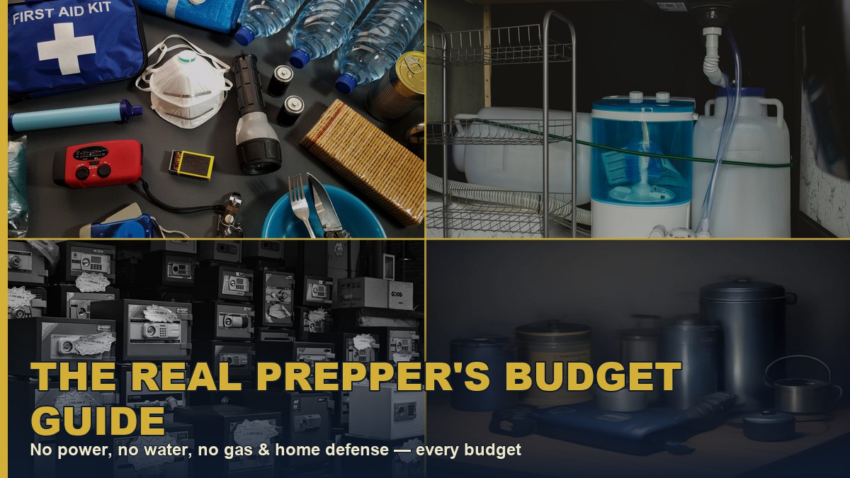
Photo by Roger Brown via Pexels · Photo by Melike B via Pexels · Photo by Ray Hamad via Pexels · AI image generated with Sana (via pollinations.ai)
1. Losing Power: What Actually Works, By Budget
A power outage isn’t just an inconvenience — it affects refrigeration, heat, medical equipment, and communication all at once. The USDA’s rule of thumb: a closed refrigerator keeps food safe for about four hours, and a full freezer for about 48 hours, so how you prepare shapes how much you lose[8]. Ready.gov’s baseline guidance for any outage starts with light, communication, and a way to charge devices[9].
💡 Low Budget (under $50)
- Two or three battery-powered LED flashlights, plus a large stock of spare batteries.
- A hand-crank or battery-powered AM/FM radio to receive emergency broadcasts.
- A basic phone power bank (10,000–20,000mAh) kept charged at all times.
- Matches, a lighter, and a battery-powered lantern for shared light in a room.
🔋 Mid Budget ($150–$500)
- A portable power station (300–500Wh lithium battery) that can run a phone, small fridge, or CPAP machine for several hours between charges.
- A set of rechargeable LED lantern/flashlight combos so you’re not burning through disposable batteries.
- Surge protectors on your computer and major appliances to guard against damage when power returns.
- A written, on-paper list of emergency contacts — cell towers can go down too.
⚡ High Budget ($1,000+)
- A solar generator/battery system (1,000W+ inverter, expandable solar panels) or a portable dual-fuel generator in the 3,000–7,500W range[1].
- A whole-home standby generator with an automatic transfer switch, professionally installed, for near-seamless backup during extended outages.
- Hardwired carbon monoxide detectors on every level of the home — non-negotiable if you’re running any kind of generator, which must always run outdoors, never in a garage or near windows[2].
2. Losing Water: What Actually Works, By Budget
Whether it’s a boil-water notice, a contamination event, or a total service failure, water is the single resource you can least afford to improvise on. Start with storage, then layer in filtration.
💧 Low Budget (under $50)
- Store at least one gallon of water per person, per day, for a minimum of three days, in clean, food-grade, sealed containers[3].
- Water purification tablets and unscented liquid household bleach for emergency disinfection (roughly ¼ teaspoon per gallon, per CDC ratios)[4].
- A personal filter straw for on-the-go filtering of questionable water sources.
🚰 Mid Budget ($150–$300)
- A gravity-fed, multi-stage countertop water filter rated for biological contaminants — no power or plumbing required, works during a boil-water notice or a total outage.
- One or two stackable 55-gallon food-grade water storage barrels with a hand siphon pump.
- Extra replacement filter cartridges kept on hand so a single filter failure doesn’t leave you stuck.
🏠 High Budget ($1,500+)
- A whole-house water filtration and UV disinfection system installed at the main water line.
- A large-capacity storage tank (275–500 gallons) with its own pump, refilled periodically and rotated for freshness.
- A rainwater catchment system with first-flush diversion and its own filtration stage for long-term, self-sufficient supply.
3. Losing Gas: What Actually Works, By Budget
“Losing gas” covers two different problems — no heat and no cooking fuel — and both come with real safety hazards if you improvise carelessly. Never bring an outdoor-rated heater, grill, or generator indoors for heat or power; carbon monoxide poisoning is one of the most common causes of death after a utility failure[2].
🔥 Low Budget (under $60)
- A single-burner butane or propane camp stove with a few spare fuel canisters for cooking without gas service.
- Waterproof matches or a butane lighter stored in a dry, accessible spot.
- Wool blankets or cold-rated sleeping bags for every household member in case heat is out too.
🍳 Mid Budget ($150–$400)
- A two-burner propane camp stove plus two or three extra 20lb propane tanks kept safely outdoors.
- A propane-safe indoor heater with an oxygen-depletion sensor, rated explicitly for indoor use[5] — never use an outdoor-rated heater or a charcoal/gas grill indoors for heat.
- A carbon monoxide detector placed near any fuel-burning appliance, checked with fresh batteries.
🛢 High Budget ($1,000+)
- A dual-fuel (propane/gasoline) portable generator that can also power gas-dependent appliances indirectly through your home’s electrical panel.
- A larger on-property propane tank (100lb or bigger) with a standing refill contract with a local supplier, so you’re never dependent on last-minute availability.
- If your service is disrupted rather than just your equipment, know the signs of a gas leak (rotten-egg smell, hissing) and evacuate immediately without using switches, phones, or lighters inside[6].
4. Home & Personal Defense Items, By Budget
Being prepared also means being able to protect what you’ve stored. Laws on pepper spray, stun guns, and other self-defense tools vary significantly by state and city — check your local regulations before buying, and treat everything below as general information, not legal advice.
🚨 Low Budget (under $50)
- A personal safety alarm or whistle to draw attention in a threatening situation.
- OC (pepper) spray kept somewhere easy to reach — check your state and local laws first, since strength and legality vary by jurisdiction.
- Door and window alarm sensors, plus a simple deadbolt reinforcement kit for exterior doors.
🔒 Mid Budget ($150–$400)
- A home safe rated for fire and impact resistance to protect documents, valuables, or a firearm — burglaries remain common enough nationally that securing valuables in place matters as much as securing the house itself[7].
- A video doorbell plus one or two Wi-Fi security cameras covering entry points, viewable from your phone.
- A stun gun or personal defense device, again only where legal in your state/city — laws vary widely and this isn’t legal advice.
🛡 High Budget ($1,500+)
- A full smart-home security system with door/window sensors, motion detection, and professional 24/7 monitoring.
- A safe-room-grade gun safe or vault, bolted down, for firearms and high-value items.
- A professionally installed camera system covering the full property, paired with a monitored alarm contract.
Kemetic Minds Analysis
None of these tiers require going into debt to build real readiness. The low-budget column alone — water storage, a flashlight, a camp stove, and a personal alarm — covers the first 72 hours of almost any outage for well under $200 total across all four categories. Everything above that is about extending how long you can hold out and how comfortably, not about whether you’re prepared at all. Start with the low tier in every section before spending more on any single one.
References
- U.S. Consumer Product Safety Commission. Portable Generator Safety. cpsc.gov ↩
- Centers for Disease Control and Prevention. Protect Yourself and Others from Carbon Monoxide (CO) Poisoning After an Emergency. cdc.gov ↩a ↩b
- Ready.gov. Water. U.S. Department of Homeland Security/FEMA. ready.gov ↩
- Centers for Disease Control and Prevention. Emergency Disinfection of Drinking Water. cdc.gov ↩
- U.S. Consumer Product Safety Commission. Space Heater Safety. cpsc.gov ↩
- Ready.gov. Natural Gas Emergency — What to Do. U.S. Department of Homeland Security/FEMA. ready.gov ↩
- U.S. Department of Justice, Bureau of Justice Statistics. Criminal Victimization & Household Burglary data. bjs.ojp.gov ↩
- U.S. Department of Agriculture, Food Safety and Inspection Service. Food Safety During Power Outages. fsis.usda.gov ↩
- Ready.gov. Power Outages. U.S. Department of Homeland Security/FEMA. ready.gov ↩
📄 Get this checklist as a free, printable PDF you can keep on hand.
Methodology: Safety guidance sourced from FEMA/Ready.gov, CDC, USDA FSIS, and CPSC as cited above; product categories and price tiers reflect typical market pricing as of publication and are not vendor-verified inventory. This is general preparedness information, not medical, legal, or emergency-response advice. The downloadable PDF checklist above contains Amazon Associates and eBay Partner Network affiliate links — we may earn a small commission on qualifying purchases made through them, at no extra cost to you.
📱 Stay Connected

Kemetic Minds Editorial Desk
Verified NewsroomPrimary-sourced investigative intelligence on civil rights, voting rights, federal policy, and consumer protection. Sourced from primary legal filings, government statistics, and direct field reporting.