
U.S. Foodborne Illness · FDA source check: November 25, 2026
The FDA has increased the reported case count from 73 to 76 in its Salmonella Javiana investigation #1424. FDA still lists the food product as “Not Yet Identified.”[1]
At a glance
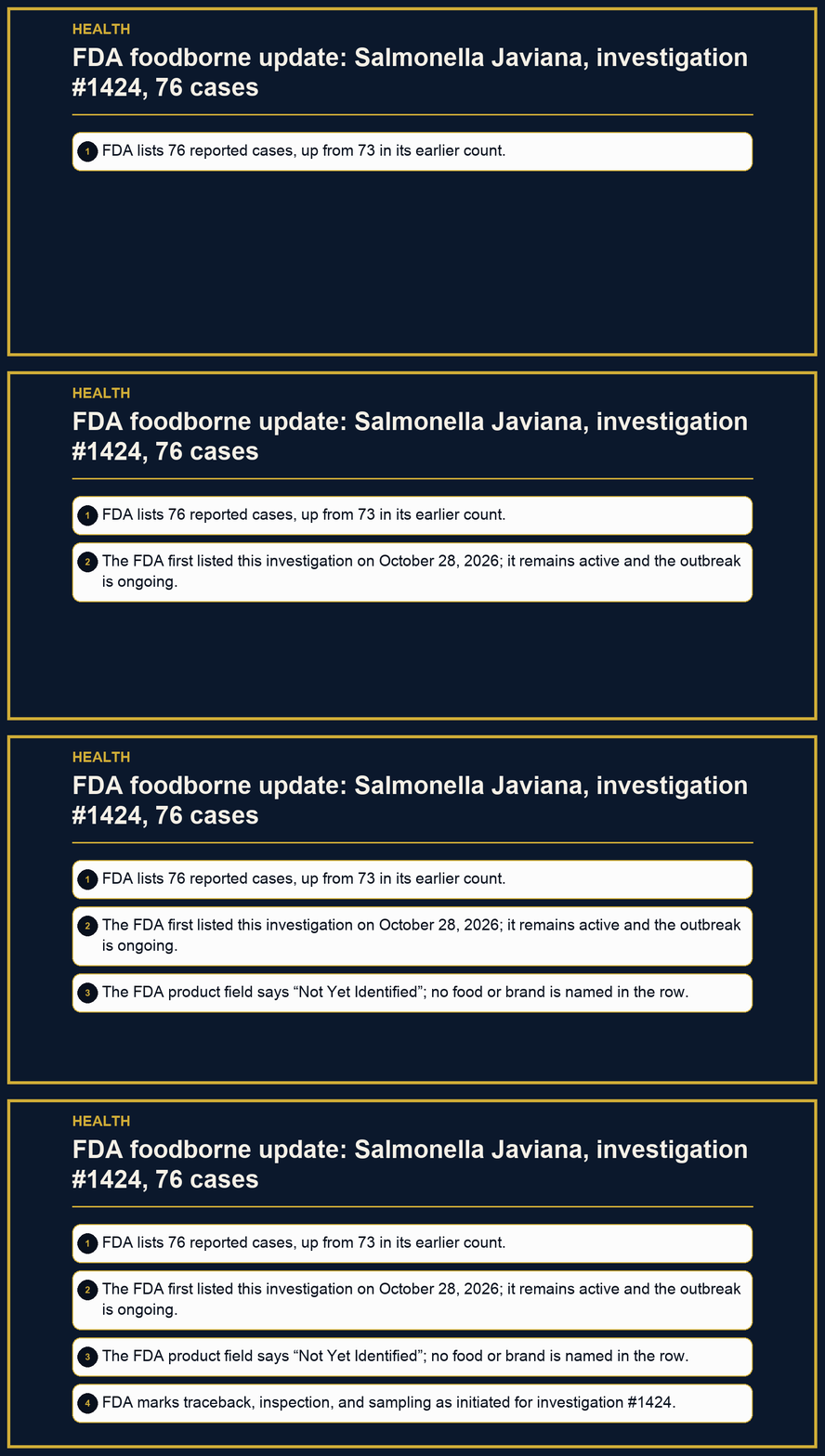
- FDA lists 76 reported cases, up from 73 in its earlier count.
- The FDA first listed this investigation on October 28, 2026; it remains active and the outbreak is ongoing.
- The FDA product field says “Not Yet Identified”; no food or brand is named in the row.
- FDA marks traceback, inspection, and sampling as initiated for investigation #1424.
These are the FDA table’s reported facts, not a finding about a particular meal or the date of anyone’s illness.[1]
The story so far
The FDA first posted this investigation to its public list on October 28, 2026. In the table checked November 25, 2026, the investigation is still “Active” and the event is “Ongoing.” Its reported case count is 76. The listing does not say when people became ill or when this change in the count occurred.[1]
FDA does not list affected states in this summary row. That makes the public record a count and an investigation status, not a map of exposures.[1]
What investigators are doing
For investigation #1424, the FDA marks traceback, inspection, and sampling as initiated. The table does not date this work or give its findings. The “Recall Initiated” box is not checked on this FDA row. A blank box is not proof that no related action exists elsewhere.[1]
Traceback is the effort to follow a suspected food through the supply chain. FDA describes comparing what people ate and where those foods came from. A traceback checkmark is a step toward an answer, not an answer by itself.[3]
What remains unknown
The unanswered question is which food, if any, links these cases. The FDA still lists the product as “Not Yet Identified,” with no brand named and no product-specific instruction in this row. This update is not a product recall.[1]
What readers can do
With no product-specific alert in this row, readers can check the FDA investigation for a later update rather than guessing which food is involved. FDA’s safe-food-handling advice applies generally; WHO offers broader prevention guidance. Neither source is a warning about a particular product in this investigation.[6][5]
FDA describes diarrhea, fever, and abdominal cramps as common Salmonella symptoms. That is general health information, not a description of the people in this outbreak.[2] NIDDK explains when people with food-poisoning symptoms should seek medical help; its guidance is not a report about these cases.[4]
What to watch next
The next official update may change the count or identify a food. Until the FDA reports such a finding, its record describes cases under investigation, not a confirmed product warning. This article will follow changes in the FDA record.[1]
How FDA investigates foodborne outbreaks
FDA’s video below is background, not footage of this investigation or evidence of a product link.
FDA’s original explainer page.
References
- FDA, Investigations of Foodborne Illness Outbreaks — active investigation table and What’s New.
- FDA, Salmonella (Salmonellosis) — general symptoms and risk groups.
- FDA, How the FDA Uses Traceback to Respond to Foodborne Illness Outbreaks — process background.
- NIDDK, Food Poisoning — general symptoms and treatment information.
- WHO, Food Safety — general prevention background.
- FDA, Safe Food Handling — general food-safety advice.
Source note: this story follows the FDA investigation row and its dated case-count notice. The cited health and investigation explainers are general context, not corroboration of this outbreak.

Kemetic Minds Editorial Desk
Verified NewsroomPrimary-sourced investigative intelligence on civil rights, voting rights, federal policy, and consumer protection. Sourced from primary legal filings, government statistics, and direct field reporting.