
Freedmen News Watch · November 22, 2026, 1:20 PM CST
Key Facts
- Slavery reparations: The case for historical acknowledgement, not compensation (via The Economic Times)
Slavery reparations: The case for historical acknowledgement, not compensation.
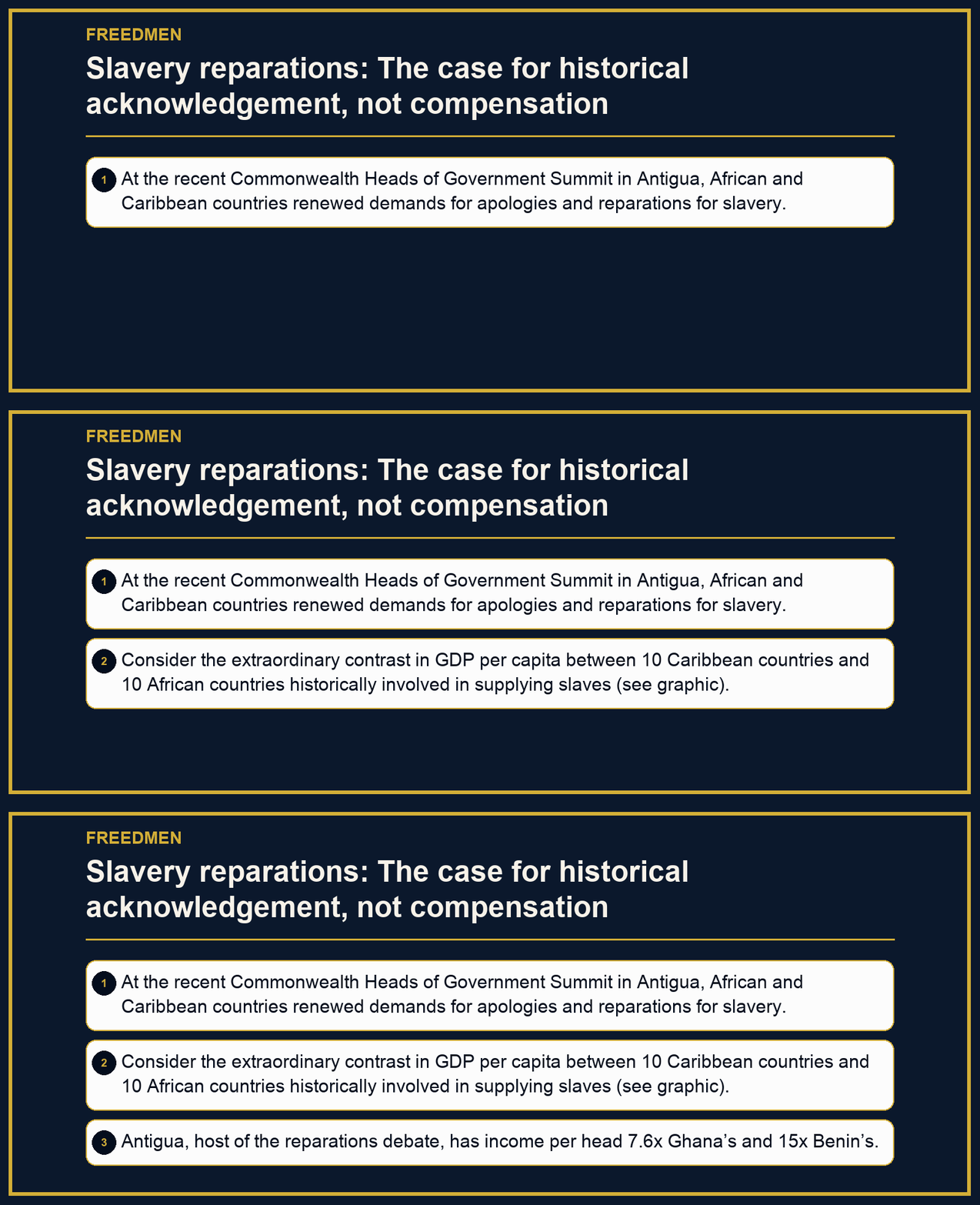
At the recent Commonwealth Heads of Government Summit in Antigua, African and Caribbean countries renewed demands for apologies and reparations for slavery.
Britain expressed sorrow but rejected financial compensation. The issue of reparations raises uncomfortable moral and economic questions.
Why should prosperous Caribbean countries receive compensation, when they are vastly richer than the African countries from which their enslaved ancestors came? And why should African countries receive compensation when African rulers and merchants themselves captured and sold the slaves?
Consider the extraordinary contrast in GDP per capita between 10 Caribbean countries and 10 African countries historically involved in supplying slaves (see graphic). Antigua, host of the reparations debate, has income per head 7.6x Ghana’s and 15x Benin’s.
Except Haiti, Caribbean countries beat the Africans hollow.[1]
About the Freedmen News Watch
This series follows the news that bears on Black American freedmen and their descendants, the people freed from slavery in this country: citizenship and treaty-rights cases such as the Cherokee, Creek and Seminole Freedmen, the Dawes Rolls and Freedmen’s Bureau records, heirs’ property and Black land loss, reparations and descendant-based programs, and the history and memory of emancipation. It covers the hard news and the good news alike. Every passage is quoted as reported and linked to its source, and nothing is generated. The photograph on each post is a public-domain file photo from Wikimedia Commons, credited, and shows a place or monument, not the people in the story.
How to Verify This Yourself
Read the original reporting directly at The Economic Times. That coverage serves as the primary factual source for the quotes and statements cited above. Readers are encouraged to review original public filings, agency announcements, and local community records to independently verify context, event timelines, and regulatory developments.
References
Additional verified portals: Background monitoring and official records from United Nations News[2], African Union[3].
- The Economic Times. Slavery reparations: The case for historical acknowledgement, not compensation. ↩
- United Nations News. UN News Africa and Regional Security Coverage. Primary (official source) ↩
- African Union. African Union Official Press Releases and Declarations. Primary (official source) ↩
Investigative methodology: this update was produced by scripts/topic_news_roundup.py from real The Economic Times reporting — not a language model. The quoted text above is verbatim from the source, cited; no analysis or interpretation is added.

Kemetic Minds Editorial Desk
Verified NewsroomPrimary-sourced investigative intelligence on civil rights, voting rights, federal policy, and consumer protection. Sourced from primary legal filings, government statistics, and direct field reporting.